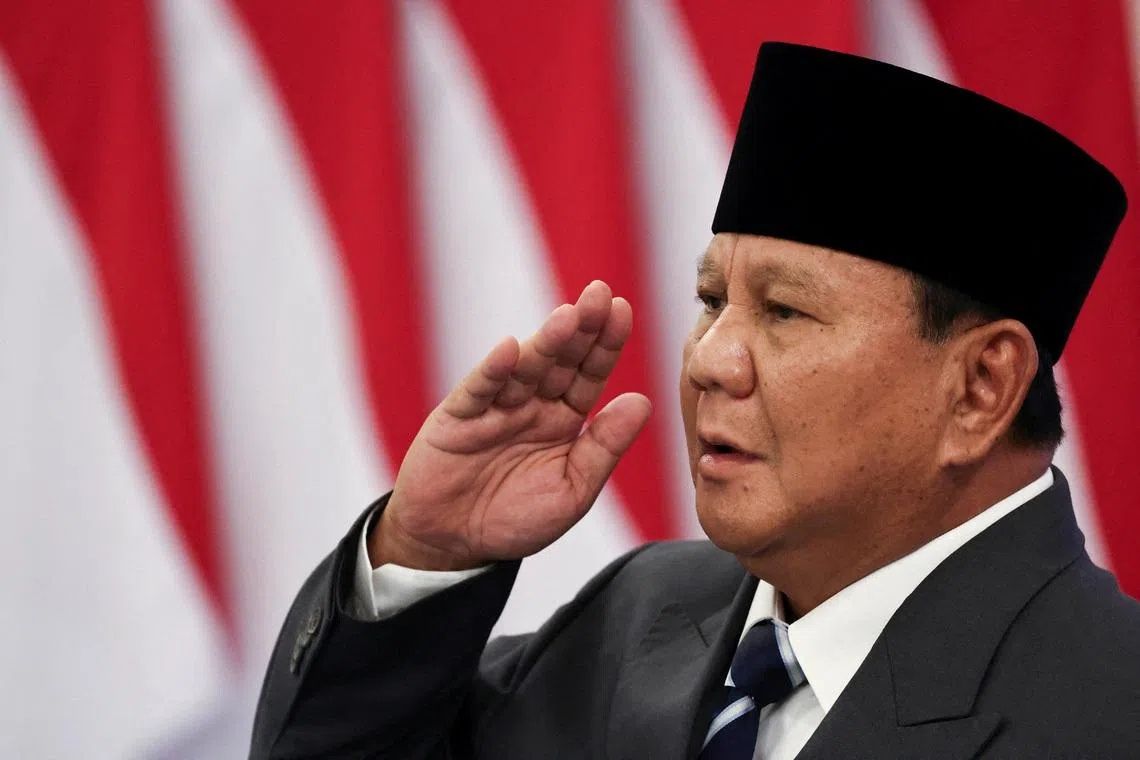
Indonesia's human rights commission has issued a forceful demand that the government abandon compulsory military training for prospective managers enrolled in President Prabowo Subianto's ambitious village cooperative initiative, following the deaths of five participants who collapsed during the early stages of a 45-day training programme. The call represents a significant challenge to a flagship government economic development scheme that was only launched last July, highlighting growing concerns about the integration of military oversight into civilian institutional capacity-building across Southeast Asia's largest economy.
The "Red and White Cooperatives" programme represents one of the Prabowo administration's central pillars for spurring economic activity at the grassroots level. The initiative envisions the establishment of approximately 80,000 village cooperatives nationwide, designed to function as community-focused commercial enterprises that would distribute essential goods, subsidised cooking gas, and agricultural fertilisers while simultaneously generating employment opportunities. The programme's underlying economic logic rests on achieving the government's ambitious target of 8% GDP growth by 2029, a goal that depends substantially on mobilising rural productivity and consumption through decentralised cooperative structures.
The fatal incidents occurred between June 17 and June 26 during the initial stages of what was originally conceived as a 45-day training cycle, which commenced on June 14 and is scheduled to conclude on July 31. Nearly 35,000 prospective cooperative managers are obligated to complete this military training component across multiple regional military installation sites. The defence ministry subsequently disclosed that the five deaths resulted from varied medical circumstances, including cardiac arrest, heat stroke, tuberculosis, and pneumonia, suggesting that participants entered the programme with pre-existing health vulnerabilities that were not adequately managed.
Major General Ketut Gede Wetan, who heads human resource development within the defence ministry, defended the training protocols by asserting that all participants had undergone mandatory medical screening prior to enrolment and received clearance. He further contended that the training curriculum emphasises civil rather than combat-focused instruction and does not incorporate strenuous physical conditioning. However, these assurances have failed to satisfy the human rights commission, which views the entire military training component as fundamentally misaligned with the cooperative sector's core institutional requirements.
The Indonesian human rights commission, represented by official Pramono Ubaid Tantowi, articulated a principled objection to the military training framework that extends beyond immediate safety concerns. The commission's position rests on the observation that cooperatives function primarily as economic institutions oriented towards business management, member services, and organisational governance—competencies entirely distinct from military discipline or command structures. The commission explicitly recommended that capacity-building for cooperative managers should concentrate on developing managerial expertise, leadership capabilities, and financial literacy, none of which receive adequate emphasis through conventional military training protocols.
This dispute reflects a broader pattern of institutional mission creep that has become increasingly apparent in post-2024 Indonesia. President Prabowo, himself a former general, has systematically expanded the military's footprint within civilian governance structures and civilian-oriented development programmes. The integration of military training into cooperative management preparation exemplifies this concerning trend, wherein security establishment institutions exercise authority over domains traditionally managed by civilian economic ministries. For Malaysian observers, this pattern offers instructive contrasts with how Southeast Asian democracies navigate civil-military balance within governance frameworks.
The human rights commission has further demanded that the government launch a comprehensive investigation into the circumstances surrounding the five deaths. Additionally, the commission has called upon law enforcement authorities to initiate forensic autopsy procedures immediately, positioning these medical examinations as crucial evidentiary components of any potential criminal investigation. This escalation in formal legal language—moving from administrative review to potential criminal proceedings—signals the commission's assessment that accountability mechanisms may be necessary beyond routine policy adjustments.
In response to the crisis, the defence ministry has pledged to conduct what it characterises as a "comprehensive evaluation" of the training programme. The stated focus of this review would encompass enhanced health monitoring protocols, earlier detection of participants presenting health risk factors, and calibration of training intensity levels. The defence ministry indicated that the health ministry would assume a collaborative role in refining the training framework, suggesting recognition that military institutions lack adequate expertise in managing large-scale civilian health and safety protocols.
The controversy surrounding this programme carries implications extending beyond Indonesia's domestic policy landscape. Within ASEAN, questions about civil-military relations and the appropriate institutional roles of security establishments remain contested and context-dependent. The Indonesian experience demonstrates how civilian economic development priorities can become entangled with military institutional interests, potentially compromising programme effectiveness and participant safety. Malaysian policymakers and regional observers monitoring institutional governance trends will likely scrutinise how the Prabowo government ultimately resolves this conflict between its military-integration agenda and public safety imperatives.
The timing of this dispute also merits attention, occurring just as the Prabowo administration attempts to consolidate its governance agenda and demonstrate programme effectiveness ahead of 2029's economic growth targets. The mounting criticism threatens not only the cooperative programme's credibility but also raises fundamental questions about how civilian development initiatives should be designed and executed. Whether the government opts to terminate military involvement, refine protocols substantially, or defend the current approach will signal its receptiveness to institutional checks and capacity limitations—a matter of considerable significance for Indonesia's democratic resilience.

