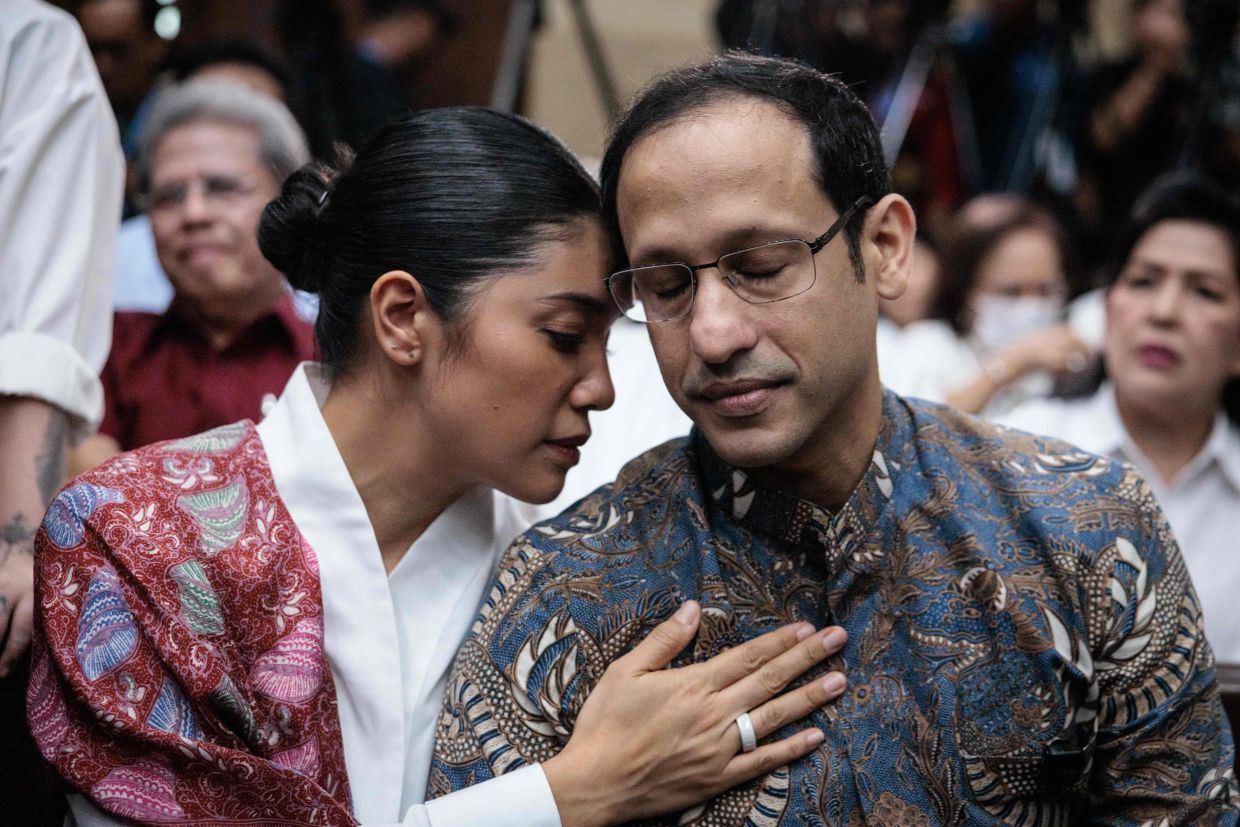
The Indonesian justice system faces competing interpretations of a high-profile corruption case involving former education minister Nadiem Makarim, as both the defendant and state prosecutors challenge last week's verdict from the Jakarta Corruption Court. The divergent appeals underscore the contentious nature of the case, which has divided legal scholars, civil society observers, and political analysts over questions of judicial reasoning, prosecutorial overreach, and the risks of pursuing prominent figures who transition from private enterprise to public service.
On June 30, the Jakarta Corruption Court found Nadiem, cofounder of Indonesia's major ride-hailing platform Gojek, guilty of abusing his authority during the procurement and distribution of Chromebook laptops to schools in remote and disadvantaged regions between 2020 and 2022. The court imposed a 10-year prison sentence, a fine of Rp 1 billion, and ordered restitution of Rp 809 billion—a figure Nadiem's representatives contend he cannot pay. Judges calculated that the alleged corruption inflicted Rp 1.57 trillion in losses to the state treasury, representing a significant diversion of educational resources during the tenure of former president Joko Widodo, under whom Nadiem served as education minister from 2019 onwards.
The sentence proved considerably lighter than what prosecutors had sought. The Attorney General's Office demanded 18 years imprisonment along with the same Rp 1 billion fine, but crucially requested restitution of Rp 5.6 trillion. Prosecutors alleged that Nadiem personally benefited from Rp 809 billion of that sum through financial transactions routed via PT Aplikasi Karya Anak Bangsa, the corporate entity that serves as Gojek's parent holding company. This prosecutorial positioning suggested a more expansive theory of liability and personal enrichment than the court ultimately accepted, setting the stage for Thursday's appeal announcement by Attorney General's Office spokesperson Anang Supriatna.
Nadiem's legal defence team swiftly filed an appeal with the Jakarta High Court, framing the conviction as legally flawed and potentially damaging to Indonesia's economic development ambitions. Lead counsel Ari Yusuf Amir argued that the trial judges overlooked exculpatory evidence and failed to properly weigh testimony presented during proceedings. More broadly, the defence asserted that the ruling could establish a chilling precedent that deters accomplished private-sector executives from accepting government positions, thereby impoverishing the bureaucracy of talented administrators. The legal team also plans to lodge a formal complaint with Indonesia's Judicial Commission, alleging that the three-judge panel showed bias in their examination of the defendant and selectively disregarded evidence.
The case has become a focal point for broader anxieties about Indonesia's anti-corruption machinery. Prominent figures, including former Constitutional Court chief justice Mahfud MD, have publicly questioned the logic underpinning the judges' reasoning on causality and criminal intent. Mahfud observed that linking Nadiem to massive state losses through his former company represents an unusual and potentially problematic legal construction, though he stopped short of endorsing reversal and instead advocated for appellate review. By contrast, law professor Suparji Ahmad from Al-Azhar University Indonesia defended the court's factual findings, asserting that sufficient evidence existed to establish both mens rea and a causal connection between Nadiem's abuse of ministerial authority and quantifiable state harm.
The trial revealed contentious details about Nadiem's wealth trajectory. Court records documented an unexplained surge in his declared assets to Rp 4.87 trillion during the litigation period, prompting judges to recommend that prosecutors investigate potential money laundering violations under Indonesia's 2010 Anti-Money Laundering Law. Nadiem subsequently attributed the increase to his shareholdings in PT Goto Gojek Tokopedia, the technology conglomerate that conducted its initial public offering in 2022. His most recent wealth declaration, filed in 2024, showed substantial contraction to Rp 600 billion, introducing additional complexity to interpretations of his financial circumstances.
The appellate phase arrives against a backdrop of significant public and academic scrutiny regarding prosecutorial motivation and fairness. Civil society organisations and university researchers have characterised the case as politically motivated, warning that aggressive pursuit of such cases risks discouraging capable professionals from transitioning into government roles where their expertise could benefit national development. This concern holds particular resonance in Southeast Asia, where brain drain from public institutions to private enterprise remains a persistent challenge to governance capacity.
Coordinating Minister Yusril Ihza Mahendera, responsible for law and human rights, adopted a neutral stance on Thursday, emphasising that the government intends to allow judicial processes to unfold without interference. He categorically rejected speculation that the administration might intervene through presidential pardon mechanisms, thereby distancing himself from any appearance of executive pressure on the bench. This posture reflects Indonesia's sensitivity to international perceptions regarding judicial independence and the separation of powers, even as domestic political currents continue to swirl around the case.
The dual appeals mean the Jakarta High Court will now navigate competing narratives about the strength of evidence, the reasonableness of judicial conclusions, and the appropriateness of sentencing calibration. Should the appellate panel uphold the conviction, Nadiem would retain rights to petition the Supreme Court, extending the litigation horizon and keeping this matter in public discourse for potentially several additional years. The case ultimately exemplifies persistent tensions within Indonesia's anti-corruption framework regarding how aggressively to pursue high-profile targets, what evidentiary standards ought to apply, and whether deterrent sentencing should prioritise public confidence in institutions or careful adherence to legal technicality.

