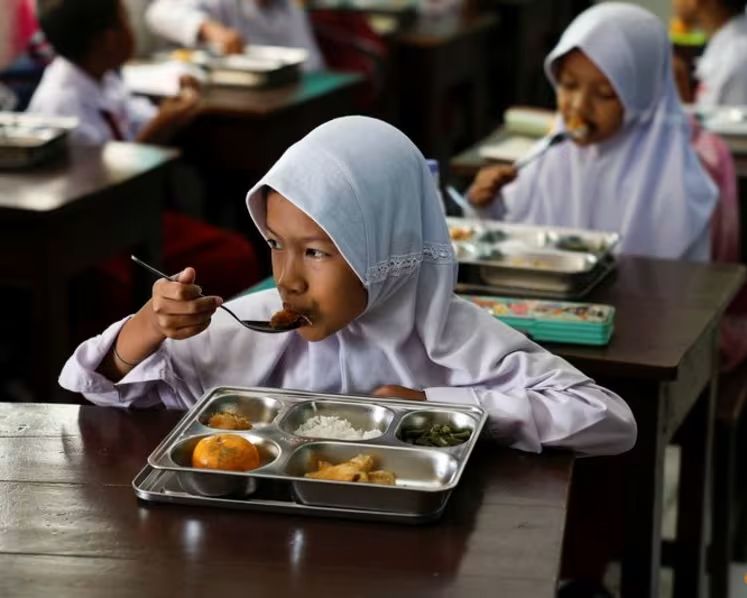
The Indonesian government's ambitious free meals programme has suffered another significant setback with the resignation of Nanik Sudaryati Deyang, the head of the National Nutrition Agency, announced on Wednesday. Her departure represents the second major leadership shake-up in little more than a month, intensifying questions about the stability and viability of what was meant to be President Prabowo Subianto's signature policy achievement. Nanik cited personal health considerations as her reason for stepping down, declaring on Facebook that she required overseas medical treatment for a heart condition, with the president's personal blessing to depart from her post.
The timing of Nanik's resignation exposes the mounting pressures facing the agency responsible for overseeing one of Southeast Asia's most ambitious social programmes. She had assumed leadership of the National Nutrition Agency only in June, inheriting an organisation already beset by operational difficulties and administrative chaos. Her brief tenure was overshadowed by serious allegations of mismanagement, with her immediate predecessor dismissed by Prabowo and subsequently arrested on corruption charges last month. The departing chief described the stress of her position as sufficiently severe to trigger arterial problems, suggesting the institutional turbulence extends far deeper than surface-level budget discussions.
The programme itself has become increasingly controversial since its rollout in January 2025. What Prabowo promoted during his election campaign as a transformative measure to address childhood malnutrition has instead accumulated a troubling record of logistical failures, food quality issues, and multiple documented instances of mass food poisoning incidents. These practical difficulties have undermined public confidence in the scheme and raised serious questions about the government's capacity to execute such a large-scale initiative effectively. For a developing nation like Indonesia, these operational breakdowns represent not merely administrative embarrassments but potential health risks affecting millions of vulnerable citizens.
Beyond the immediate operational challenges, the programme has become entangled in a criminal investigation that extends into the highest levels of the agency's leadership. The arrest of Nanik's predecessor on corruption allegations related to the multibillion-dollar budget suggests that financial irregularities may be contributing to the programme's dysfunction. This dimension troubles Indonesian policymakers and foreign observers alike, as it indicates that the free meals initiative may be serving purposes beyond nutritional assistance—potentially becoming a conduit for embezzlement or misallocation of public resources at a time when Indonesia faces pressing fiscal constraints.
The budgetary trajectory of the programme reveals a concerning pattern of downward revisions that undermines the government's original vision. The 2026 budget allocation has now been slashed twice, declining from an initial 335 trillion rupiah to the current 229 trillion rupiah—representing a reduction exceeding 100 trillion rupiah. This represents a cumulative budget cut of more than 30 percent from the original projection, with agency officials indicating that further reductions remain possible pending additional review cycles. Such volatility suggests inadequate planning and raises doubts about the government's realistic assessment of the programme's financial requirements.
The gap between ambition and resources has become starkly apparent when examining the programme's coverage targets. Initially, the free meals scheme aspired to reach 83 million people encompassing schoolchildren, adolescents, and pregnant women across the archipelago. Current delivery figures show the agency has provided meals to 62.5 million beneficiaries as of the latest count, leaving a shortfall of nearly 21 million people. The continued budget reductions make achieving even the current coverage levels increasingly challenging, suggesting that the programme may contract further in coming months as fiscal pressure mounts.
Nanik's characterisation of the free meals initiative as a straightforward nutrition intervention measure rather than a political initiative appears somewhat defensive, given that Prabowo explicitly campaigned on this pledge during his presidential campaign. The distinction she draws between health policy and political messaging, however, highlights a genuine tension within Indonesian governance. Programmes tied to electoral promises often become symbols of presidential prestige, creating pressure to maintain them regardless of fiscal capacity or implementation feasibility. This politicisation can distort resource allocation and undermine objective assessment of whether a programme merits its cost.
The proposed supervisory board that Nanik mentioned as under consideration suggests the government may be attempting to introduce additional oversight mechanisms to address governance failures. Her suggestion that she might lead such a board indicates potential continued involvement despite her formal resignation from the chief executive role. This arrangement would represent an unusual governance structure, potentially fragmenting decision-making authority between the supervisory body and whatever new executive leadership emerges.
The question of succession remains unresolved, with Nanik offering only the vague indication that her replacement would be a junior colleague from within the agency. This suggests an internal promotion rather than external recruitment, raising concerns about whether fresh perspectives and management expertise from outside the compromised institution might better serve the programme's rehabilitation. The lack of clarity regarding leadership transition compounds uncertainty about the agency's near-term direction and capacity to stabilise operations.
For Malaysian observers, Indonesia's struggles with this massive social programme offer instructive lessons about the challenges of implementing universal benefit schemes across large, geographically dispersed populations. The intersection of budgetary constraints, logistical complexity, governance vulnerabilities, and political pressure creates conditions where even well-intentioned policies can deteriorate rapidly. As Malaysia itself grapples with expanding welfare commitments and fiscal sustainability questions, the Indonesian experience demonstrates the necessity of robust institutional capacity, transparent financial management, and realistic assessment of implementation timelines before committing public resources to programmes affecting tens of millions of citizens.
The broader implication for Southeast Asia concerns the region's ability to deliver on ambitious social promises amid economic pressures and institutional limitations. As middle-income countries attempt to upgrade social welfare systems, the Indonesian free meals programme exemplifies how quickly initiatives can become mired in crisis when foundational governance structures prove inadequate. The programme's future trajectory will depend substantially on whether the incoming leadership can address corruption allegations, restore public trust, and develop realistic operational frameworks—challenges that appear daunting given the institutional turmoil evident in recent weeks.

