Public opinion in Indonesia has become sharply divided over President Prabowo Subianto's signature free nutritious meal programme, with duelling protests erupting across multiple regions that reveal fundamental disagreements about government spending priorities, programme effectiveness, and the proper distribution of state resources during a period of fiscal constraint.
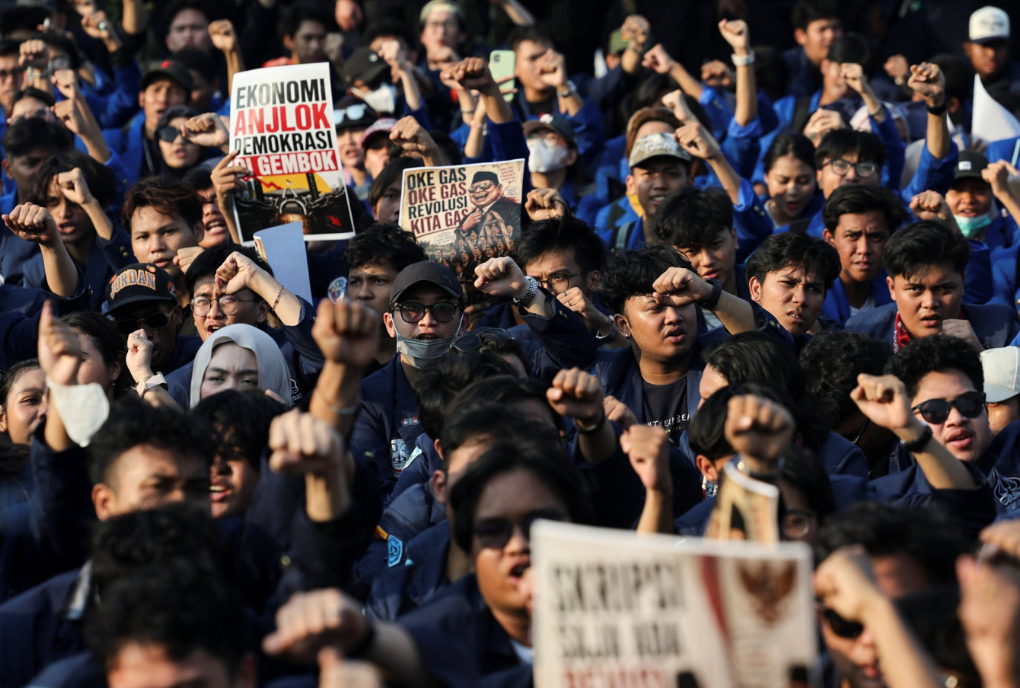
Students in Bali staged a significant demonstration outside the regional legislative council in Denpasar on Monday, bringing hundreds together to challenge not only the meal scheme itself but the broader economic and governance framework surrounding its implementation. Their petition sought a thorough audit by the Supreme Audit Agency and called upon authorities to investigate reported instances of foodborne illness and suspected embezzlement connected to programme administration. The student movement framed the initiative within Indonesia's current economic difficulties, questioning whether such an expansive commitment of public funds remains defensible when the government is simultaneously implementing austerity measures elsewhere.
In the capital, members of the Indonesian Islamic Student Movement organised a parallel demonstration at the House of Representatives complex in Central Jakarta, drawing thousands who specifically demanded the removal of leadership at the National Nutrition Agency. This action followed the recent arrest of three senior officials from the agency on corruption allegations, suggesting that student concerns extend beyond abstract fiscal arguments to documented failures in governance and accountability. The protesters connected their criticism of the meal scheme to broader demands for stronger economic management and improved compensation for teachers, positioning the programme within a wider conversation about governmental competence and resource allocation.
The Batam rally, organised by the city's student alliance movement, centred on a conditional demand: the government should evaluate programme effectiveness and suspend operations if assessments reveal poor targeting, limited impact, or failure to generate meaningful public benefit. Student coordinator Muryadi Agus Priawan characterised campus activism as an essential mechanism for democratic oversight, describing student mobilisation as the public demanding attention from decision-makers while reminding officials that policy must genuinely serve ordinary Indonesians rather than serve as vessels for corruption or waste.
President Prabowo introduced the free nutritious meal programme in January of the previous year as a public health intervention targeting malnutrition and childhood stunting, persistent challenges across the Indonesian archipelago. The initiative represents extraordinary fiscal commitment, with allocations reaching at least 335 trillion rupiah—approximately 15 billion United States dollars—annually, aiming to feed approximately 83 million beneficiaries spanning schoolchildren, pregnant women, and nursing mothers. Yet despite its ambitious scope and health-focused rationale, the programme has encountered sustained criticism regarding elevated implementation costs, documented instances of food contamination, and an active criminal investigation into alleged embezzlement.
Government officials have pushed back against suspension demands, with the Government Communications Agency head emphasising that refining and improving the programme represents the appropriate path rather than abandonment. In response to mounting pressure, authorities have announced substantial modifications, reducing the annual budget allocation to 228.4 trillion rupiah and introducing various efficiency measures designed to lower expenses without completely dismantling the initiative. These adjustments include pausing meal distribution during the late June through mid-July school break and discontinuing provision in 76 schools located in comparatively affluent municipalities where officials assess that families possess sufficient independent capacity to meet nutritional requirements.
However, these economies have generated significant opposition from those whose livelihoods depend directly upon programme continuation. Kitchen workers in Batam—approximately 1,500 individuals receiving daily wages—staged their own rally near the local legislative council, articulating how the reduction from six to five weekly distribution days and holiday suspensions would materially harm their earnings and their families' financial stability. Protest coordinator Langga Husein also highlighted that discontinuing operations during school holidays would disadvantage pregnant women, lactating mothers, and young children who require consistent nutritional support regardless of the academic calendar.
Local economies throughout Indonesia have become intertwined with the programme's operations in ways that extend beyond direct recipients. In Bandar Lampung, residents organised demonstrations in defence of continued programme implementation, noting that the massive procurement requirements generate sustained demand for domestically produced agricultural commodities including rice, corn, cassava, and fresh produce. Field coordinator Maradoni explained that this agricultural stimulus has benefited farmers by supporting commodity prices and strengthening rural incomes. The economic multiplier effects of the programme throughout provincial food systems have created constituencies substantially invested in its preservation, illustrating how spending initiatives generate complex networks of dependent interests.
Similar demonstrations supporting programme continuation have materialised recently in Jakarta, West Nusa Tenggara, and East Java, suggesting that grassroots backing remains robust in communities perceiving tangible advantages. This geographic distribution of pro-continuation rallies indicates that opposition to the programme concentrates among urban student populations and civic oversight advocates, whereas rural and economically marginal communities tend to mobilise in its defence. The political geography of these competing protests reflects competing interests between those prioritising fiscal discipline and economic management and those depending upon the programme for nutrition, employment, or agricultural market access.
The intensifying debate encompasses genuine policy questions about programme design, implementation quality, and fiscal sustainability rather than merely reflecting partisan disagreement. Documented corruption arrests within the National Nutrition Agency lend credibility to student claims that the programme requires serious institutional overhaul. Simultaneously, the demonstrated economic dependence of kitchen workers and the agricultural stimulus benefits to provincial farmers illustrate legitimate interests in programme preservation. The Indonesian government faces the challenge of addressing corruption, improving food safety, and enhancing targeting efficiency while maintaining support for millions of beneficiaries and the livelihoods that have become structurally dependent upon continued operations.
For Malaysia and other Southeast Asian nations, Indonesia's experience with the free meal programme offers instructive lessons regarding the implementation complexities and unintended dependencies that emerge when governments launch large-scale social spending initiatives. The combination of corruption risks, food safety challenges, programme targeting difficulties, and the rapid creation of constituencies with vested interests in continuation presents a cautionary framework for regional policymakers considering comparable interventions. Indonesia's struggle to balance fiscal constraint, health objectives, and the protection of vulnerable populations while maintaining institutional integrity illustrates the multifaceted challenges inherent in translating ambitious social policy into effective, accountable governance.
As President Prabowo's administration navigates these competing pressures, the outcome will likely establish important precedents for how Indonesian governance addresses social spending, anti-corruption enforcement, and democratic accountability in subsequent years. The continuing protests suggest that no consensus has yet emerged regarding the programme's ultimate trajectory, and further modifications appear likely as authorities attempt to retain core objectives while responding to documented problems and mounting fiscal pressure.