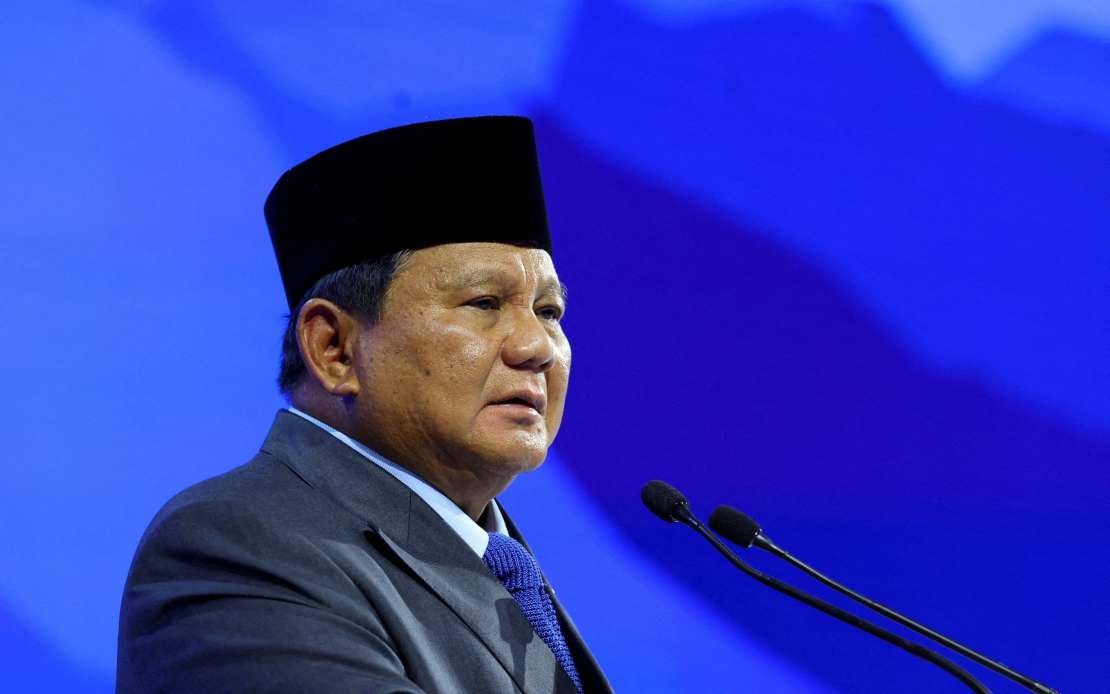
Indonesia's ongoing battle against forest and land fires appears to be yielding results, with President Prabowo Subianto expressing cautious optimism that the crisis could be fully resolved within the next fortnight. Speaking at the launch of Indonesia's ambitious 100-gigawatt solar power programme in Jembrana, Bali, on Tuesday, Prabowo indicated that containment efforts in several regions have begun to stabilise the situation, marking a potential turning point in what has been a serious environmental and humanitarian challenge for Southeast Asia's largest nation.
The Indonesian government has committed extraordinary resources to combat the fires, a scale of intervention that underscores both the severity of the crisis and the administration's determination to address it. The response encompasses dozens of helicopters and more than a dozen fixed-wing aircraft dropping water on affected areas, hundreds of water wells and pumps deployed across fire-stricken regions, and thousands of personnel working across multiple fronts. This mobilisation represents one of the most significant firefighting operations Indonesia has undertaken in recent years, reflecting the scale of the environmental threat facing the country.
Prabowo's personal involvement in managing the crisis has been evident through his direct inspection visits to the affected zones. He travelled to West and Central Kalimantan last Saturday to oversee firefighting operations firsthand, then proceeded to Sumatra on Monday to assess and coordinate response efforts there. These field visits serve both a practical purpose—allowing the president to directly monitor progress and identify bottlenecks—and a symbolic one, demonstrating executive commitment to resolving the disaster. During these inspections, Prabowo observed coordinated action among regional governments, national ministries and agencies, the military, police and disaster management authorities, suggesting that institutional coordination across Indonesia's complex bureaucracy is functioning effectively.
The timing of the fires coincides with a particularly intense manifestation of the El Niño weather phenomenon, which meteorologists are forecasting could rank among the strongest on record. This climatic factor has significantly exacerbated Indonesia's vulnerability to forest fires, as the atmospheric pattern typically brings reduced rainfall and increased temperatures to Southeast Asia during its active phase. The president acknowledged this global weather system as a persistent threat, emphasising that Indonesia must remain vigilant and maintain elevated readiness against the compounding risks that El Niño amplifies. Understanding this connection is crucial for Malaysian readers and policymakers, as El Niño's effects on regional weather patterns have direct implications for the entire Southeast Asian region, potentially affecting rainfall patterns and air quality across borders.
Indonesia's firefighting efforts come against the backdrop of another recent major disaster that tested the government's response capacity. A magnitude 7.7 earthquake struck the Flores region in East Nusa Tenggara on August 15, causing 103 deaths and leaving 1,666 people injured. As of Tuesday afternoon, 185,131 people remained displaced from their homes, representing one of the most significant humanitarian consequences of a natural disaster in Indonesia's recent history. The National Disaster Management Agency reported that 7,029 aftershocks have been recorded following the main earthquake, including 141 tremors that residents actually felt, indicating continued seismic instability in the region and ongoing danger to rescue and reconstruction operations.
Prabowo's reference to his government's response to the Aceh disaster earlier this year, coupled with his characterisation of the NTT earthquake response as "very fast, very massive," suggests a deliberate messaging strategy about state capacity and executive competence. The president framed these responses as evidence that the government is operationally present wherever national emergencies demand, a politically significant assertion in a country where disaster management capacity has sometimes been questioned. Whether these claims accurately reflect the ground reality or represent aspirational statements about government intentions remains a matter for independent verification, but they reflect Prabowo's understanding that how a government manages crisis response significantly shapes public confidence in its leadership.
For Malaysia and other neighbouring Southeast Asian nations, Indonesia's forest fires carry direct implications beyond Indonesia's borders. In past years, transboundary haze from Indonesian fires has severely affected air quality in Malaysia, Singapore and Brunei, causing respiratory health problems and disrupting transportation and commerce. The region's interconnected geography means that environmental management in one country inevitably affects its neighbours. Should Indonesia's current firefighting efforts succeed in resolving the crisis within the projected timeframe, it would provide relief not only to Indonesian citizens but also to the broader Southeast Asian community exposed to the resulting air pollution and atmospheric degradation.
The fires also serve as a broader reminder of Indonesia's ongoing struggle to balance economic development with environmental protection. Indonesia's palm oil plantations and logging operations have historically been linked to deforestation, which increases vulnerability to fire during dry seasons. While the current government is attempting to frame its response as evidence of effective crisis management, the underlying challenge of sustainable forest management and prevention of future fires remains unresolved. The deployment of massive resources to fight fires, while necessary in the short term, cannot substitute for structural changes to land use practices that would reduce fire risk in the longer term.
The launch of the 100-gigawatt solar power programme alongside announcements about fire containment also signals Indonesia's attempt to pursue renewable energy development as part of a broader climate and environmental strategy. While the connection between solar energy development and immediate forest fire response might seem tangential, it reflects an implicit acknowledgment that Indonesia needs to transition away from practices and economic models that create environmental vulnerability. For Malaysian observers monitoring Indonesia's climate and environmental policies, this juxtaposition suggests that the new administration recognises the need for systemic shifts in how the nation manages its natural resources and energy needs.
The success or failure of the Indonesian government's effort to resolve the fires within the stated two-week timeframe will test both the operational capacity of the disaster response system and the predictability of the environmental conditions driving the fires. Weather patterns could accelerate or delay resolution regardless of firefighting efforts, and on-ground coordination challenges may emerge as operations continue. Nevertheless, Prabowo's public commitment to a specific timeline—however optimistic it may appear—establishes a measurable standard against which his government's performance can be evaluated. For Malaysia and the region, this next fortnight will be crucial in determining whether Indonesian fires remain a significant transboundary environmental challenge or begin to recede as a pressing concern.

