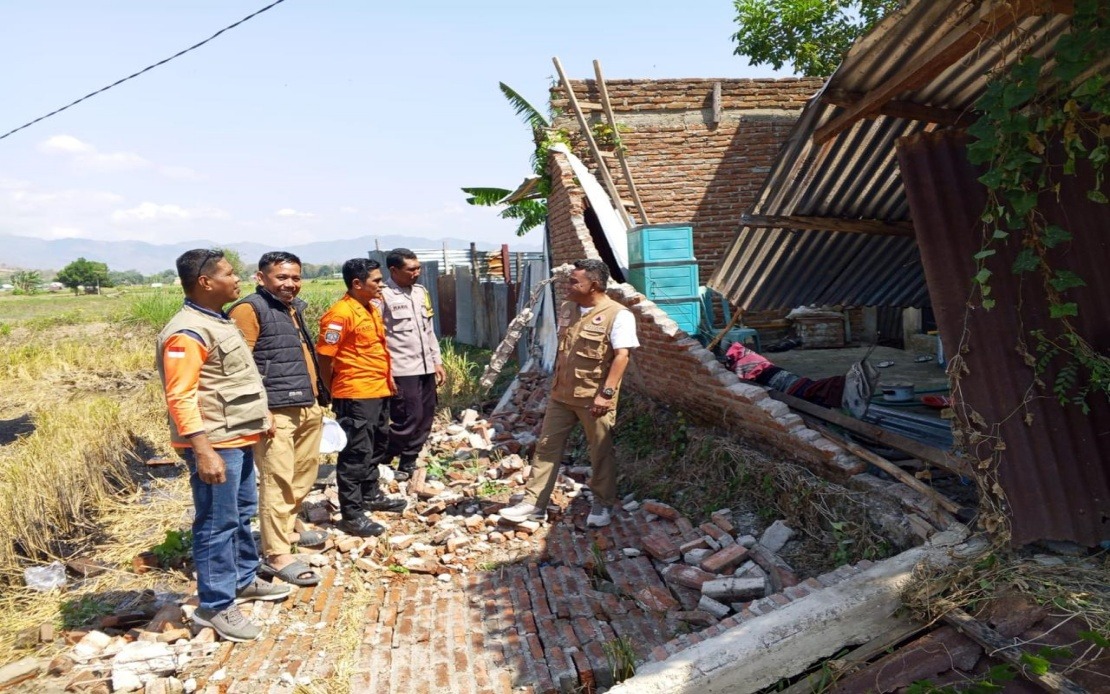
A devastating magnitude 7.7 earthquake struck Indonesia's Flores Island in East Nusa Tenggara early Saturday morning, leaving at least 38 people dead and triggering an urgent search and rescue operation across the disaster zone. The catastrophe unfolded at 4:58 am local time, with the seismic event centred in the ocean approximately 30 kilometres from Mbay at a depth of 15 kilometres, unleashing powerful tremors across the densely populated island.
National Disaster Management Agency (BNPB) chief Suharyanto provided a grim update at a Saturday afternoon press conference, revealing that beyond the confirmed fatalities, two individuals sustained serious injuries while eleven others suffered minor wounds. The scale of displacement became apparent as approximately 2,000 residents evacuated affected areas independently, recognising the danger posed by deteriorating structures and continuing aftershocks. Suharyanto emphasised that rescue teams believed additional residents remained imprisoned beneath damaged buildings, making the search operation paramount in the hours following impact.
Authorities immediately prioritised locating and extracting survivors from the rubble. Personnel from the National Search and Rescue Agency (Basarnas), Indonesian military units, and police forces fanned out across the affected regions, navigating through destroyed infrastructure and hazardous terrain. The coordination represented a standard protocol for Indonesian disaster response, yet the scale of destruction posed significant logistical challenges to rescue teams racing against time to reach survivors before conditions deteriorated further.
The physical devastation extended far beyond individual casualty figures. Dozens of residential structures lay partially or completely destroyed, whilst several community health centres sustained serious damage that threatened to compromise medical services precisely when they were most urgently needed. Landslides triggered by the earthquake's violence blocked multiple roads, fragmenting access routes and complicating rescue operations. Critical infrastructure including airport terminal buildings and two port facilities experienced damage, though airport runways escaped significant harm, preserving Indonesia's ability to rapidly deploy resources and transport evacuees.
The BNPB chief acknowledged that Saturday represented merely the first day of the unfolding disaster, with casualty and damage assessments still incomplete. This temporal reality matters significantly for regional observers, as initial figures typically underestimate final death tolls and property losses. Earthquakes in Indonesia, where building codes remain inconsistently enforced across less-developed regions, frequently produce higher casualty rates than equivalent seismic events in developed nations. The mountainous terrain of Flores, combined with construction practices common to remote Indonesian communities, heightened vulnerability to both direct earthquake damage and secondary hazards like landslides.
A tsunami warning issued immediately after the earthquake created additional concern for residents and authorities alike. However, sea-level monitoring stations provided reassurance when observations revealed no significant ocean rise, prompting authorities to lift the warning at 7:31 am. This development, while relieving pressure on evacuation planners, did not diminish the urgency of land-based rescue operations. For Malaysian observers, the incident underscored shared seismic risks across the Southeast Asian region, situated along the Pacific Ring of Fire where tectonic activity remains constant and unpredictable.
The response mobilisation demonstrated the institutional capacity Indonesian authorities had developed through previous disasters. The BNPB deployed two helicopters and one fixed-wing aircraft to support evacuation efforts and deliver critical relief supplies to isolated communities. This aerial capacity proved essential given road blockages from landslides, enabling authorities to reach populations otherwise cut off from ground-based assistance. The helicopter deployment represented a significant commitment of resources, typically reserved for major disaster scenarios, underscoring how severely officials assessed the Flores situation.
Sustenance and basic necessities became immediate concerns as displaced populations faced shelter shortages and supply disruptions. Relief distribution efforts encompassed food provisions, drinking water, purified water supplies, temporary tents, electrical generators, and other essential commodities necessary for survival in post-disaster conditions. The logistics of delivering these materials across damaged terrain and to scattered populations required coordination across multiple government agencies and potential involvement of international humanitarian organisations.
Indonesia's Public Works Ministry played a crucial role in restoring territorial connectivity, deploying personnel and specialised equipment to clear landslide-blocked roads. Transport link restoration held strategic importance beyond immediate disaster relief, as reopened routes facilitated access for additional rescue teams, medical personnel, and supply convoys. Communications infrastructure restoration proceeded simultaneously, as disrupted telephone and internet services complicated coordination efforts and prevented families from confirming loved ones' safety.
For Malaysia's policymakers and disaster management professionals, the Flores earthquake carried instructive implications. The incident reinforced how rapidly seismic events propagate across wide geographic areas, how secondary hazards like landslides compound primary earthquake damage, and how critical infrastructure interdependencies—roads enabling rescue, ports facilitating supply delivery, airports supporting rapid response—determine response effectiveness. Similar vulnerabilities exist throughout Southeast Asia, where rapid urbanisation has outpaced building code enforcement and where mountainous terrain amplifies earthquake-triggered landslide risks.
The disaster also highlighted the importance of maintaining regional disaster response capabilities and mutual assistance frameworks. Indonesia's BNPB demonstrated established protocols and resource deployments, yet the magnitude of the catastrophe suggested that international support and expertise-sharing arrangements strengthen regional resilience. For Malaysian observers, watching Indonesian rescue operations unfold provided practical insights into disaster management scaling challenges and resource allocation decisions that neighbouring nations might face during comparable emergencies.
As rescue operations continued throughout Saturday and beyond, the final casualty toll remained uncertain and likely to rise. The earthquake's timing—early morning when many residents remained in buildings rather than outdoors—contributed to casualties, a pattern observed in numerous previous Indonesian seismic disasters. The Flores incident served as a sobering reminder of natural hazard vulnerability across Indonesia's archipelago and the broader Southeast Asian region, demanding continued investment in disaster preparedness, building resilience, and institutional capacity development.

