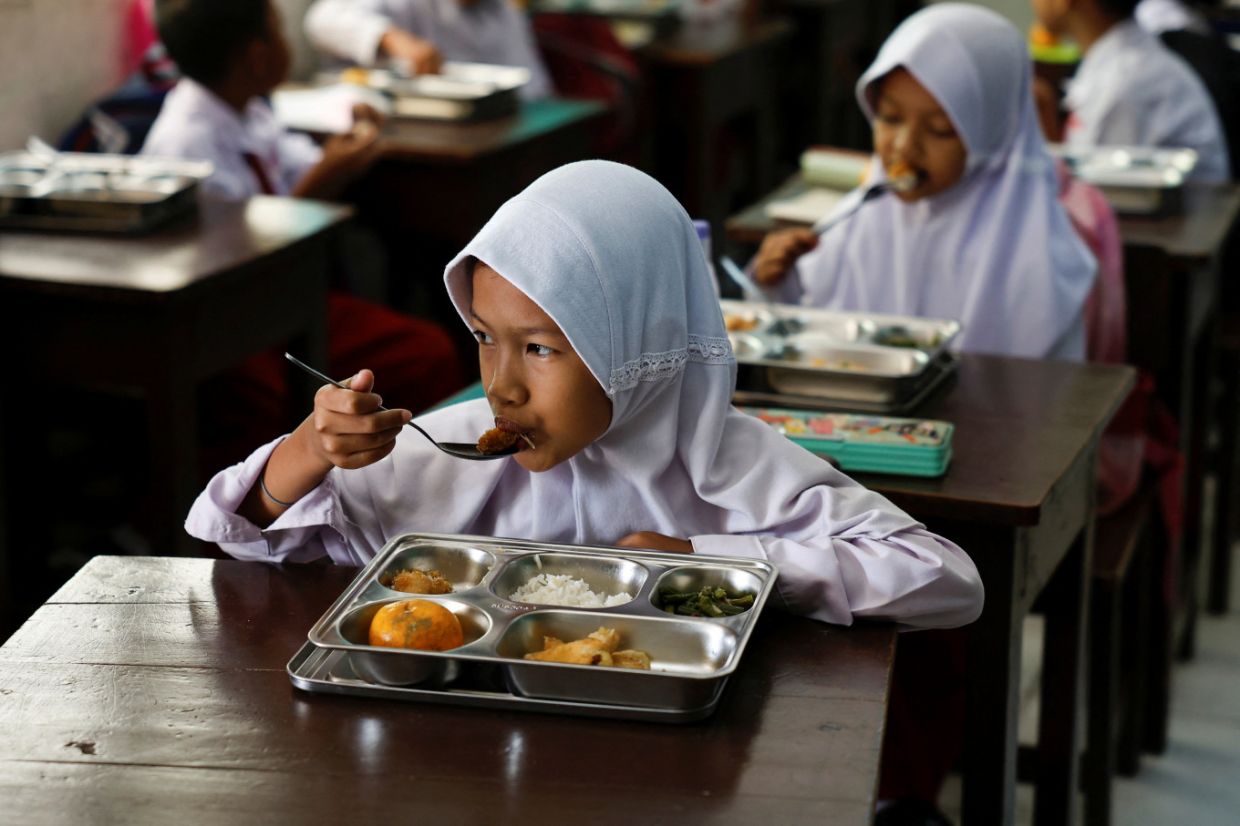
Teacher organisations in Indonesia have raised alarm that a proposed revision to the national education law contains language ambiguous enough to resurrect funding for the government's free nutritious meals program through education allocations, potentially circumventing a recent Constitutional Court ruling that declared such spending unconstitutional. The Indonesian Teachers Association and allied groups contend that draft provisions treating health services as an integral education function could become a legal pathway to channel education budget money toward the meal initiative once again.
The Constitutional Court delivered a significant judgment on July 30, determining that President Prabowo Subianto's flagship free meals scheme falls outside the scope of education and therefore cannot legitimately draw from the mandatory education budget. This decision upheld petitions filed by educators, academics, student representatives, and civil society organisations concerned about budget misallocation. The ruling has profound implications for Indonesia's education financing, as the free meals program currently consumes Rp 223 trillion from the annual Rp 769 trillion education allocation—nearly a third of compulsory education spending that the Constitution mandates must support learning and teaching.
The contentious provision in the draft law dated July 8 proposes that government and educational institutions "provide health services, including those concerning mental health, at educational institutions in a manner that is integrated with the national health policies as well as the national education goals." According to Satriwan Salim, the national coordinator of the Indonesian Teachers Association, this language creates interpretive flexibility that policymakers could exploit. The vagueness transforms the free meals program—which the government frames as a national health initiative—into a potential educational mandate eligible for education budget financing, thereby circumventing the court's explicit prohibition through semantic redefinition.
This concern reflects a pattern of constitutional tensions within Indonesia's governance architecture. Constitutional law expert Feri Amsari emphasised that the court's constitutional principles bind all future legislation, not merely the budget law itself. Any legislative attempt to repackage or relabel the free meals funding as an education expense would violate the ruling's spirit and legal force. "Under constitutional principles, it does not matter which law it is placed in, the program cannot be funded from the education budget again under any name or in any other form," Amsari explained, signalling that legal creativity alone cannot overcome the court's constitutional judgment.
Civil society monitors have similarly warned that authorities may pursue what they term "budget engineering"—restructuring nomenclature or regulatory frameworks to achieve the same financial outcome while technically complying with the letter of the ruling. The MBG Watch coalition and Transparency International Indonesia, which supported the court petitioners, view the education law revision with considerable scepticism. Agus Sarwono of TII stated that any manoeuvre to maintain education funding for meals through classification changes or regulatory adjustments would constitute outright denial of the court's decision, undermining constitutional accountability.
Indonesia's track record on implementing Constitutional Court rulings has fuelled these anxieties. Previous instances demonstrate that binding decisions sometimes face implementation delays or circumvention through legislative workarounds. A December 2025 ruling prohibiting active-duty police officers from simultaneously holding government positions exemplifies how judicial determinations can languish or be sidestepped, suggesting institutional resistance to judicial oversight of executive and legislative prerogatives. For education activists, the free meals funding question represents a critical test of whether the judiciary's constitutional authority can withstand political pressure to maintain popular programs.
The education law revision addresses multiple substantial matters beyond the meals controversy. House Commission X, chaired by Golkar Party lawmaker Hetifah Sjaifudian, is deliberating provisions to explicitly regulate adequate teacher salaries and allowances, strengthen protections against student violence, and clarify mandatory education financing obligations. These legitimate reform objectives create political momentum for the revision, potentially providing cover for provisions that civil society finds problematic. The strategic packaging of multiple education priorities may inadvertently or deliberately obscure the constitutional hazard embedded in the health services language.
Hetifah acknowledged on Friday that the bill remains incomplete and that concerns about interpretive ambiguity have reached the commission's attention. She committed that every provision would be drafted to eliminate multiple interpretations and avoid constitutional conflict, asserting that education funding would remain dedicated to learning quality, teacher welfare, and core educational services rather than extraneous programs. Her statement suggests receptiveness to refinement, though whether substantive changes will materialise remains uncertain given the political salience of the meals initiative, which enjoys substantial public support despite its budgetary implications.
For Malaysian and broader Southeast Asian observers, Indonesia's struggle illustrates the governance challenges facing populous democracies attempting to deliver popular welfare programs while respecting constitutional constraints. The free meals program genuinely addresses nutritional gaps affecting school attendance and learning outcomes, objectives that any education ministry would endorse. Yet funding mechanisms matter constitutionally and fiscally—education budgets must sustain teacher quality, infrastructure, and pedagogy if systems are to function. The tension between worthy social goals and budgetary discipline reflects a problem that transcends Indonesia, as governments across the region balance popular entitlements against fiscal sustainability and constitutional limits.
The revision process now enters a critical phase where legislative deliberation will either fortify safeguards against circumvention or proceed with provisions enabling future reinterpretation. Civil society participation and public scrutiny become essential countervailing forces. Malaysia's experience with constitutional interpretation and budget law, including debates around mandatory education financing, provides relevant comparative context. How Indonesia's legislature resolves this question will signal whether recent judicial assertions of constitutional authority can withstand coordinated legislative recalibration, or whether political imperatives consistently override institutional checks designed to constrain executive and legislative power.

