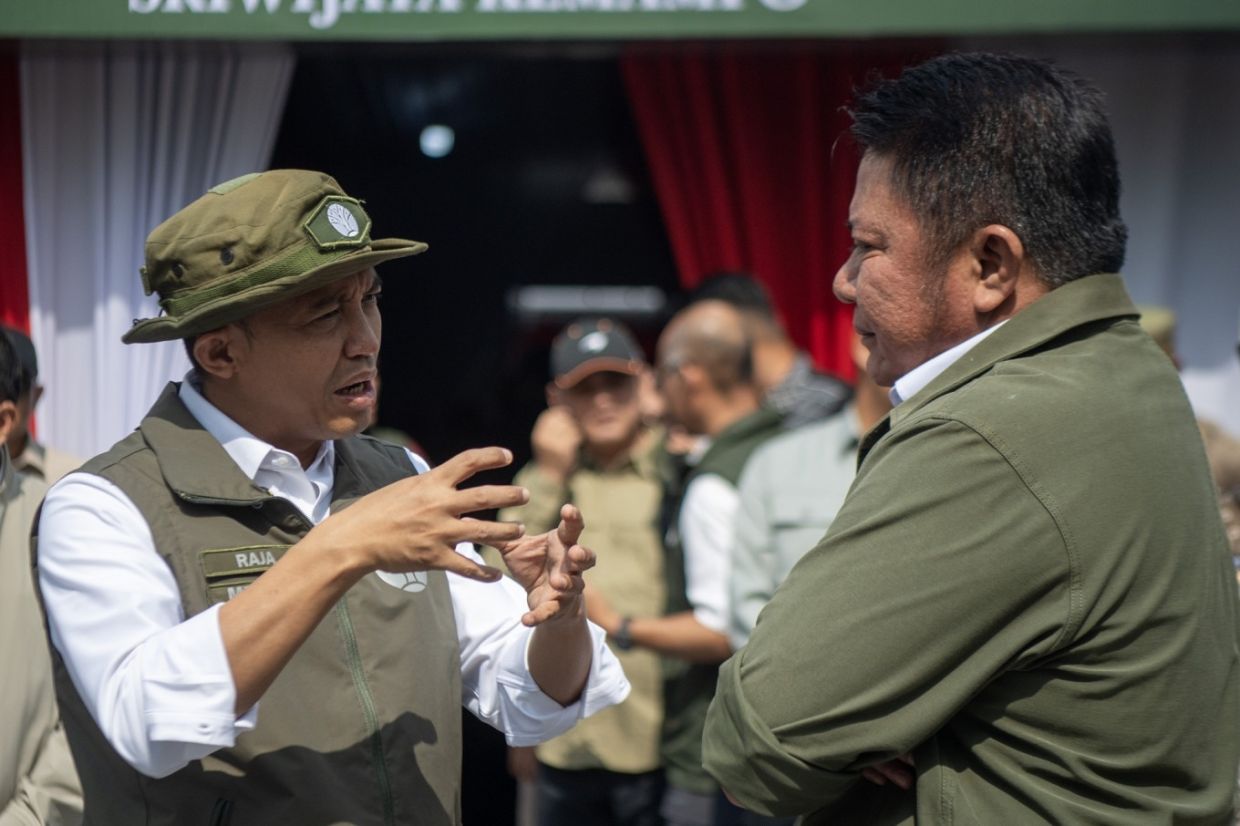
Indonesia's Corruption Eradication Commission (KPK) has reactivated its investigation into allegations that Forestry Minister Raja Juli Antoni failed to fully return bribes offered by a regional administrator with business before his ministry, marking a significant turn in a case that has already embroiled multiple officials across the archipelago. The antigraft agency's renewed scrutiny centres on discrepancies between the amount of illicit money the minister initially reported and what investigators believe he actually received from Suhardiman Amby, regent of Kuantan Singingi district in Riau province, during what authorities describe as a series of coordinated meetings spanning several months.
The foundation of the investigation traces back to an encounter on June 2 when the regent allegedly presented the minister with an envelope containing Singapore dollars following a gathering between the ministry and the Kuantan Singingi administration. According to KPK spokesperson Budi Prasetyo, the envelope held S$14,000 in Singaporean currency, equivalent to approximately US$10,919. The investigation also encompasses related kickbacks totalling S$12,500 that allegedly flowed to other forestry ministry personnel from various officials within the regency administration, suggesting a broader pattern of attempted influence rather than an isolated transaction.
Raja Juli's handling of the matter raises questions about the transparency expected from senior government officials. The minister reported the regent's purported bribe attempt to the KPK on July 3, nearly a month after the June 2 meeting, claiming he had rejected the offer outright. He stated that he subsequently returned the envelope on June 12, depositing it at the Kuantan Singingi Police headquarters, asserting that accepting such funds would violate his obligations as a public servant. However, the KPK's renewed investigation suggests investigators have identified gaps between the funds allegedly given and those supposedly returned, creating uncertainty about the completeness and authenticity of the minister's account.
The apparent connection between these financial transactions and pending regulatory decisions implicates the core responsibility of Raja Juli's office. The regency administration had submitted proposals to the forestry ministry requesting the reclassification of more than 1,800 hectares of limited production forest (HPT) in Kuantan Singingi, a designation that restricts land use to low-volume production activities for settlement or industrial development. This timing raises the question of whether the financial inducements were intended to influence the ministry's evaluation of these significant land-use conversion requests, a concern that gives the alleged bribery profound implications for environmental governance and resource management across Indonesia's regions.
Under Indonesian law, the regulatory framework for handling improper gifts received in connection with public office positions is explicit and unforgiving. Officials must report such gifts to the KPK within 30 days of receipt, not to local police authorities, a distinction that potentially affects how Raja Juli's actions are ultimately evaluated. The statutory penalties are severe: conviction on charges related to accepting illicit gifts can result in imprisonment for up to two decades and fines reaching Rp 1 billion (approximately US$55,867), reflecting the seriousness with which Indonesia's legal system treats corruption in the forestry sector, a domain particularly vulnerable to graft given the substantial economic value of natural resource concessions.
The investigation's scope has expanded as authorities have identified a pattern of engagement between the minister and the regent that extends beyond the single June meeting. KPK investigators have documented at least three separate encounters occurring in April, May, and June, though officials have not yet disclosed whether these meetings form part of a coordinated influence campaign or represent routine administrative coordination between the ministry and a regional authority. This timeline compression raises analytical questions about the nature and purpose of the repeated contact, particularly when considered alongside the financial transactions that allegedly accompanied at least one of these gatherings.
Suhardiman Amby, the regent at the centre of the investigation, carries his own substantial legal jeopardy. Already arrested and designated as a suspect by the KPK in late June, he faces separate corruption allegations involving kickbacks paid by the regency's secretary, Zulkarnain, in exchange for his appointment to a senior administrative position. The KPK subsequently broadened its investigation into Suhardiman's conduct to encompass the alleged bribe attempts directed at the forestry ministry regarding forest conversion permits, creating an interconnected web of suspected graft that extends across multiple layers of provincial governance. Notably, Suhardiman holds membership in President Prabowo Subianto's Gerindra Party, adding a political dimension to the corruption probe.
Raja Juli's position as secretary-general of the Indonesian Solidarity Party (PSI) has intensified scrutiny from legislative bodies and the broader public. Members of the House of Representatives Commission IV, the parliamentary body responsible for forestry oversight, moved to summon the minister for direct questioning regarding the allegations and his ministry's decision-making processes. However, the minister's absence from a scheduled July 14 meeting with Commission IV, attributed to attendance at an umrah (minor pilgrimage) journey, drew criticism from lawmakers and fuelled speculation about whether the absence represented a deliberate effort to avoid parliamentary accountability during a period of heightened public concern.
The forestry ministry has responded to the mounting pressure through official channels, issuing statements reaffirming its commitment to cooperating fully with the KPK's investigation and pledging to provide any requested documentation or information to support the antigraft agency's work. The ministry has also sought to contain the reputational damage by clarifying that it has not approved any forest classification changes in Kuantan Singingi to date, with the three most recent proposals from the regency either rejected or remaining under verification status. This defensive posture reflects the ministry's awareness that the allegations carry implications extending beyond individual officials to the institutional integrity of forestry governance itself.
For Malaysian observers and policymakers, the Indonesian case offers instructive lessons about the vulnerabilities that emerge when resource allocation decisions intersect with political networks and financial incentives. The sophistication of the alleged bribery scheme—involving graduated payments to multiple officials, coordination across several months, and connection to specific regulatory outcomes—illustrates the challenges facing anticorruption bodies across Southeast Asia. The KPK's decision to reopen and expand its investigation demonstrates institutional persistence, yet the delays in investigation and reporting raise questions about how quickly such mechanisms can respond when public officials may be involved, a concern relevant to neighbouring jurisdictions grappling with similar governance challenges and the balance between protecting official reputation and ensuring thorough accountability.

