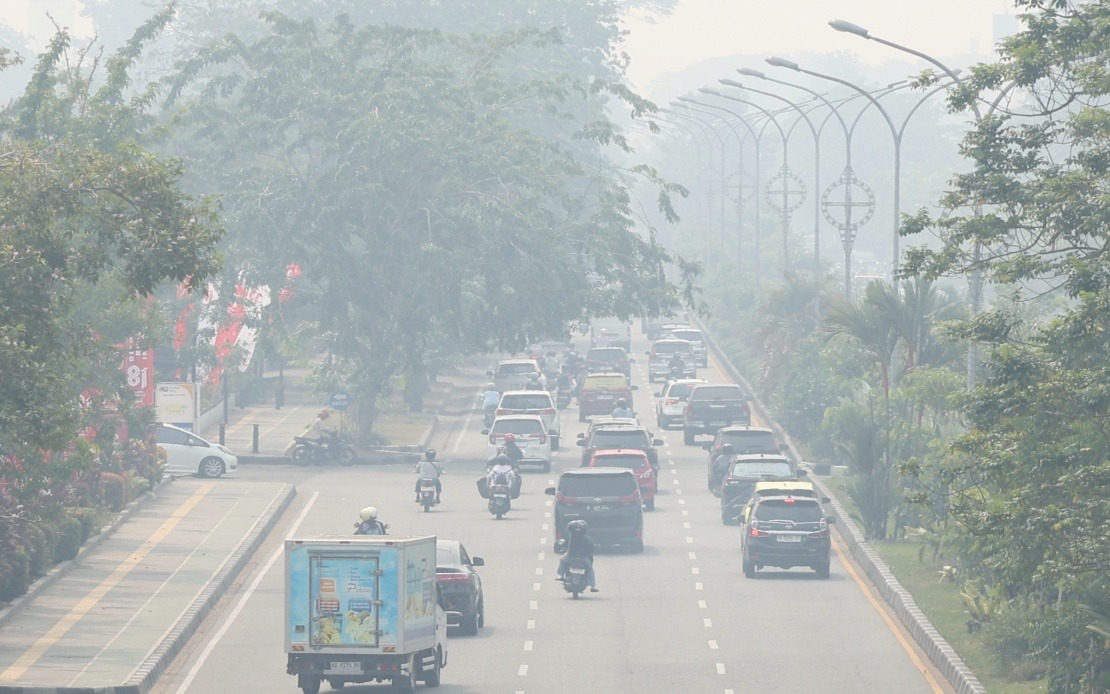
Indonesia is grappling with a severe air quality emergency stemming from extensive forest and land fires, with pollution readings in Central Kalimantan reaching alarming proportions. The Air Pollutant Index has surged to 573 in Jekan Raya, a subdistrict within Palangka Raya, according to measurements recorded by health authorities at 17 monitoring stations early Wednesday morning. This figure places the region firmly in the hazardous category, representing a public health threat of considerable magnitude that demands immediate intervention and public awareness.
The health crisis extends well beyond Central Kalimantan's borders. Muaro Jambi Regency in Jambi province has also recorded dangerously high pollution levels, reaching an API of 302, while multiple other locations across the Sumatran and Kalimantan landmass have registered very unhealthy air quality measurements between 201 and 300. These affected areas include Pelalawan in Riau, Penukal Abab Lematang Ilir and Ogan Ilir in South Sumatra, Southeast Pontianak in West Kalimantan, and Gunung Mas and Katingan in Central Kalimantan, painting a picture of widespread atmospheric degradation across Indonesia's most fire-prone regions.
In response to the deteriorating conditions, Indonesia's Health Ministry has tightened guidelines for public behaviour. According to Then Suyanti, the ministry's Environmental Health Director, residents in areas classified as hazardous must refrain entirely from outdoor activities to minimise exposure to airborne pollutants. For communities experiencing very unhealthy air quality, the advice is more cautious than prohibitive—authorities recommend limiting time spent outdoors, particularly for vulnerable populations including children, the elderly, and individuals with pre-existing respiratory conditions. This graduated approach reflects the ministry's attempt to balance public safety with the practical realities of daily life in affected regions.
Anticipating further deterioration, the Health Ministry is preparing comprehensive protective measures that could reshape educational routines across affected provinces. A circular issued by the ministry's secretary-general within the coming days is expected to authorise distance learning arrangements for schools operating in areas where air quality reaches hazardous thresholds. This contingency plan acknowledges the particular vulnerability of young students and the accumulated health risks of prolonged exposure to toxic air within school buildings, even those equipped with basic ventilation systems.
The geographical extent of the disaster underscores the transnational dimensions of Indonesia's fire problem. Approximately 3.4 million people across seven provinces have been touched by this crisis—residents of Riau, Jambi, and South Sumatra on the island of Sumatra, alongside those in West, Central, East, and South Kalimantan. All affected provinces have declared an emergency alert status, distinguishing this response from the more severe emergency response classification but nonetheless indicating the seriousness with which officials are treating the situation. The hope expressed by health authorities is that ongoing firefighting operations will gain momentum, gradually reducing the haze that blankets these regions.
Casualties remain limited but present. Agus Jamaludin, heading the Health Ministry's Health Crisis Centre, reported that 42 individuals have sustained minor injuries directly attributable to the fires. More concerning are two individuals in South Kalimantan who suffered severe burns and required hospitalisation, though no deaths have been recorded to date. Notably, no mass evacuations have been triggered, suggesting that while the air quality crisis is acute, the immediate threat to life and infrastructure remains manageable under current firefighting efforts. The ministry has positioned 321 health personnel across the affected provinces to respond to medical emergencies and provide preventive guidance.
Satellite monitoring data reveals the persistent and extensive nature of the fire threat across Indonesia's landscape. As of late Tuesday evening, the Forestry Ministry identified 805 high-confidence hotspots and 11,313 medium-confidence hotspots nationwide, indicating that fire activity remains widespread and potentially capable of generating new smoke plumes. Among the six priority provinces designated for intensive intervention, South Sumatra leads in high-confidence hotspots with 239 detections, followed by Central Kalimantan with 113, South Kalimantan with 89, and West Kalimantan with 86. Jambi and Riau recorded seven and one high-confidence hotspots respectively, suggesting that while fire activity is concentrated geographically, the risk spans the entire region.
The medium-confidence hotspots present an additional layer of concern, as these represent areas where satellite analysis indicates possible fire activity but with lower certainty levels. West Kalimantan dominates this category with 2,447 medium-confidence detections, trailed by Central Kalimantan's 2,168, South Sumatra's 1,161, and South Kalimantan's 710. These figures suggest that large tracts of forest and peatland remain vulnerable to ignition, whether through controlled burns that escape management or through deliberate clearing operations. Riau and Jambi recorded 199 and 197 medium-confidence hotspots respectively, indicating that the potential for escalation exists across virtually all priority provinces.
For Malaysian readers and policymakers, this Indonesian crisis carries direct implications. Cross-border haze from Indonesian fires regularly affects air quality in Peninsular Malaysia, Sabah, and Sarawak, particularly during peak burning seasons. The scale of current fires and their northward spread suggest that transnational air pollution episodes remain probable, potentially affecting tourism, investment decisions, and public health planning across Southeast Asia. The Indonesian government's declared emergency alert status and mobilisation of health personnel demonstrate institutional awareness of the crisis, yet the persistence of high and medium-confidence hotspots indicates that resolution remains distant and uncertain.

