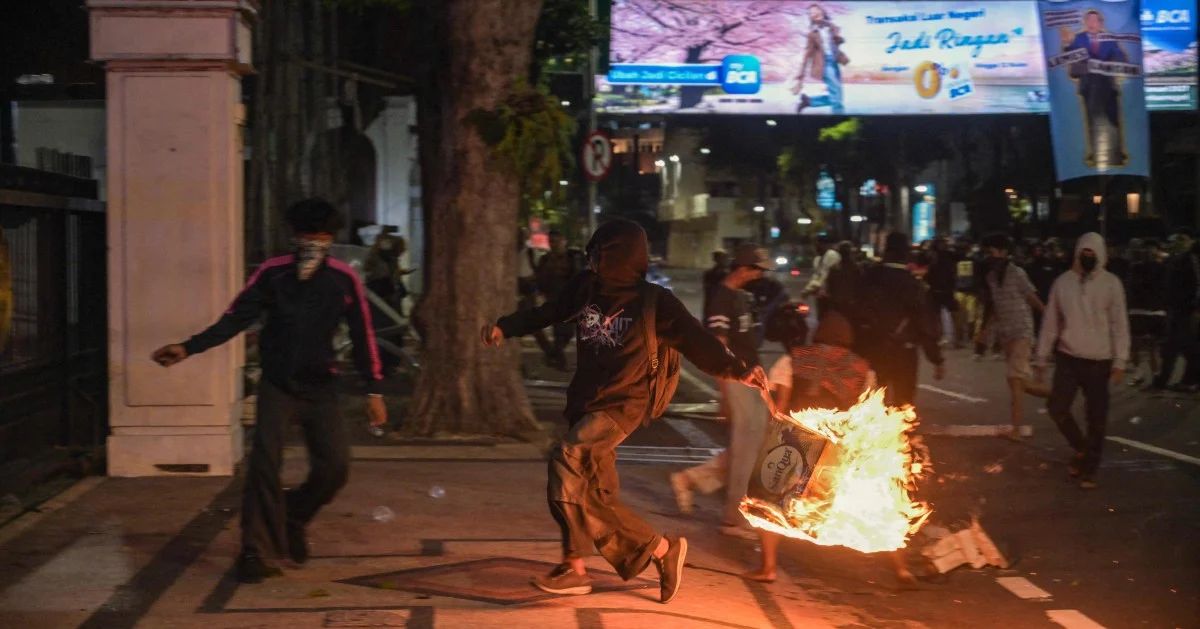
Indonesian police operations in Surabaya have resulted in the detention of numerous demonstrators who gathered to express opposition to the policies of President Prabowo Subianto, marking another instance of crowd management action in the country's second-largest metropolitan area. Human rights organizations documented the mass arrests on Saturday, adding to a growing record of law enforcement responses to public dissent across the Southeast Asian nation.
The scale and nature of the detentions underscore the volatile relationship between Indonesian authorities and sections of the public that harbour concerns about the new administration's direction. Surabaya, with its history as an industrial and political centre in East Java, has frequently served as a focal point for organised demonstrations reflecting broader discontent with national governance. The recent action reflects patterns observed elsewhere in Indonesia where security forces have adopted stricter approaches to managing public assembly and protest activity.
President Prabowo Subianto assumed office to lead a nation navigating complex economic and social challenges. His administration has pursued initiatives that have provoked opposition from various quarters including labour organisations, environmental advocates, and political opposition groups. The Surabaya demonstration represents part of a wider tapestry of civil resistance to specific government decisions and broader policy orientations that critics argue neglect vulnerable populations or environmental protection.
Human rights monitors expressed concern about the detention operations, viewing them as potentially restrictive of freedoms of expression and assembly that remain constitutionally protected under Indonesian law. Documentation by advocacy groups typically focuses on whether proper legal procedures were followed, whether detainees received access to legal counsel, and the duration of custody. These questions carry particular weight given Indonesia's international commitments to uphold civil liberties standards and its recent democratic trajectory.
The arrest operation in Surabaya reflects broader tensions within Indonesia regarding the appropriate balance between maintaining public order and permitting legitimate political expression. Unlike some regional counterparts with more authoritarian governance systems, Indonesia maintains institutional mechanisms for addressing citizen grievances through courts and formal political channels. However, implementation gaps between constitutional protections and street-level enforcement by security personnel remain persistent sources of friction.
For Malaysian observers, developments in Indonesia warrant close attention given the interconnected nature of Southeast Asian politics and the mutual concern both nations share regarding social stability and democratic processes. The manner in which Indonesia's security forces manage dissent carries implications for regional discussions about governance standards and the treatment of civil society across the broader ASEAN community. Malaysia's own experiences with protest management and police conduct in crowd situations provide points of comparison for understanding regional norms.
The detention of demonstrators also highlights questions about the composition of anti-government movements in Indonesia. Protests against President Prabowo's policies may encompass diverse constituencies ranging from organised political opposition to spontaneous grassroots mobilisation around specific grievances. Understanding these distinctions matters for assessing whether security responses target coordinated activities that authorities deem threatening or whether they extend to ordinary citizens exercising constitutional rights.
Organisations dedicated to monitoring human rights in Indonesia indicated they would conduct formal investigations into the circumstances surrounding each detention, including the legal basis cited by police and the treatment of those taken into custody. Such documentation serves important functions in holding security institutions accountable and establishing records that may inform future policy discussions or legal proceedings. The transparency provided by these monitoring efforts represents a crucial element of Indonesia's institutional checks on executive power.
The incident also raises questions about proportionality in law enforcement responses. Indonesian police commands in different regions may apply varying standards when determining whether assembly requires dispersal and whether participants should face detention. Consistency in applying legal standards across jurisdictions remains a challenge for any large police force managing dozens of protests simultaneously across an archipelago spanning thousands of kilometres.
Looking forward, the detention operations in Surabaya may influence protest behaviour and political engagement patterns as citizens calculate the personal costs of public demonstration. If detentions become routine responses to dissent, participation levels in future demonstrations may decline, potentially reducing visibility of public opinion on contested policy questions. Conversely, if civil society organisations successfully mobilise legal resources and public attention around the detentions, such episodes could galvanise broader movements for protecting protest rights.
The situation underscores Indonesia's ongoing navigation of tensions between security concerns and democratic freedoms. President Prabowo's administration faces the challenge of managing dissent while maintaining the democratic legitimacy that derives partly from permitting opposition expression. How authorities calibrate responses to future demonstrations will carry significance not only for Indonesian domestic politics but also for Southeast Asia's broader trajectory regarding governance and civil liberties.

