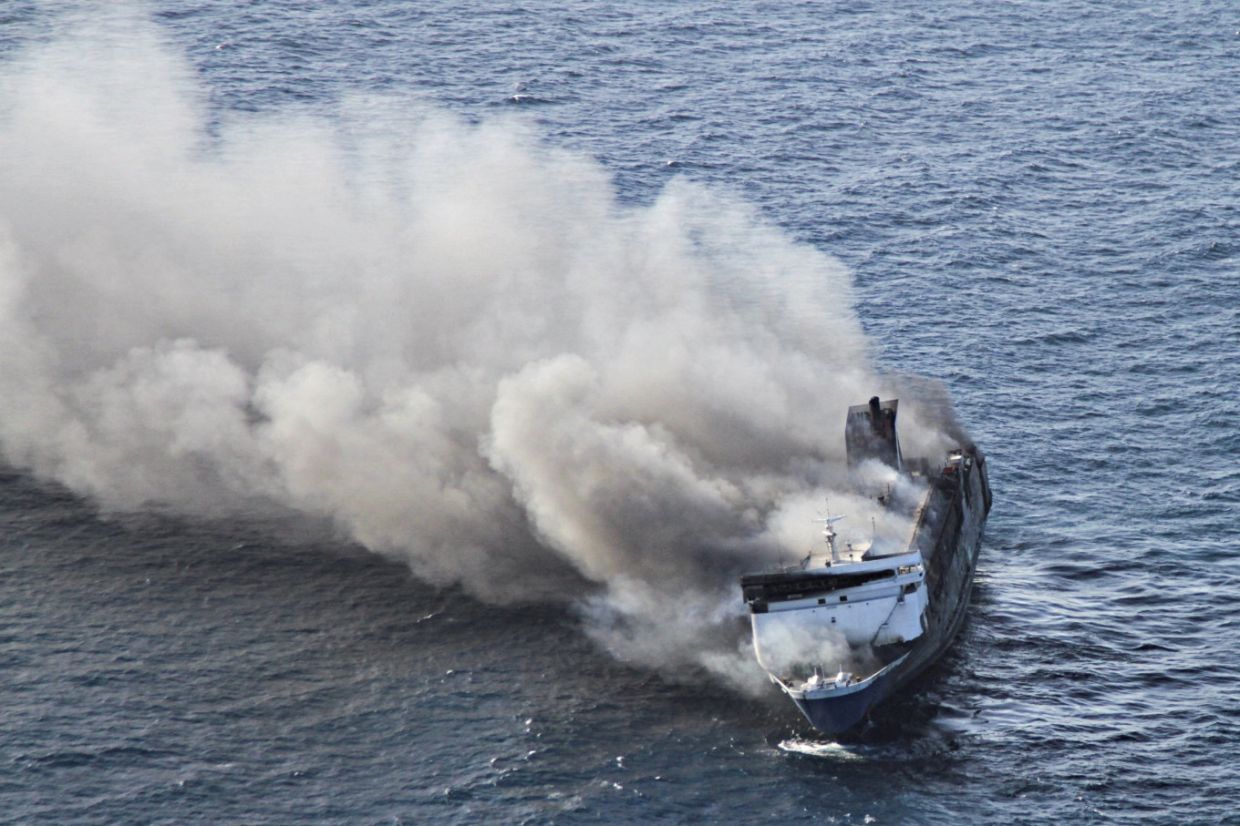
A catastrophic fire that engulfed the KMP Mutiara Sentosa II ferry on Sunday morning has thrust Indonesia's maritime safety practices under intense scrutiny, revealing what critics describe as fundamental weaknesses in how passenger vessels are regulated and monitored. The incident, which claimed at least five lives and left two people missing, occurred as the 160-metre-long roll-on/roll-off passenger ferry operated a commercial route between Surabaya in East Java and Makassar in South Sulawesi, carrying 236 passengers alongside 39 crew members when the blaze erupted around 6am on August 2.
The tragedy has exposed troubling gaps in emergency response capabilities aboard the vessel. Udin Karo Karo, representing the Makassar–Surabaya Truck Drivers Association, documented a chaotic evacuation where crew members apparently failed to coordinate rescue efforts, leaving passengers to fend for themselves as flames spread through the ship. Approximately 40 percent of the drivers aboard managed to escape by jumping overboard using only personal life jackets, a stark indication that the vessel lacked adequate lifeboat and inflatable rescue raft systems that should have been deployed during such emergencies. This pattern of inadequate emergency preparedness goes beyond a single operational lapse and suggests broader institutional problems with how safety drills and evacuation protocols are implemented in Indonesia's maritime industry.
What makes this incident particularly alarming is that it represents a recurring failure at the same shipping company. PT Atosim Lampung Pelayaran, the operator responsible for the KMP Mutiara Sentosa II, previously owned the KMP Mutiara Sentosa I, which caught fire near Madura in May 2017, also killing five people. The recurrence of similarly catastrophic incidents within the same fleet raises serious questions about whether the company implemented any meaningful safety improvements following the first disaster. Edi Priyanto, deputy chairman of the East Java Occupational Safety and Health Council, pointedly noted that maritime safety protocols demand continuous learning from accidents, yet the repetition of such incidents suggests these lessons have not been incorporated into actual operational practices.
Beyond the immediate technical failures, safety experts argue that the problem reflects deeper institutional issues within the company's organisational culture and risk management approach. Edi emphasised that investigating a fire incident cannot stop at identifying the initial ignition source; regulators must understand why the blaze spread so rapidly and whether the vessel's safety management systems functioned as designed. This systems-based perspective is crucial for understanding maritime safety in Southeast Asia, where rapid industrialisation and ferry expansion often outpace the development of corresponding safety infrastructure. The investigation must examine crew training standards, maintenance quality, adherence to safety procedures, and whether the company had genuinely embedded a culture prioritising passenger protection over operational convenience.
Transportation Minister Dudy Purwagandhi has committed to a comprehensive evaluation of PT Atosim Lampung Pelayaran pending findings from the National Transportation Safety Committee investigation. However, such promises have been made before without producing visible systemic change. The minister acknowledged that the company had been involved in at least two previous maritime accidents, yet apparently continued operating without the kind of intensive regulatory intervention that such a safety record would ordinarily trigger. This pattern suggests that Indonesia's maritime oversight mechanism operates reactively, responding to disasters after they occur rather than proactively preventing them through stringent pre-incident monitoring and enforcement.
The timing of this disaster is particularly significant as it arrives merely one month after another ferry tragedy near Selayar island in South Sulawesi, where a vessel carrying over 70 passengers sank with at least four confirmed dead and 14 still missing when search operations ceased. The clustering of major maritime incidents within a compressed timeframe indicates systemic problems extending far beyond any single company or vessel. For Malaysian readers, this should prompt consideration of how such incidents might affect regional maritime traffic and passenger confidence in Indonesian ferry services, particularly given Malaysia's reliance on maritime transport through shared Southeast Asian waters and the potential for safety failures to have cross-border implications.
Abdul Hadi, a member of the House of Representatives Commission V responsible for transportation oversight, has characterised the recurring ferry disasters as symptomatic of a maritime safety system requiring fundamental reorientation. He stressed that routine safety inspections and certification procedures have apparently become administrative formalities disconnected from genuine vessel seaworthiness assessments. When authorities issue seaworthiness certificates, these should represent evidence-based conclusions about a vessel's actual capability to safely transport passengers, not bureaucratic checkpoints easily satisfied through documentation compliance. The distinction between formal certification and substantive safety represents a critical divide in Indonesia's maritime regulation, with passenger lives dependent on which standard authorities actually enforce.
The investigation must examine whether the KMP Mutiara Sentosa II's fire suppression systems, structural fire barriers, and emergency communication equipment met Indonesian maritime standards, and crucially, whether regular inspections actually verified these systems remained functional. Malaysian maritime authorities and industry observers should note that inadequate oversight in neighbouring maritime jurisdictions can create competitive disadvantages for companies maintaining higher safety standards, potentially incentivising cost-cutting measures across the region. The incident underscores why ASEAN cooperation on maritime safety standards remains important, as incidents on Indonesian ferries can influence public perception and regulatory approaches across the region.
The crew's apparent failure to conduct proper emergency procedures suggests training and competency deficits that regulatory inspections should have identified beforehand. Maritime safety protocols demand that crews conduct regular evacuation drills, maintain and test emergency equipment, and understand their specific responsibilities during vessel emergencies. If these fundamental requirements were not being met, this indicates either that inspectors were not adequately verifying compliance or that PT Atosim Lampung Pelayaran was systematically circumventing safety requirements without facing meaningful consequences. Either scenario points to regulatory failure at the government level.
Transportation Minister Dudy's statement that evaluation of PT Atosim Lampung Pelayaran will follow investigation findings by the National Transportation Safety Committee reveals the sequential approach authorities intend to adopt. However, this measured response may prove inadequate given the company's established pattern of maritime disasters. Stronger jurisdictions might implement immediate operational restrictions or safety mandates for companies with multiple fatal incidents, using investigation timelines as an opportunity for enhanced oversight rather than a justification for delayed action. The Indonesian government faces pressure to demonstrate that it takes maritime safety seriously through swift, visible enforcement actions rather than waiting for formal investigation completion before addressing obvious systemic failures.
For passengers throughout Southeast Asia using Indonesian ferry services, this incident represents a sobering reminder that maritime safety depends on consistent implementation of international standards and genuine commitment to passenger protection. The victims of the KMP Mutiara Sentosa II fire and the earlier disasters demand more than investigations and promises; they require regulatory authorities to transform safety oversight from administrative routine into genuine protection mechanisms. As Abdul Hadi noted, passengers' lives cannot be sacrificed to negligence or weak supervision, yet the pattern evident in recent maritime incidents suggests that precisely this sacrifice has been occurring within Indonesia's ferry industry. The challenge ahead involves translating regulatory intent into operational reality, ensuring that seaworthiness certificates represent actual safety rather than procedural compliance, and holding operators accountable through meaningful consequences for safety failures.

