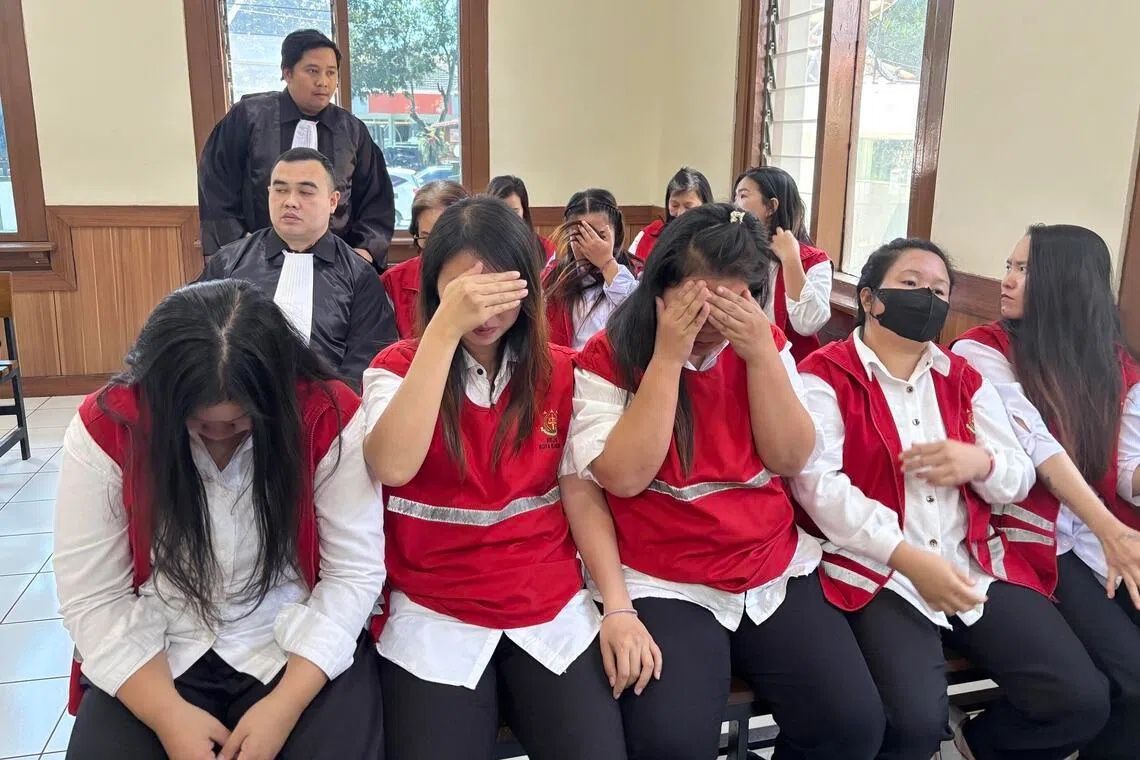
Indonesian prosecutors have sought sentences of up to 10 years imprisonment for members of a sophisticated baby trafficking network accused of selling at least 34 infants, including numerous cases involving buyers in Singapore, marking one of Southeast Asia's most significant human smuggling operations uncovered in recent times. The prosecution's demands, presented at Bandung District Court on 30 June, target 19 defendants—18 women and one man—who have been undergoing trial since April on charges connected to the alleged trafficking of newborns throughout 2023 and 2025. Among the cases documented, prosecutors determined that a minimum of 12 babies were transferred to Singapore, with individual infants commanding prices between 200 and 250 million rupiah, equivalent to approximately S$18,110 each.
Central to the investigation is 70-year-old Lie Siu Luan, known colloquially as Lily or Popo, whom law enforcement authorities have identified as the alleged mastermind orchestrating the entire operation. Court documents presented by prosecutors paint a picture of a coordinated criminal enterprise where Lie maintained control over multiple functions within the network, including sourcing infants, managing fraudulent documentation systems, and overseeing the logistics of international transfers. Her role as alleged ringleader places her at the apex of what appears to have been a well-organised criminal structure with defined responsibilities distributed across multiple participants in Indonesia and abroad.
Prosecutor Cucu Gantina formally requested that the court find Lie legally culpable of recruiting, harbouring, sending, transferring, or receiving persons for purposes of exploitation—charges that carry implications under Indonesia's human trafficking legislation. This framing suggests that prosecutors view the operation not merely as an adoption facilitation scheme but as deliberate human trafficking with predatory intent. The legal characterisation carries significant weight in determining sentencing outcomes and establishing the case's precedent value within Indonesia's criminal justice framework. For regional observers monitoring trafficking trends, the case demonstrates how organised syndicates exploit weaknesses in adoption verification systems across multiple jurisdictions.
Beyond Lie, prosecutors targeted specific roles within the hierarchy with differentiated sentencing recommendations. Astri Fitrinika, identified as a principal recruiter responsible for identifying and acquiring infants, faces a 10-year sentence demand matching Lie's potential punishment. Djaka Hamdani and another individual named Elin, both alleged recruiters, also confront identical maximum sentences. Lai Su Hua, accused of manufacturing false state documents purporting to satisfy adoption requirements, likewise faces a decade-long potential incarceration. The remaining 14 defendants, characterised as caretakers responsible for the daily supervision and welfare of trafficked infants during their time within the network, face recommended five-year sentences—a substantial reduction reflecting their perceived subordinate roles.
The emotional tenor of proceedings became apparent when both Lie and Astri wept upon hearing the prosecution's sentencing demands, a visible reaction that highlighted the gravity of accusations and their personal consequences. Lie's legal representative, Sendi Sanjaya, subsequently addressed the media, acknowledging respect for prosecutorial efforts while contesting specific elements of the charges. His defence strategy hinges upon challenging the exploitation element—contending that prosecution evidence fails to demonstrate that trafficked children suffered harmful circumstances. Sanjaya emphasised that infants transferred through the network maintained good health and remained traceable, arguments potentially resonating with judges assessing whether the prosecution has proven all required legal elements beyond reasonable doubt.
Astri's counsel, Hendri Samuel Tampubolon, adopted a distinct defensive posture, expressing disappointment that prosecutors sought identical sentences for his client as for Lie despite the pronounced hierarchical differences. This objection articulates a substantive legal argument about culpability gradation—the principle that criminal liability should reflect an individual's degree of responsibility and agency within a broader scheme. Tampubolon stressed that Astri operated under Lie's control and authority, positioning his client as a subordinate actor rather than a co-conspirator operating with equivalent autonomy. Additionally, he highlighted Astri's cooperation with investigative authorities, suggesting that prosecutors should have weighted this collaboration more substantially in their sentencing recommendations.
The network's discovery originated in July 2025 when West Java authorities apprehended approximately a dozen individuals following initial intelligence. The investigation gained critical momentum through a civilian report submitted by Dani Hidayat, a West Java resident whose wife was pregnant at the time he sought adoption information. Hidayat's participation in Facebook adoption groups exposed him to Astri's recruitment overtures, wherein she allegedly proposed compensation of 8 million rupiah for forthcoming offspring—a proposal revealing the syndicate's direct solicitation methodology. Such grassroots intelligence gathering underscores how trafficking networks exploit legitimate platforms for illicit recruitment, a challenge extending across Indonesia and throughout Southeast Asia where social media adoption communities lack rigorous verification mechanisms.
The transnational dimensions of this case have prompted formal diplomatic engagement. The Singapore and Indonesian governments announced on 9 January joint collaborative efforts addressing the case's cross-border implications, signalling recognition that effective trafficking suppression requires coordinated governmental action spanning multiple jurisdictions. During testimonies, Lie identified four Singaporean individuals—referred to as "Petter", "John", "Mr Tan", and "Mr Chew"—allegedly serving as adoption intermediaries facilitating connections between Indonesian suppliers and Singaporean buyers. These alleged Singapore-based facilitators represent critical components of the distribution network, suggesting the operation possessed international operational infrastructure extending beyond Indonesia's borders.
The case carries substantial implications for Malaysia and the broader Southeast Asian region, where adoption fraud and trafficking networks similarly exploit porous borders, inconsistent regulatory frameworks, and desperate populations vulnerable to manipulation. Malaysian authorities likely observe these proceedings with particular attention, given Malaysia's geographic position, significant migrant and vulnerable populations, and documented trafficking concerns. The sophistication demonstrated by this network—encompassing document falsification, international coordination, and systematic recruitment—reflects capabilities potentially replicated by competing criminal organisations throughout Southeast Asia. Furthermore, the case illustrates how legitimate adoption pathways become corrupted when regulatory oversight remains inadequate and demand for children from wealthier neighbouring states creates powerful economic incentives for trafficking.
Defence presentations are scheduled for the following week, providing the accused opportunities to contest prosecution allegations and present alternative explanations for their conduct. The defence strategy emerging from preliminary statements suggests reliance upon challenging whether specific legal elements—particularly exploitation—have been adequately established, and arguing that hierarchical distinctions warrant differentiated sentencing considerations. These proceedings will substantially influence future approaches to adoption-related trafficking cases throughout Indonesia and potentially establish important jurisprudential precedents regarding conspiracy liability, document falsification charges, and sentencing frameworks for human trafficking offences. The trial's outcome will have ramifications extending beyond its 19 defendants, shaping how authorities across Southeast Asia conceptualise and prosecute the intersection of fraudulent adoption schemes and criminal trafficking networks exploiting vulnerable infants and desperate families seeking children.

