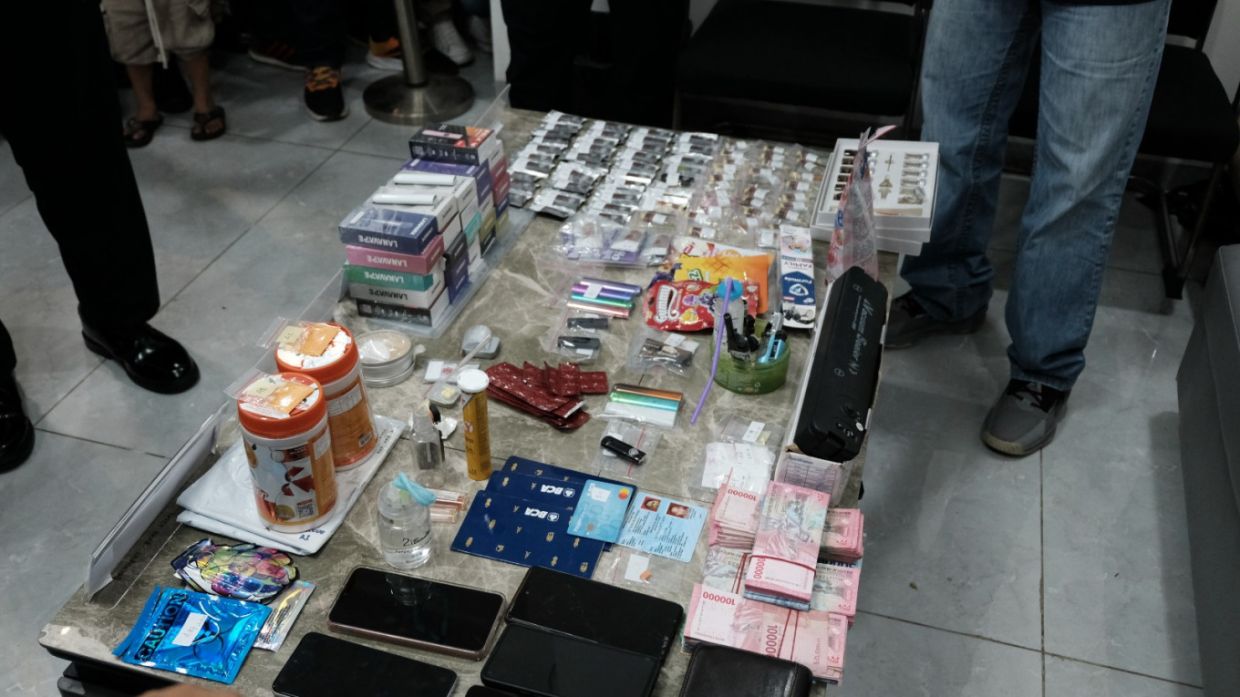
Indonesian law enforcement has broken up an organised international narcotics syndicate that operated between Malaysia and Indonesia's Riau Islands, arresting half a dozen suspects and uncovering a sophisticated smuggling operation that disguised controlled substances as everyday food products. The National Narcotics Agency (BNN) and the Customs and Excise Directorate General announced the coordinated crackdown on Friday, revealing the extent of the cross-border trafficking network that brought drugs through illegal seaports before repackaging and distributing them across Batam and surrounding areas.
The operation commenced when Customs officers working at Jakarta's Soekarno-Hatta International Airport intercepted a parcel from Malaysia that raised immediate suspicion. The package had been labelled innocuously as Orange Fiber Xtra food supplement, but laboratory analysis at the Customs and Excise Laboratory (BLBC) in the capital revealed a different story entirely. Testing confirmed the shipment contained 3,4-Methylenedioxymethamphetamine (MDMA), ketamine, and other controlled substances—triggering a joint investigation between Customs and the BNN that would ultimately uncover the broader network.
BNN deputy for enforcement Insp. Gen. Aswin Sipayung outlined the operation's scope during a press conference held at one of the crime scenes, a shophouse in the Sakura Garden area in Batu Ampar. The syndicate operated with striking professionalism, employing established smuggling routes, repackaging facilities, and distribution channels throughout the islands. Officers and Customs personnel conducted coordinated raids on four separate locations identified as key nodes in the network, with enforcement teams deploying specialised K-9 sniffer dogs to ensure thorough searches.
The breakthrough came when authorities arrested a suspect identified as BAP who had been assigned to collect the intercepted parcel at Batam on Wednesday. Under interrogation, BAP provided crucial intelligence that rapidly led to the apprehension of three additional suspects at a Baloi hotel—including an individual designated ED who had allegedly placed the original order, along with NC and TFS. This cascade of arrests proved instrumental in mapping the entire operational structure, as each detainee provided information leading to further discoveries.
Further searches of TFS's apartment in Teluk Tering and a boarding house in the Sakura Garden area where suspects AJ and DA were based yielded substantial quantities of controlled drugs and paraphernalia. Officers discovered dozens of electronic cigarette pods containing etomidate, methamphetamine in crystalline form, Happy Five tablets, and sachets of Happy Water beverages—each container carefully concealed within what appeared to be legitimate consumer products. The level of sophistication suggested the syndicate possessed considerable experience in evading detection.
The total haul represented a significant seizure by regional standards. Authorities confiscated 1,076.18 grams of MDMA, 50 grams of methamphetamine, 25.6 grams of ketamine powder, 86 Happy Five tablets, ten ecstasy pills, and 170 vape cartridges containing etomidate alongside 12 vials of the same substance weighing 226 grams combined. Officers also seized 88 vape devices, nine bongs used for drug consumption, three plastic sealing devices employed in repackaging operations, and six digital scales used for measuring and distributing substances.
Concurrently, Customs personnel at Batam Centre International Ferry Terminal intercepted a separate smuggling attempt. A Malaysian passenger identified as PS arriving from Stulang Laut International Ferry Terminal in Johor Bahru was discovered carrying 48 cartridges containing etomidate—providing evidence of ongoing attempts to move supplies across the border despite heightened vigilance. Investigators are now examining whether this incident connects to a drug manufacturing facility that BNN and Customs officers had recently raided in Batam, suggesting the possibility of a larger, more integrated production-and-distribution ecosystem.
Beyond the drug seizures, law enforcement confiscated four vehicles including a Toyota Alphard van, Toyota Agya hatchback, Chery sport utility vehicle, and two motorcycles—assets likely used in the distribution network and now subject to forfeiture proceedings. The scale of the operation extended well beyond the arrested individuals, with authorities actively hunting two Malaysian nationals identified as SL and WKC who have been designated as the syndicate's principal suppliers and placed on Indonesia's wanted list.
The syndicate's operational strategy proved both clever and typical of modern drug smuggling networks. By resealing confiscated drugs and etomidate cartridges within dried food packages and food supplement sachets using plastic sealing devices, operators created products that appeared commercially legitimate during cursory examination. This deception technique represents a recurring challenge for border enforcement agencies throughout Southeast Asia, where the volume of legitimate international commerce provides substantial cover for illicit shipments.
Batam Customs and Excise Office head Agung Widodo characterised the enforcement action as a logical extension of daily border monitoring operations that had evolved into a comprehensive investigation. Officials estimated that the operation prevented potential harm to approximately 6,770 individuals who might otherwise have accessed these substances, while forestalling state healthcare rehabilitation costs estimated at Rp10.8 billion (US$599,000). Such calculations reflect growing recognition among Indonesian authorities of the public health dimensions of narcotics enforcement, extending beyond simple drug seizure metrics.
The arrested suspects face severe charges under Indonesia's Law No. 35/2009 on Narcotics, specifically Article 114(2) in conjunction with Article 132(1) and Article 112(2), also with Article 132(1). These provisions carry penalties ranging from a minimum of five years' imprisonment to capital punishment, alongside potential fines reaching Rp10 billion. The severity of these charges underscores Indonesia's determination to prosecute large-scale trafficking operations with particular harshness, especially those involving cross-border coordination.
For Malaysian authorities and regional law enforcement, the case illustrates ongoing challenges posed by narcotics smuggling networks that exploit geographic proximity and maritime routes connecting Malaysia and Indonesia. The identification of Malaysian nationals as principal suppliers suggests that source-country interventions remain essential complements to border interdiction efforts. Coordinated action between Indonesian and Malaysian agencies at both the operational and strategic policy levels will prove critical to disrupting the supply chains that continue fuelling demand across the region.

