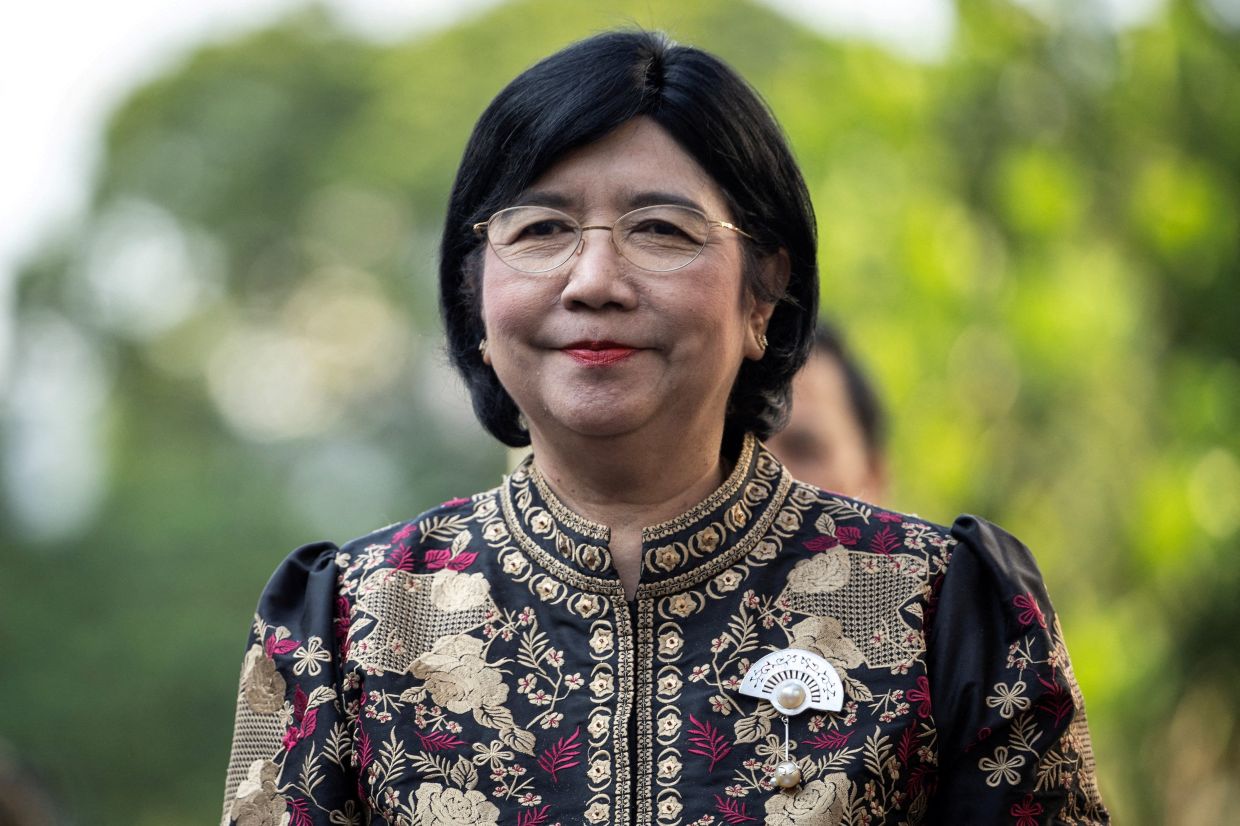
President Prabowo Subianto has put forward Destry Damayanti as Indonesia's sole nominee for the leadership of Bank Indonesia, the country's central banking authority, according to an announcement from the presidential office on Monday. The decision concludes a closely watched selection process that has captured the attention of international investors and market analysts tracking the direction of monetary policy in Southeast Asia's largest economy.
Destry's elevation marks the ascent of the institution's second-ranking executive, who has been managing the central bank's day-to-day operations in an acting capacity since the abrupt exit of Perry Warjiyo in late November. The 57-year-old has held the position of senior deputy governor at Bank Indonesia since 2019, making her the most senior official within the institution aside from the governor himself. Financial newswires had identified her as the leading contender for the position even before the formal announcement, based on consultations with sources familiar with the selection deliberations.
Market participants responded positively to word of the nomination, with the rupiah strengthening against the American dollar to levels not seen since mid-June. The currency's recovery reflects investor sentiment that the central bank's institutional continuity, combined with the appointment of a respected internal candidate, reduces uncertainty about future monetary direction. Financial markets have historically viewed leadership transitions at the monetary authority as potential flashpoints for volatility, particularly in emerging economies where political considerations can influence central banking decisions.
The path forward requires parliamentary ratification, with legislators from the governing coalition led by President Prabowo holding the authority to approve or reject the nomination within the coming month. Indonesia's parliament, dominated by Prabowo's broad coalition of parties, has maintained a tradition of supporting presidential nominees for the central bank post, with no rejection occurring since 2008. The political arithmetic suggests smooth passage of Destry's nomination, barring unforeseen complications.
Warjiyo's sudden resignation last month created a period of heightened market anxiety regarding Indonesia's macroeconomic outlook and governance. International investors, already cautious about the nation's fiscal trajectory and concerns about central bank autonomy, interpreted the departure as a potential warning sign. Additional pressures weighing on investor confidence include transparency challenges afflicting equity market operations, broader anxieties connected to regional geopolitical tensions including the conflict between Iran and its adversaries, and questions about whether the central bank can maintain its traditional independence while being expected to support the administration's ambitious development agenda.
The economic backdrop for this leadership transition remains challenging. Bank Indonesia confronts competing mandates that grew more complex under the previous administration. The central bank has already tightened monetary policy through rate increases totalling 100 basis points during the current year, implemented special hedging arrangements designed to support the rupiah's valuation, and deployed high-interest short-term securities to induce capital inflows that would stabilise the currency. These measures represent attempts to simultaneously manage currency depreciation and inflationary pressures while supporting broader economic objectives.
The Prabowo administration has signalled expectations that the central bank should facilitate higher economic growth, potentially accelerating expansion to 8 percent annually from the current trajectory of roughly 5 percent. Balancing such growth objectives against the traditional central banking responsibilities of price stability and exchange rate management will present significant challenges for Destry's tenure. The central bank's ability to maintain policy credibility while navigating these competing demands will substantially influence Indonesia's economic performance throughout the coming years.
Destry's appointment from within the institution could provide advantages for policy continuity and institutional knowledge, yet also raises questions about the central bank's independence from political pressure. Her long tenure within Bank Indonesia means she understands the technical complexities of monetary transmission mechanisms and financial market operations, potentially enabling more sophisticated policy responses to emerging challenges. However, observers will closely monitor whether an internal promotion translates to greater deference to presidential economic priorities or reinforces institutional autonomy.
For regional markets and foreign investors with exposure to Indonesia, the leadership succession carries implications extending beyond Jakarta. Bank Indonesia's policy decisions ripple through currency markets across Southeast Asia and influence capital flows throughout the broader emerging market complex. A central bank perceived as maintaining strong institutional standards and independence can attract stable foreign investment, while any perception of political capture tends to produce capital outflows and currency weakness. The coming months will reveal how Destry navigates these institutional pressures.

