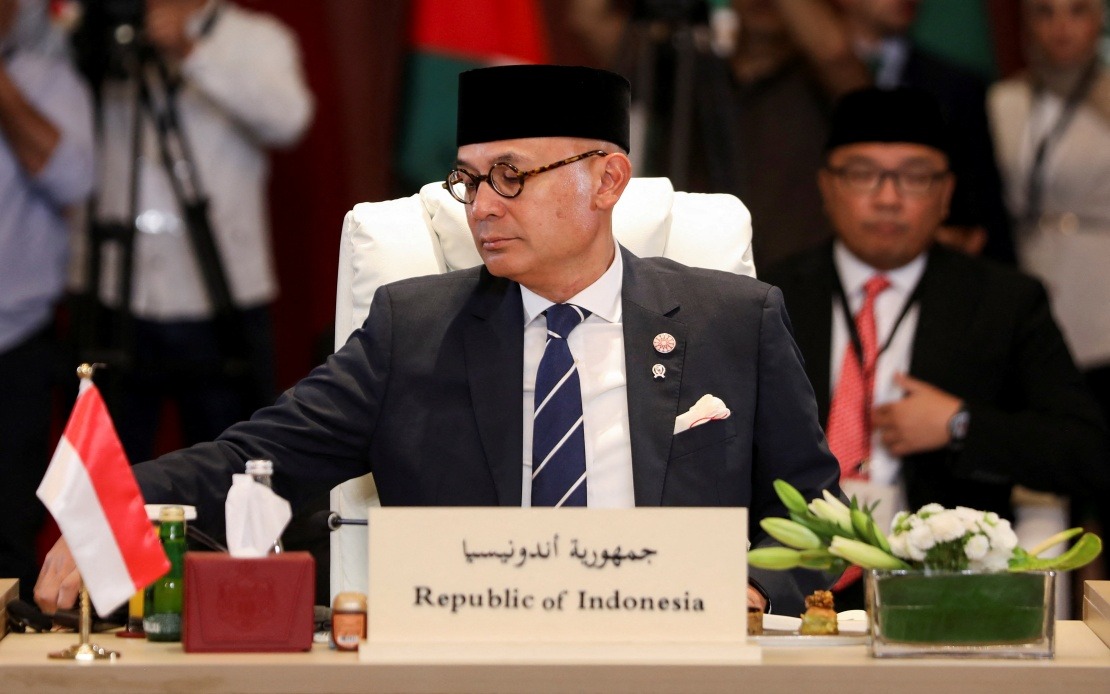
Indonesia is pressing the international community to abandon piecemeal diplomatic efforts and instead forge a cohesive global coalition backing the Palestinian cause. Speaking at the Ministerial Meeting on Jerusalem in Amman, Jordan, Deputy Foreign Minister Arrmanatha Nasir delivered a forceful message: the world's approach to Palestinian issues has become fractured, and this disunity is precisely what allows violations to persist unchecked. He underscored that the Palestinian struggle transcends religious boundaries and should command universal support grounded in international law and shared values.
Nasir, representing Foreign Minister Sugiono at the Wednesday gathering, articulated a central strategic concern that carries weight across Southeast Asia and the broader Global South. Division among nations, he stressed, creates openings that Israel consistently exploits to advance its position without facing coordinated consequences. This framing rejects what Indonesia views as an outdated, reactive posture in which countries respond individually to specific incidents rather than presenting a unified diplomatic front. By dismantling such fragmentation, Indonesia argues, the international community could exert meaningful pressure to curb what Jakarta characterises as systematic violations.
To translate this vision into action, Indonesia put forward a comprehensive five-point framework aimed at building sustainable support for Palestinian statehood and rights. The first pillar involves establishing a unified international strategy rooted in collective resolve rather than scattered bilateral initiatives. The second emphasises strict adherence to international legal standards and compliance with International Court of Justice rulings, positioning law as the foundation for resolving disputes. The third calls for expanding formal diplomatic recognition of Palestine globally, thereby isolating those who resist this step and incrementally shifting the status quo.
The remaining two elements address specific concerns that animate diplomatic engagement across the Muslim world and beyond. Indonesia proposed intensifying protection efforts for the Al Aqsa Mosque and the broader Jerusalem holy sites, recognising their symbolic and spiritual centrality to millions. Simultaneously, it advocated for concerted international support for Gaza's reconstruction, acknowledging the humanitarian imperative to address the territory's devastation. The package also includes promoting Palestinian national unity and safeguarding the UN Relief and Works Agency for Palestine Refugees (UNRWA), institutions that have become geopolitical flashpoints.
Nasir's remarks reflected a sobering assessment of how dramatically the West Asian geopolitical landscape has shifted. He identified several transformative developments that, in Indonesia's view, demand urgent international recalibration. Proliferating Israeli settlements in the West Bank, ongoing military operations spanning Gaza, Syria and Lebanon, and escalating US-Iran tensions have collectively redrawn regional dynamics in ways that outpace existing diplomatic frameworks. Indonesia's position is that these interconnected crises reinforce the necessity for coordinated international responses rather than isolated bilateral negotiations that ignore the broader strategic picture.
Jakarta also reaffirmed its unwavering support for the Hashemite Custodianship—Jordan's historical guardianship role over Islamic holy sites in Jerusalem—and reiterated its backing for Palestinian independence aligned with international legal norms. This dual emphasis reflects Indonesia's desire to anchor its advocacy in both Islamic tradition and universal principles, thereby broadening its appeal beyond the Organisation of Islamic Cooperation (OIC) to secular democracies and non-aligned nations. By framing Palestinian rights as a matter of universal law rather than religious identity alone, Indonesia positions itself as a bridge between different constituencies with stakes in resolving the conflict.
The Amman ministerial was itself significant in demonstrating the breadth of international concern. Malaysia, Algeria, Saudi Arabia, Iraq, Egypt, Türkiye, Tunisia, Somalia, Pakistan, Morocco, Palestine, and Qatar convened alongside the League of Arab States to address what they view as a crisis of international law and regional stability. The gathering represented one of the clearest recent instances of concerted diplomatic mobilisation among Muslim-majority states and Arab nations on this issue, even as it acknowledged ongoing divisions over tactics and priorities.
The joint statement emerging from the meeting encapsulated shared positions while advancing specific diplomatic initiatives. Participating nations collectively rejected what they termed unilateral relocations of diplomatic missions to Jerusalem as breaches of international law, a direct reference to the United States' and a handful of other countries' embassy moves. Crucially, they committed to launching a coordinated media and communication campaign aimed at educating global audiences about Israeli actions and their destabilising effects on regional peace. This recognises that diplomatic victories increasingly depend on shifting international public opinion, particularly in Western democracies where internal politics shape foreign policy.
For Malaysian readers, Indonesia's initiative carries particular relevance given Malaysia's own prominent role in Palestinian advocacy and its status as a regional diplomatic heavyweight. The call for unified strategy reflects broader frustrations among Southeast Asian and OIC nations with the perceived ineffectiveness of fragmented appeals. Indonesia's emphasis on international law and ICJ rulings also resonates with Malaysia's consistent positioning of itself as a champion of multilateral institutions and rules-based order. When Jakarta advocates for coordinated global responses, it implicitly invites other regional powers to pool diplomatic resources rather than conducting parallel initiatives.
The proposal to strengthen Palestinian institutions in Jerusalem while rejecting unilateral diplomatic moves represents a carefully calibrated diplomatic stance. Rather than calling for reversal of already-completed embassy relocations, Indonesia and its partners are attempting to prevent further moves and legitimise alternative governance structures in Palestinian territories. This pragmatic approach acknowledges geopolitical realities while maintaining principled opposition to what they view as illegal actions. The emphasis on institutional strengthening also redirects attention toward state-building and institution-development rather than simply reactive condemnation.
Indonesia's five-point agenda ultimately represents an attempt to translate moral and legal arguments into concrete diplomatic mechanisms that might shift international behaviour. By proposing specific measures rather than general appeals, Jakarta signals seriousness about implementation and accountability. The focus on media campaigns and public diplomacy acknowledges that winning international coalitions increasingly requires mobilising domestic constituencies in key countries, particularly in the West where political support for Israel remains substantial. Indonesia's initiative thus aims to reshape the international conversation around Palestine through systematic, coordinated effort rather than episodic rhetorical flourishes.
Looking ahead, the viability of Indonesia's coalition-building will depend on sustained commitment from participating nations and their ability to translate diplomatic statements into material support and coordinated voting patterns in international forums. The Amman meeting demonstrated that broad agreement exists on principles, but converting this into effective pressure requires mechanisms for accountability and burden-sharing. Indonesia's role as a facilitator and strategic voice within this constellation of nations will be crucial in maintaining momentum and translating rhetoric into substantive policy shifts that tangibly affect developments on the ground.

