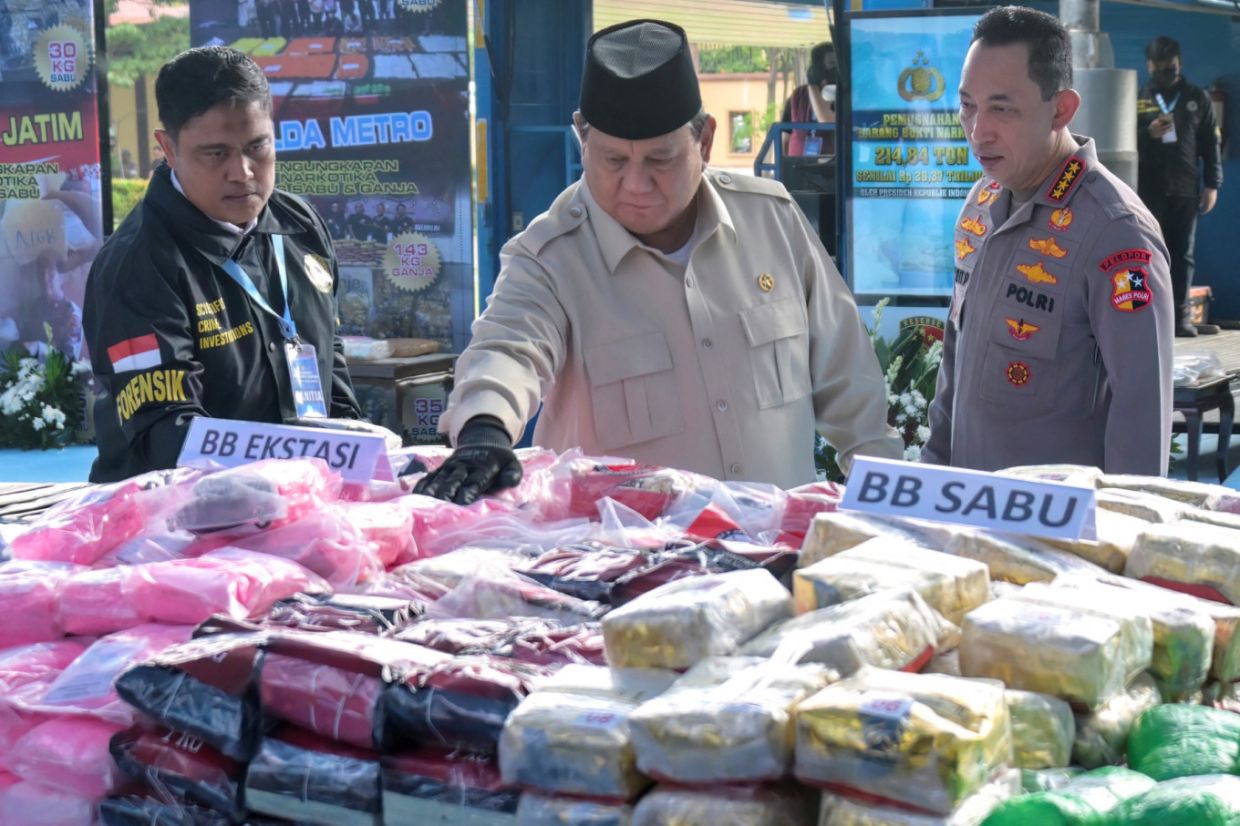
Indonesian authorities have completed one of their most substantial drug seizures in recent years, intercepting a vessel carrying 2.6 tonnes of liquid methamphetamine concealed in water containers near the northern coast of Sumatra. The National Narcotics Agency, operating in conjunction with customs personnel, apprehended the MV Rain Maker, a Tanzanian-flagged ship operating under an assumed identity, off Bengkalis in Riau province on Monday evening following an intelligence-led interception. The operation resulted in the arrest of all 10 crew members aboard the vessel, each holding Myanmar nationality, and represents a significant blow against trafficking networks utilising maritime routes through Southeast Asian waters.
The discovery unfolded after the narcotics agency received prior intelligence suggesting that a vessel departing from Sarawak, Malaysia and traversing the Andaman Sea posed a potential drug smuggling threat to Indonesian territory. This advance warning proved crucial in positioning enforcement teams along the transit corridor. When officials boarded and inspected the MV Rain Maker, they uncovered the contraband methodically packaged within eight water barrels and an additional water tank, a concealment method designed to evade visual detection whilst exploiting the vessel's legitimate need to carry water supplies. Roy Hardi Siahaan, a senior official with the narcotics agency, provided details of the seizure, confirming that the confiscated substance represented liquid methamphetamine in its chemical form prior to crystallisation.
Beyond the primary narcotics discovery, sniffer dogs deployed during the vessel inspection identified an additional cache comprising more than 1.5 million contraband cigarettes stored in the ship's hold. This secondary find underscores the multifaceted nature of organised smuggling operations, which frequently combine illicit drug trafficking with other prohibited goods to maximise profit margins and distribute enforcement attention. The simultaneous trafficking of multiple controlled substances and counterfeit products reflects the sophisticated coordination within transnational criminal networks operating throughout the region.
The August seizure joins a pattern of significant interdictions in Indonesian waters during the month, with authorities demonstrating enhanced operational capability across the archipelago's maritime domain. Earlier this month, on August 8, Indonesian enforcement personnel stopped another Tanzanian-flagged vessel operating in the waters surrounding the Riau Islands, adjacent to Singapore's maritime boundary. That interception resulted in the confiscation of 1.3 tonnes of ketamine, a dissociative anaesthetic increasingly prevalent in recreational drug markets throughout Asia. The crew apprehended in that separate operation comprised seven Myanmar nationals and one individual from Taiwan, demonstrating the transnational composition typical of major trafficking ventures.
The concentration of major drug busts involving Tanzanian-flagged vessels within a single month raises questions about potential flag-state vulnerabilities and the exploitation of particular maritime registries by smuggling organisations. Tanzania's shipping registry, like those of several other developing nations, has faced international scrutiny regarding enforcement standards and susceptibility to vessel registration fraud. Criminal networks systematically identify jurisdictions with weaker oversight mechanisms, registering vessels under flags of convenience whilst operating under false identities and altering vessel names to complicate tracking by maritime authorities.
Indonesia's geographic position at the convergence of major maritime trading lanes and its vast territorial waters create both vulnerability to drug trafficking and opportunity for enforcement operations. The country serves as a transit point, distribution hub, and consumption market for narcotics flowing from production centres in the Golden Triangle and beyond. The Andaman Sea and surrounding waters function as critical arteries in the trafficking network, offering relatively open passages compared to land borders and proximate to primary production regions in Myanmar and beyond. Recent seizures indicate that enforcement agencies have improved intelligence gathering and interception capabilities, enabling them to position assets effectively along likely transit routes.
The legislative framework governing drug offences in Indonesia represents among the world's most severe, with trafficking offences carrying potential capital punishment. Despite maintaining this stringent statutory regime, Indonesian authorities have observed a moratorium on executions spanning several years, reflecting evolving international human rights considerations and domestic penal policy debates. The moratorium coexists alongside the retention of death penalty provisions, creating a legal environment where traffickers face potential execution whilst de facto benefiting from governmental restraint in implementing those sentences. This tension between statute and practice generates ongoing discussion regarding deterrent effectiveness and consistency in applying the law.
The volume of methamphetamine intercepted—2.6 tonnes in liquid form—represents a quantity with substantial street value and capacity to supply significant downstream distribution networks. When converted to crystalline form through chemical processing, this quantity would yield product sufficient to supply regional markets across multiple countries for extended periods. The seizure thus prevents substantial quantities of the drug from reaching consumers throughout Southeast Asia, including Malaysia, Singapore, and Thailand, where methamphetamine consumption represents an escalating public health and social policy challenge.
Myanmar nationals predominate among arrested crew members across recent interdictions, reflecting the geographic proximity of Myanmar to maritime trafficking routes and the role of Burmese ports and territorial waters in facilitating regional drug flows. The military coup and subsequent state dysfunction in Myanmar have complicated international narcotics enforcement cooperation and created governance vacuums exploited by trafficking organisations. Border regions, particularly those administered by autonomous armed groups or quasi-independent militia forces, operate beyond effective state control and provide sanctuary for processing facilities and transshipment operations.
For Malaysian readers and regional observers, these seizures carry significance extending beyond immediate law enforcement metrics. The Sarawak origin point mentioned in intelligence assessments indicates that Malaysian territory remains implicated in trafficking logistics, whether as a departure point, transshipment location, or route utilised by trafficking networks. Enhanced cross-border coordination between Malaysian and Indonesian authorities, alongside intelligence sharing regarding vessel movements and suspicious commercial activities, proves essential for disrupting trafficking patterns. Regional cooperation mechanisms including bilateral agreements and multilateral maritime surveillance initiatives require sustained investment and political commitment to address the transnational dimensions of drug smuggling.
The August busts demonstrate that despite resource constraints and geographic challenges, Indonesian authorities maintain capacity to conduct major enforcement operations. Yet the regularity of significant seizures also underscores the vastness of trafficking flows and the persistence of criminal networks in adapting methods and routes. Sustainable reduction in drug availability requires simultaneous attention to supply-side enforcement, demand-reduction initiatives, treatment and rehabilitation infrastructure, and international cooperation addressing source countries and precursor chemical supplies. The seizures provide temporary disruption but represent snapshots within ongoing contests between law enforcement and organised crime networks commanding substantial resources and operational sophistication.

