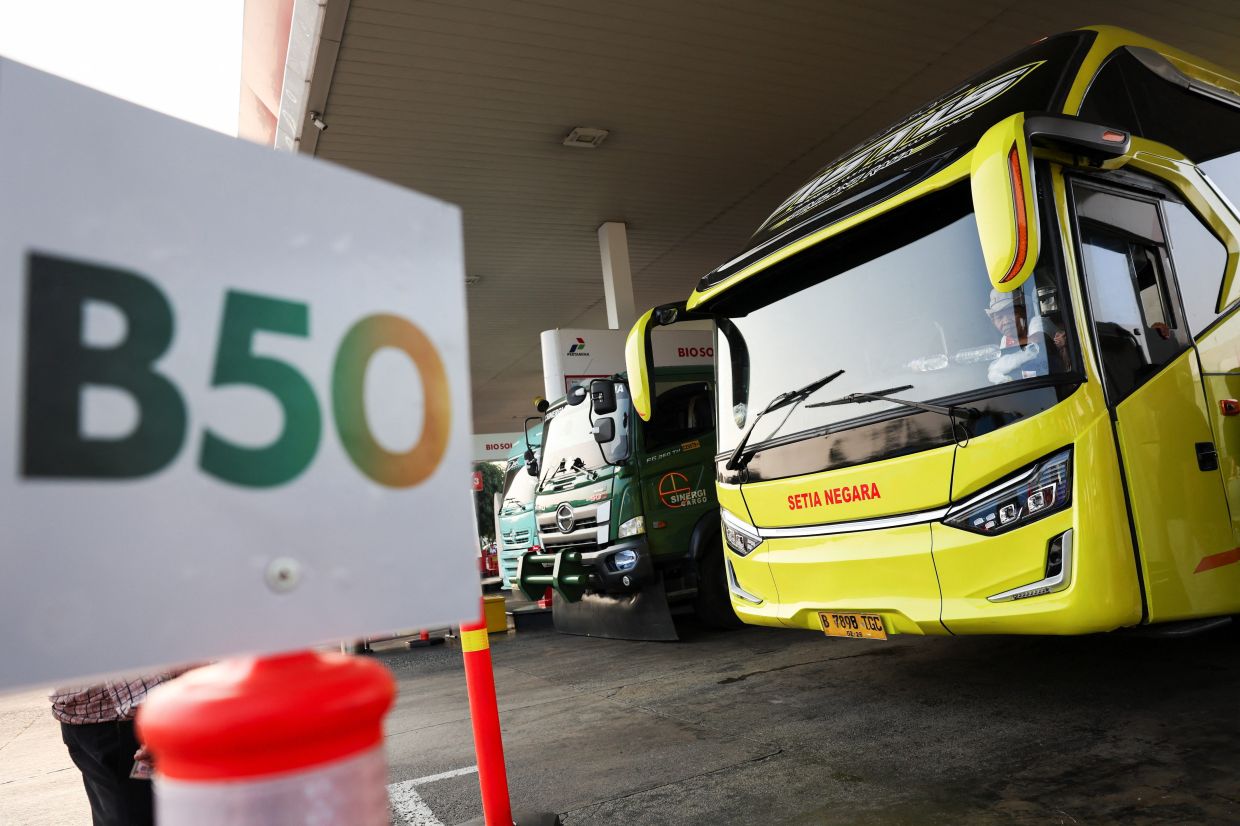
Indonesia has embarked on an ambitious expansion of its mandatory biodiesel blending programme, elevating the palm oil content threshold to 50% in a move designed to deepen the country's control over global fuel markets while simultaneously reducing its exposure to volatile international diesel prices. Energy Minister Bahlil Lahadalia announced the escalation during a high-profile ceremony in Karawang, West Java, underscoring government commitment to what officials characterise as both an economic and environmental initiative. The shift from the existing B40 standard—which mandates 40% palm oil-based fuel blending—represents a significant intensification of a policy that has already established Indonesia as a dominant player in the biodiesel sector.
The numerical implications of this upgrade are substantial for the palm oil industry. Crude palm oil consumption is projected to rise to between 16.3 million and 17 million metric tons from the current 15.2 million tons annually, a modest but meaningful increase that reflects the inherent constraints in blending higher concentrations of the commodity into diesel supplies. This expansion will occur across the archipelago's extensive plantation network, where palm oil production has long anchored the nation's agricultural economy and export revenues. The figures underscore both the centrality of palm oil to Indonesia's energy transition strategy and the government's determination to maximise domestic utilisation of its most abundant commodity.
The financial calculus propelling the B50 mandate reveals the substantial economic pressures driving energy policy in Jakarta. Officials project that raising the biodiesel blend this year alone will trim the country's diesel import bill by 170 trillion rupiah, equivalent to approximately $9.41 billion—a striking sum that illustrates how heavily Indonesia depends on imported fuel despite its vast natural resources. Comparative data show that 2025 saw projected savings of some 133 trillion rupiah, indicating that the acceleration to B50 yields nearly 30 percent greater savings annually. For a nation perpetually concerned with managing its current account and capital outflows, such figures carry outsized political weight and explain why senior leadership, including President Prabowo Subianto, has publicly championed the initiative.
President Prabowo's involvement in the Karawang ceremony and his explicit endorsement of even more aggressive targets point to the policy's elevation beyond mere technocratic adjustment. He revealed that he had initially advocated for a B100 mandate—requiring 100% palm oil-based diesel—before accepting ministerial advice that 50% blending would suffice to eliminate imports entirely. More significantly, Prabowo indicated his intention to pursue a 60% blend in the medium term, suggesting that the current B50 phase represents merely an interim step in a longer-term vision. Such political commitment from the presidency ensures that biodiesel expansion will remain a priority regardless of sectoral resistance or international environmental criticism.
The transition mechanics reveal logistical complexity underlying what appears a straightforward regulatory adjustment. The programme requires deployment of between 16.7 million and 18 million kilolitres of fatty acid methyl ester (FAME), the chemical compound derived from palm oil that constitutes the active biodiesel ingredient. Under the previous B40 framework, Indonesia allocated 15.64 million kilolitres annually, representing a 4.68% increase over 2024 consumption of 14.94 million kilolitres. The new quotas represent a jump of approximately 6 to 15 percent, depending on final allocations, necessitating careful coordination across refineries, distribution networks, and retail fuel stations throughout the sprawling archipelago.
Critically, the Energy Ministry has not yet formally issued supplementary quotas for the B50 programme, leaving businesses in a state of uncertainty as implementation deadlines approach. Existing B40 stocks must be depleted by end-September, creating a narrow window for industry adjustment and potential supply chain friction. This administrative lag between policy announcement and quota allocation reflects the complexities of managing transition in a sector where refineries, traders, and retailers must synchronise operations across regions with variable infrastructure capacity. Malaysian industry observers should note that regional supply chains may experience volatility as Indonesian producers reorient palm oil volumes toward domestic biodiesel commitments rather than traditional export markets.
The global positioning implicit in Indonesia's biodiesel expansion warrants careful consideration. President Prabowo framed the initiative as part of Indonesia's leadership in international efforts to reduce carbon emissions, effectively claiming environmental legitimacy for a policy whose primary drivers are economic self-interest and import substitution. This framing contests growing international criticism of palm oil expansion, particularly regarding deforestation and biodiversity loss in Southeast Asia. By positioning biodiesel as climate action, Indonesian officials reshape the narrative around palm cultivation, complicating Western environmental critiques that have long targeted the sector.
For Malaysia, Indonesia's aggressive biodiesel strategy carries significant implications. As the world's second-largest palm oil producer, Malaysia has pursued its own biofuel mandates with considerably less intensity and political momentum. Indonesia's willingness to consume domestically at higher blend rates reduces export availability and potentially elevates global palm oil prices—a development that benefits Malaysian producers but also reflects Indonesia's strategic choice to prioritise energy security and import reduction over export revenues. This reorientation reflects Jakarta's longer-term calculation that controlling its energy destiny outweighs short-term commodity export benefits.
The research agenda outlined by Energy Minister Bahlil—including study of a 60% blend—suggests that the B50 milestone is not a plateau but rather an intermediate target within a broader trajectory. Government commitment to advancing beyond current thresholds indicates that policy continuity across administrations is likely, barring unforeseen technical or economic obstacles. Investors and traders throughout Southeast Asia should monitor both the formal quota allocation process and the government's research outcomes, as these will signal whether the B50 target represents a durable policy framework or merely a stepping stone toward even more expansionary biodiesel mandates.
The broader significance of Indonesia's biodiesel push extends beyond immediate fuel economics to encompass strategic autonomy and regional energy leadership. By substantially reducing diesel imports, Indonesia decreases vulnerability to global market disruptions and currency fluctuations that historically constrain developing economies. The initiative simultaneously cements palm oil's role in Indonesia's economic and energy architecture for decades to come, shaping land-use patterns, investment flows, and political economy dynamics across the archipelago. For regional stakeholders navigating energy transitions, Indonesia's commitment to domestically utilised palm oil biodiesel offers both a cautionary tale about the persistence of commodity-dependent development strategies and a model of how nationalist resource policies interact with global sustainability imperatives.

