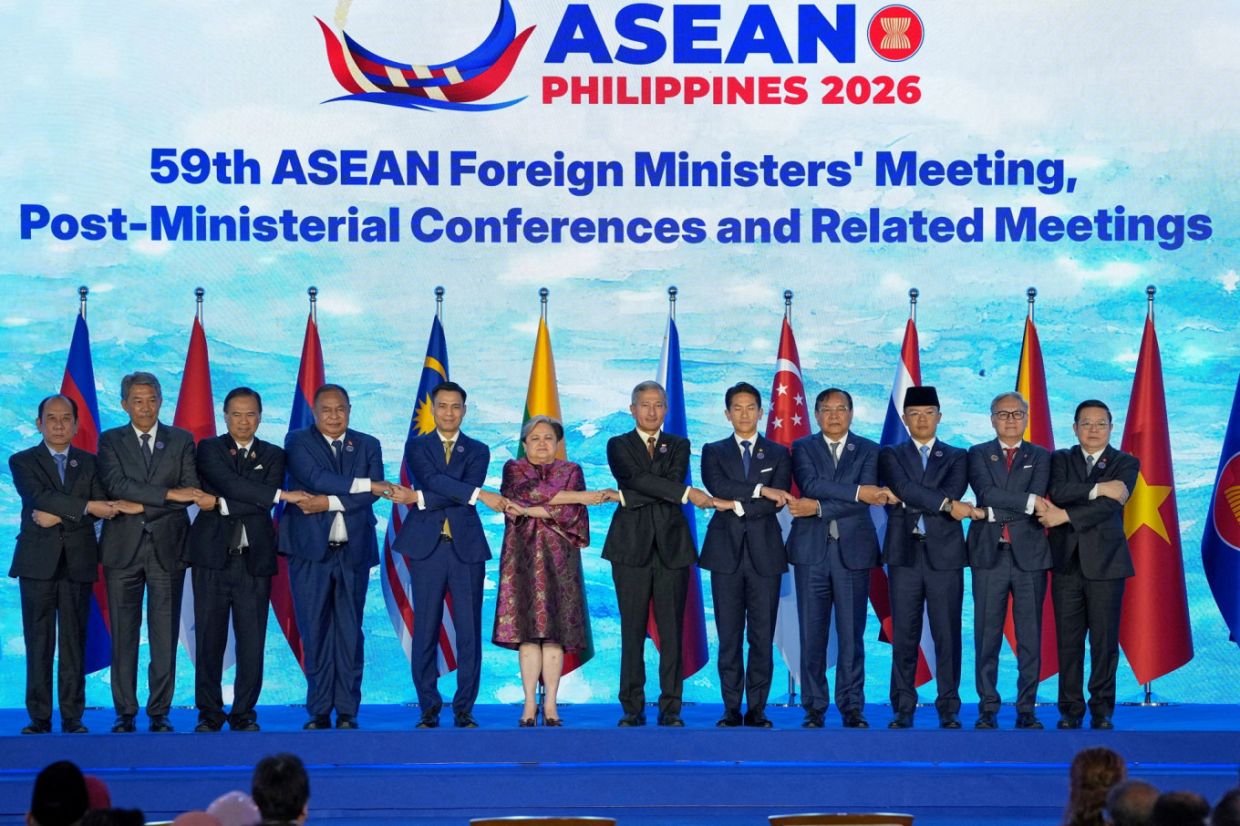
Indonesia has put the spotlight on Asean's capacity to deliver meaningful results on its policy commitments, challenging the regional bloc to prove its relevance amid deepening geopolitical instability. The appeal came during Tuesday's gathering of foreign ministers from all eleven Asean member states in Manila, where diplomats convened to establish unified positions ahead of subsequent talks with dialogue partners. Indonesian Foreign Minister Sugiono framed the moment as pivotal, stressing that recent crises around the world underscore why Asean must move swiftly from rhetoric to implementation across its core priorities.
Sugiono's remarks reflected mounting frustration within the bloc about the gap between ambitious declarations and actual policy outcomes. He reminded his counterparts that Asean's charter obligates member states to preserve regional stability across political, economic and social domains, yet the bloc has struggled to maintain cohesion on contentious issues. The minister referenced May's Asean Summit, which successfully amended the charter to welcome Timor-Leste as the eleventh member—a rare moment of consensus. Yet he posed a pointed question: having achieved that historic step, could Asean now demonstrate equal resolve in addressing the interlocking crises demanding urgent attention?
The Middle East conflict emerged as an immediate test case during the Manila deliberations. Asean released a joint statement acknowledging the economic repercussions for member states, the welfare of their citizens in affected regions, and the need for humanitarian coordination. Behind this diplomatic language lies a graver concern: the conflict has exposed structural vulnerabilities in Asean's energy security and, by extension, its negotiating leverage on other fronts. The disruptions to crude oil flows through the Strait of Hormuz have forced Asean economies to scramble for alternative suppliers, with many turning increasingly toward China for renewable energy solutions and critical materials.
This shift in energy dependencies carries troubling implications for Asean's longstanding effort to resolve contested waters in Southeast Asia. The Code of Conduct for the South China Sea, intended to establish binding rules for maritime behaviour in one of the world's most strategically vital and contentious zones, has languished for twenty-four years without completion. Sugiono underscored the human cost of this prolonged stalemate, insisting that Asean's people deserved a settlement based on law rather than power politics. Yet rising economic ties between Asean members and China—a trend accelerated by energy market disruptions—may inadvertently weaken Asean's collective bargaining position in those very negotiations.
Trade data illustrates this pattern vividly. The Philippines, which holds the 2024 Asean chair, more than doubled its imports of solar panels from China during the first five months of this year relative to the equivalent 2023 period. Similar patterns are observable across other member states as they diversify away from Middle Eastern oil and gas. While pragmatic from an energy security standpoint, this growing reliance creates subtle pressure on Asean governments to avoid antagonising Beijing over maritime disputes, potentially hampering efforts to finalise the Code of Conduct on terms acceptable to smaller claimant states.
The Myanmar situation similarly illustrates Asean's struggle to translate declared principles into coordinated action. Member states have repeatedly endorsed the Five-Point Consensus as their roadmap for resolving Myanmar's political crisis, yet sharp divisions persist over how aggressively to pressure the military junta, whether to maintain dialogue, and how to measure progress toward democracy and human rights. During Tuesday's retreat session dedicated to Myanmar, ministers acknowledged that familiar disagreements had resurfaced, though Philippine Foreign Secretary Theresa P. Lazaro noted that some delegations had articulated relatively progressive positions on possible reforms.
An intriguing development emerged regarding Asean's special envoy mechanism for Myanmar. Rather than simply extending the current arrangement, ministers have agreed to scrutinise how progress on the Five-Point Consensus is actually measured and assessed. Lazaro indicated that a comprehensive review of this mechanism should conclude by November's leaders' meeting, suggesting that Asean recognises the current approach may require substantive recalibration. This openness to procedural reform at least hints that the bloc is contemplating more rigorous accountability frameworks, though whether this translates into firmer stances toward Myanmar's military government remains uncertain.
The interconnection between these crises—Middle East turmoil, South China Sea gridlock, and Myanmar's intractable political situation—underscores why Sugiono's appeal for concrete delivery carries such weight. External shocks have a way of exposing the limits of consensus-based multilateralism, particularly when consensus itself masks genuine disagreement. Asean members face genuine trade-offs between immediate economic interests and long-term strategic autonomy, between solidarity with fellow members and bilateral advantage with major powers, between principled stands on democracy and pragmatic engagement with authoritarian regimes.
The bloc's credibility—a phrase Sugiono invoked directly—rests not merely on producing joint statements and formal agreements, but on demonstrating that these commitments lead to tangible improvements in regional stability and prosperity. For Southeast Asian readers and observers, the question Sugiono posed resonates beyond diplomatic pleasantries: can Asean actually function as a consequential force in managing the region's most pressing challenges, or does it primarily serve as a venue for airing grievances while major decisions flow from bilateral relationships with external powers?
Wednesday's expanded sessions with Asean's eleven dialogue partners—including the United States, China and Russia—will test whether the bloc enters those conversations from a position of internal unity or fragmented resolve. The geopolitical competition between Washington and Beijing, neither of which will treat a divided Asean as a serious partner, adds urgency to Indonesia's call for the bloc to move beyond promises. For Malaysia and other Asean members navigating complex relationships with multiple powers, the outcome of these negotiations carries direct implications for their own strategic room for manoeuvre in coming months and years.

