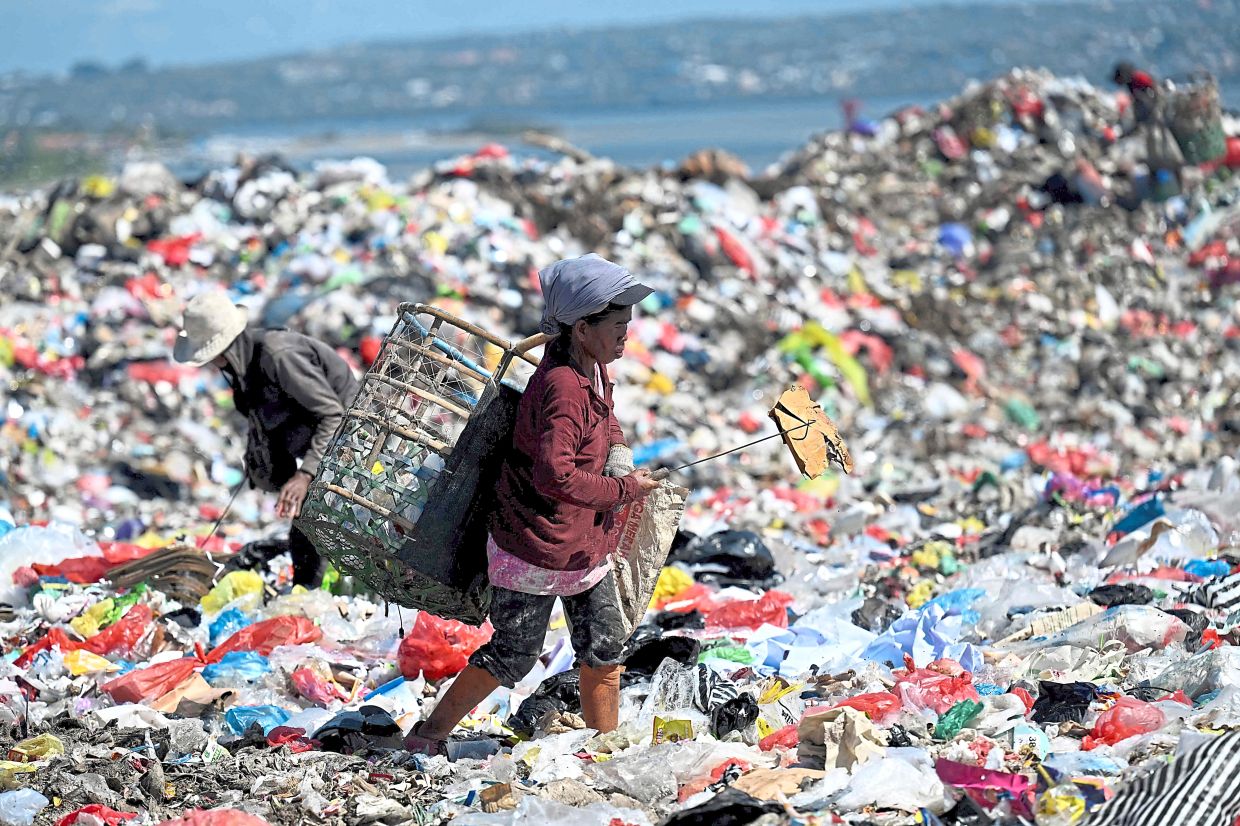
Indonesia has formally launched construction on its maiden waste-to-energy facility in Bali, signalling a strategic pivot toward sustainable waste management and renewable energy generation. The groundbreaking ceremony took place on Wednesday, July 8, in Pedungan Village within South Denpasar, representing a watershed moment for the archipelago's environmental policy. The facility, developed through a collaboration between sovereign wealth fund Danantara Investment Management and project developer Daya Energi Bersih Nusantara, exemplifies the government's commitment to modernising infrastructure while addressing one of Southeast Asia's most pressing municipal challenges.
Rosan Roeslani, chief executive officer of Danantara Indonesia, framed the initiative within President Prabowo Subianto's broader governance agenda. He emphasised that waste management constitutes a collective responsibility demanding urgent action to prevent environmental burdens from cascading onto future generations. This framing reflects a philosophical shift in Indonesian policymaking, where infrastructure development is increasingly coupled with intergenerational environmental stewardship. The project's inception signals that the current administration views waste-to-energy conversion not merely as a technical solution but as a foundational component of national modernisation.
The Bali facility will employ moving grate incinerator technology, a proven system deployed extensively across waste-to-energy installations worldwide. This technological choice underscores Indonesia's commitment to international standards, as the design specifically complies with the European Industrial Emissions Directive, a stringent regulatory framework governing air quality and environmental protection. By adopting technology engineered for stringent European compliance, Indonesia positions itself within global best-practice networks while ensuring that domestic operations meet world-class environmental benchmarks. This standards-based approach contrasts with earlier waste management practices in the region and reflects evolving expectations among both policymakers and civil society regarding environmental governance.
The environmental benefits quantified by Danantara are substantial. The facility is projected to reduce greenhouse gas emissions by up to eighty per cent per tonne of waste relative to conventional open landfill dumping, the historically predominant disposal method across Indonesia. This efficiency gain matters considerably given that Indonesia generates more than 140,000 tonnes of refuse daily, creating an aggregate environmental footprint that warrants systematic reduction. When multiplied across thousands of tonnes annually, the cumulative emissions reductions from such facilities represent meaningful progress toward Indonesia's climate commitments and regional environmental targets.
Beyond environmental metrics, the project promises significant economic stimulus, with projections indicating the creation of approximately 1,200 green jobs throughout the construction and operational phases. This employment dimension appeals to stakeholders across the political spectrum, as it demonstrates that environmental infrastructure can simultaneously generate livelihoods, address waste challenges, and expand renewable energy capacity. For Malaysia and other Southeast Asian nations grappling with similar waste management crises, Indonesia's approach offers a replicable model linking job creation to sustainability objectives.
The commercial architecture supporting the facility reflects Indonesia's determination to attract sustained investment in renewable infrastructure. State utility PLN and the project company executed a Power Purchase Agreement during the groundbreaking ceremony, establishing long-term commercial certainty for electricity sales. This contractual foundation is crucial, as it signals to investors that the Indonesian government stands behind renewable energy procurement commitments, reducing financing risks that otherwise might deter capital allocation to such projects. The PPA mechanism mirrors practices in advanced energy markets and demonstrates that Indonesia is institutionalising frameworks necessary for scaling renewable infrastructure.
Indonesia's waste crisis demands solutions of precisely this calibre. The nation's 140,000 tonnes of daily waste generation reflects rapid urbanisation, rising consumption patterns, and inconsistent waste segregation practices across municipalities. Open landfilling, the conventional disposal pathway, consumes finite land resources while generating methane emissions and contaminating groundwater across populated regions. Waste-to-energy technology addresses these challenges through thermal processing, which simultaneously reduces volume, captures energy value, and minimises environmental leakage. However, such facilities represent complementary rather than comprehensive solutions; they require parallel investments in waste reduction, source separation, and circular economy initiatives.
For Malaysia and the broader Southeast Asian region, Indonesia's waste-to-energy initiative carries instructive implications. Malaysia generates approximately 38,000 tonnes of waste daily, yet faces comparable challenges in transitioning from landfill-dependent systems toward diversified waste management portfolios. Indonesia's groundbreaking demonstrates that regional governments can mobilise sovereign wealth instruments, engage state utilities in power procurement, and structure projects according to international environmental standards while operating within developing-economy contexts. This feasibility proof may catalyse similar initiatives across the Association of Southeast Asian Nations, particularly as climate financing mechanisms and green bonds become increasingly accessible to regional governments.
The Bali facility's design also reflects evolving corporate governance standards within Indonesia's development landscape. Danantara's involvement signals that sovereign wealth funds increasingly view environmental infrastructure as both an ethical imperative and a defensible long-term investment. This institutional reorientation suggests that future Southeast Asian infrastructure will increasingly incorporate environmental and governance considerations alongside financial returns, potentially reshaping capital allocation patterns across the region.
Looking forward, the Bali waste-to-energy plant represents the inaugural component of what Danantara characterises as a national programme. This framing indicates that policymakers envision scaling the model across additional municipalities and regions, potentially creating a network of facilities processing waste while generating distributed electricity. Successful implementation of this facility will establish proof-of-concept data regarding technology performance, operational efficiency, environmental outcomes, and workforce development in an Indonesian context, information essential for replication and expansion.
The project's significance extends beyond waste management and energy metrics into broader questions regarding Indonesia's development trajectory. It demonstrates that the Prabowo administration prioritises environmental modernisation alongside economic growth, positioning sustainability as integral rather than ancillary to national advancement. For Malaysia, monitoring this initiative's performance and learning from its operational experiences could inform domestic policy discussions regarding waste management innovation and green energy expansion, particularly as both nations navigate the urgent imperatives of climate mitigation and sustainable urbanisation.

