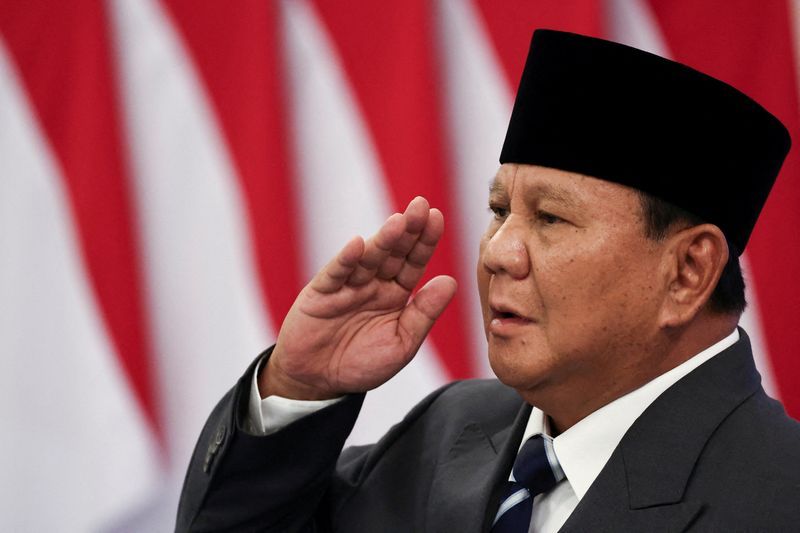
Indonesia is preparing to embed artificial intelligence across several flagship government initiatives, with the centrepiece being President Prabowo Subianto's ambitious $15 billion free-meals programme. A draft presidential regulation obtained by Reuters reveals the government's intention to harness AI technologies to enhance operational efficiency and quality control across its most high-profile social welfare schemes. The regulation, which remains unsigned and outlines implementation timelines stretching from 2026 to 2029, reflects Jakarta's determination to leverage digital transformation as an economic lever, with planners claiming the move could inflate the nation's gross domestic product by 12 per cent—equivalent to approximately $366 billion—by the end of this decade.
The strategic deployment of AI represents Jakarta's attempt to catch up with regional competitors that have already established themselves as meaningful players in the global artificial intelligence sector. Both Singapore and Malaysia have moved aggressively to position themselves as regional development hubs, attracting billions of dollars in investment from multinational technology firms eager to construct the computational infrastructure necessary to serve burgeoning demand for cloud and AI services across Southeast Asia. Indonesia's comparative lag in AI advancement has not gone unnoticed by policymakers in the capital, and this regulation signals a recognition that remaining on the sidelines of the digital revolution carries genuine economic costs.
The regulation explicitly targets what it terms "economic growth through development, facilitation and use of AI especially in the president's priority programmes." Rather than attempting an immediate technological leap into AI development itself, the government is focused on applying existing AI tools and platforms to improve service delivery in sectors where the state maintains direct operational control. This pragmatic approach acknowledges the constraints that currently limit Indonesia's capacity to become an original AI creator, yet positions the nation as a sophisticated consumer of global AI capabilities adapted to local conditions.
Within the free-meals scheme specifically, planners envision AI playing several distinct roles. The technology would facilitate the design of region-specific menus tailored to local dietary preferences and nutritional profiles, monitor kitchen hygiene standards through automated visual inspection, forecast food demand patterns to minimise waste, detect operational irregularities that might indicate fraud or mismanagement, and integrate health data systems to provide early warning of potential health emergencies. Given that this programme has experienced considerable controversy—including the arrest of its former head and documented food poisoning incidents affecting tens of thousands of children last year—the introduction of algorithmic oversight carries both promise and risk.
The meals initiative represents precisely the kind of public programme where systematic implementation failures have generated public concern and squandered resources. Transparency deficits, inconsistent hygiene standards, and inadequate emergency response mechanisms created a crisis of confidence in a scheme designed to reach millions of Indonesia's poorest households. Proponents of AI integration argue that algorithmic monitoring could introduce an objective layer of oversight capable of identifying problems before they metastasize into scandals. However, critics worry that technological solutions risk obscuring the governance failures that allowed such problems to develop in the first place.
Tech industry giants including Meta Platforms, IBM and Microsoft shaped the regulation's development, according to Wahyudi Djafar, the tech analyst who co-authored portions of the framework and sits on the government's AI task force. Microsoft alone has signalled serious commitment to Indonesia's digital infrastructure, committing $1.7 billion over several years to expand cloud and artificial intelligence services within the archipelago. These investments suggest that major technology corporations view Indonesia—despite its current limitations—as a strategically important market warranting significant capital commitment.
Yet scepticism about Indonesia's AI readiness runs deep among specialists and scholars who closely observe the sector. Derwin Suhartono, a professor of artificial intelligence at Bina Nusantara University in Jakarta, has publicly questioned whether Indonesia possesses the foundational requirements for meaningful AI leadership. The nation confronts formidable structural barriers, including inadequate computational infrastructure, a conspicuous shortage of domestically trained AI expertise, and the absence of integrated chip-manufacturing capacity. Under such constraints, Suhartono argues, Indonesia may indefinitely remain confined to the role of consumer, purchasing and implementing AI products developed abroad rather than generating domestic innovation.
Executive capacity presents an equally critical challenge. Suhartono notes that while the government's regulatory roadmap appears coherent on paper, the actual implementation record suggests that strategic ambitions frequently exceed institutional capability. He contends that declarations of AI integration amount to "rhetoric" without corresponding evidence of organisational readiness or resource allocation sufficient to translate policy intentions into operational reality. This disconnect between written strategy and practical delivery reflects a broader pattern observable across multiple Indonesian government sectors, where ambitious programmes frequently encounter execution bottlenecks.
Beyond the meals initiative, the regulation proposes expanding AI applications into health screening programmes and tuberculosis testing protocols—sectors where systematic data analysis could theoretically improve diagnostic accuracy and resource allocation. The framework also contemplates a "sovereign AI fund" primarily managed through the newly established national wealth fund, Danantara Indonesia, coupled with fiscal incentives designed to attract AI researchers and offset Indonesia's talent shortage in the field. These mechanisms suggest an attempt to create financial pathways for developing indigenous AI capacity rather than relying exclusively on foreign technology imports.
Accompanying the AI integration roadmap is a parallel regulatory mechanism addressing governance concerns specific to artificial intelligence deployment. This second draft regulation mandates that government agencies disclose AI-related risks, including unauthorised use of biometric data, intellectual property violations, and synthetic deepfake media creation. Such provisions reflect growing international awareness that AI systems, while offering efficiency gains, simultaneously introduce novel vulnerabilities and opportunities for systemic abuse. Indonesia's acknowledgement of these risks, even in preliminary regulatory form, suggests at least nominal awareness that technological solutions require corresponding governance frameworks.
The timing of this regulatory push remains uncertain, with President Prabowo's office providing no indication of when signature might occur. The framework builds upon an earlier white paper released the previous year, suggesting that AI integration has occupied official attention for some time, yet execution remains nascent. For regional observers, Indonesia's deliberate though potentially halting progress toward AI integration carries broader implications. Success in embedding AI across major government programmes could establish a replicable model for other Southeast Asian nations attempting to harness digital technologies while confronting similar infrastructure and skills deficits. Conversely, implementation failures could reinforce existing patterns where ambitious digital transformation initiatives founder upon bureaucratic resistance and capacity constraints.