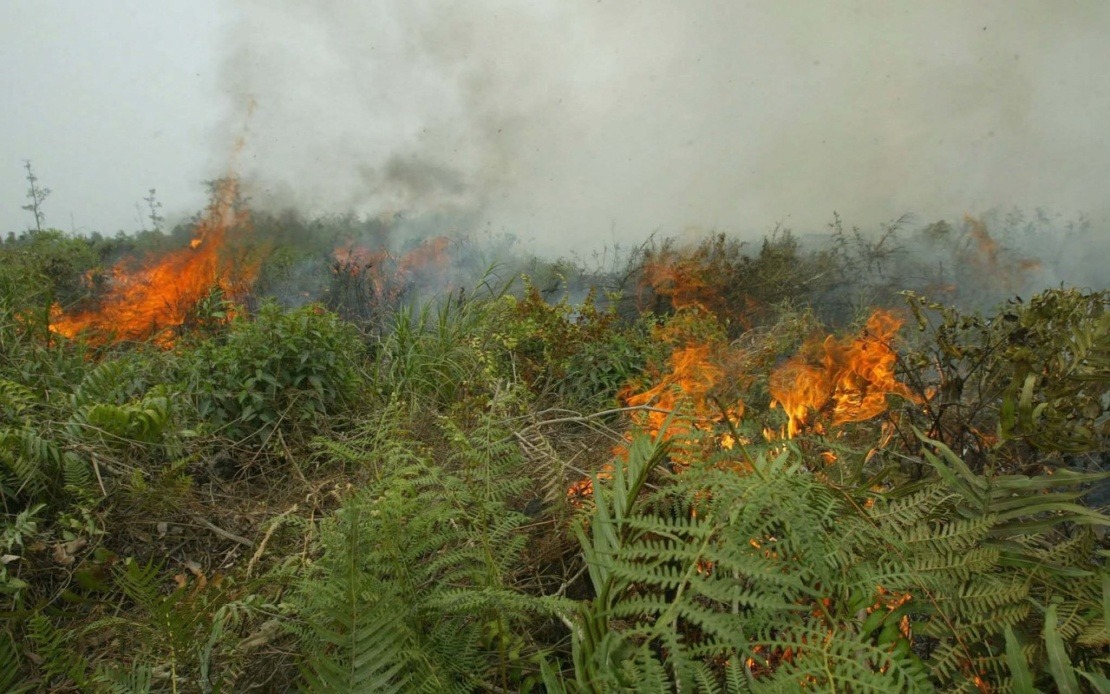
Indonesia is grappling with a rapidly worsening forest fire crisis concentrated across its most vulnerable regions, particularly Kalimantan and Sumatra, where environmental degradation has created conditions for fires to spread uncontrollably. The situation deteriorated significantly in late August, with West Kalimantan experiencing a dramatic surge in hotspots that nearly doubled within a single reporting period, according to data released by the National Disaster Mitigation Agency (BNPB). The spike underscores the cyclical nature of Indonesia's fire season and the persistent vulnerability of its forest ecosystems to both deliberate and accidental ignition, a challenge that has plagued the nation for decades.
The scale of the emergency became evident when BNPB's Acting Head of Data, Information and Disaster Communication Centre Berton Panjaitan disclosed that West Kalimantan's hotspots jumped dramatically by 3,553 in a single day to reach 7,377. Simultaneously, the number of active fire spots climbed to 104, and atmospheric conditions deteriorated sharply with visibility plummeting below one kilometre—a threshold that creates hazardous conditions for transportation and outdoor activities. The speed of this escalation reflects how rapidly fire events can cascade across forested terrain when weather patterns, moisture levels, and fuel availability align unfavourably, creating what researchers characterise as critical fire windows.
Neighbouring regions within Kalimantan presented a more mixed picture, though the broader trend remained concerning. Central Kalimantan showed a modest decline in hotspot numbers, falling by 147 to 5,244, yet paradoxically registered an increase in active fire spots that surged by 16 to 72, suggesting fires were becoming more concentrated and intense rather than dispersed. South Kalimantan similarly demonstrated this pattern, with hotspots decreasing by 405 to 504 but fire spots rising by 33 to 55. This apparent contradiction reveals an important dimension often overlooked in fire management discourse: the relationship between the number of detected thermal anomalies and the intensity and spread rate of actual blazes on the ground.
Sumatra, the nation's westernmost major island and a region frequently battered by seasonal fires, exhibited volatile conditions across its provinces. South Sumatra experienced a notable surge, with hotspots climbing by 209 to 1,013, while both Riau and Jambi registered significant improvements, suggesting that fire activity was concentrating in specific geographic zones rather than spreading uniformly across the archipelago. This geographic variability points to the importance of localized weather systems and land-use patterns in determining fire risk, a reality that complicates national firefighting strategies and resource allocation.
The human toll of the crisis extended beyond immediate evacuation and property loss into long-term public health consequences that would likely persist for months. Deputy Health Minister Prof Dante Saksono Harbuwono warned that approximately 5.5 million individuals across affected provinces in Sumatra and Kalimantan faced direct exposure to smoke and particulate matter. The health system recorded nearly 13,500 cumulative cases of acute respiratory infection (ISPA) spanning July and August, with 4,082 people still suffering from the condition as of late August. Dante's observation that health impacts this year exceeded the previous year's burden suggested an accelerating trend rather than a temporary spike, raising concerns about systemic environmental degradation in these regions.
The respiratory crisis disproportionately affected vulnerable populations including children, the elderly, and those with pre-existing cardiovascular or pulmonary conditions. The concentration of cases in specific provinces indicated that proximity to active fire zones amplified health risks exponentially, transforming environmental incidents into public health emergencies requiring coordinated responses from multiple government agencies. The coordination challenge became particularly acute given the dispersed nature of fires across multiple provinces and international borders, requiring real-time data sharing and adaptive resource management.
Recognising that fires often originated within industrial concessions, the Environment Ministry escalated enforcement actions against suspected culprits. Authorities identified 42 companies with documented hotspot activity within their licensed forest or plantation areas, representing the most significant investigation phase in the current cycle. Environmental Law Enforcement Deputy Rizal Irawan explained that the Environment Ministry employed a systematic approach, overlaying satellite thermal imagery with official concession boundary maps to identify areas where fires coincided with corporate land rights. This methodology, while powerful, remained dependent on satellite data quality and verification accuracy.
Of the 42 flagged companies, 19 were undergoing rigorous field verification to determine whether fires were intentionally set, negligently permitted through inadequate prevention measures, or resulted from uncontrollable natural circumstances. The remainder were scheduled for inspection in subsequent phases, reflecting logistical constraints in conducting simultaneous investigations across such large and often remote forest areas. Rizal emphasised that Indonesian law applied strict liability principles to forest concession holders, meaning that companies bore responsibility for fires within their territories regardless of intent. This approach theoretically created powerful incentives for companies to invest in prevention infrastructure and trained response teams.
Administrative and civil sanctions ranged from substantial financial penalties to operational restrictions or concession suspensions, creating layered deterrent mechanisms. However, enforcement effectiveness remained inconsistent across regions, and allegations of corruption in the inspection process occasionally surfaced in independent monitoring reports. The identification of these 42 companies represented progress in corporate accountability, yet critics argued that prosecution rates remained low relative to investigations initiated, and penalties often failed to deter repeat offences.
Indonesia's approach to transboundary air pollution incorporated regional diplomacy through ASEAN frameworks, recognising that fires in Indonesian territories generated haze affecting neighbouring Malaysia and Singapore. A ministerial-level meeting held in Bali during the previous month brought together environmental officials from Indonesia, Malaysia, and Singapore to discuss coordinated responses and information-sharing mechanisms. This diplomatic engagement reflected regional acknowledgment that environmental crises transcended national borders and required cooperative solutions, though implementation of agreements frequently lagged behind the rhetoric of cooperation.
Prevention remained the most cost-effective intervention, yet remained chronically under-resourced relative to firefighting expenditure. The Environment Ministry had established 95 Fire Care Community (MPA) groups comprising approximately 1,425 trained personnel distributed across six fire-prone provinces spanning Sumatra and Kalimantan, with plans to establish an additional 35 groups during the current year. These community-based organisations represented efforts to decentralise fire management capacity and empower local stakeholders, though their effectiveness depended critically on adequate funding, equipment provision, and integration with official government response structures.
Corporate participation in prevention mechanisms remained uneven despite regulatory requirements. Authorities had issued notices to 2,226 companies in the previous year mandating preparation of personnel, equipment, and response protocols to address forest and land fires. Approximately 80 per cent subsequently reported readiness compliance, while the remainder either failed to respond or provided incomplete documentation. This compliance gap indicated ongoing challenges in enforcement, suggesting that some companies either lacked resources or perceived penalties as acceptable business costs relative to fire prevention investments.
The fires underscored fundamental vulnerabilities in Indonesia's environmental governance and land-use management systems. Addressing the crisis required simultaneous action across multiple domains: strengthening corporate accountability mechanisms, enhancing community-based prevention capacity, improving real-time fire detection and response capabilities, and implementing land restoration programmes that reduced fuel availability in fire-prone zones. The convergence of industrial expansion, climate variability, and peatland degradation created conditions where seasonal fire outbreaks had become endemic rather than exceptional, demanding sustained investment in prevention rather than cyclical emergency responses.

