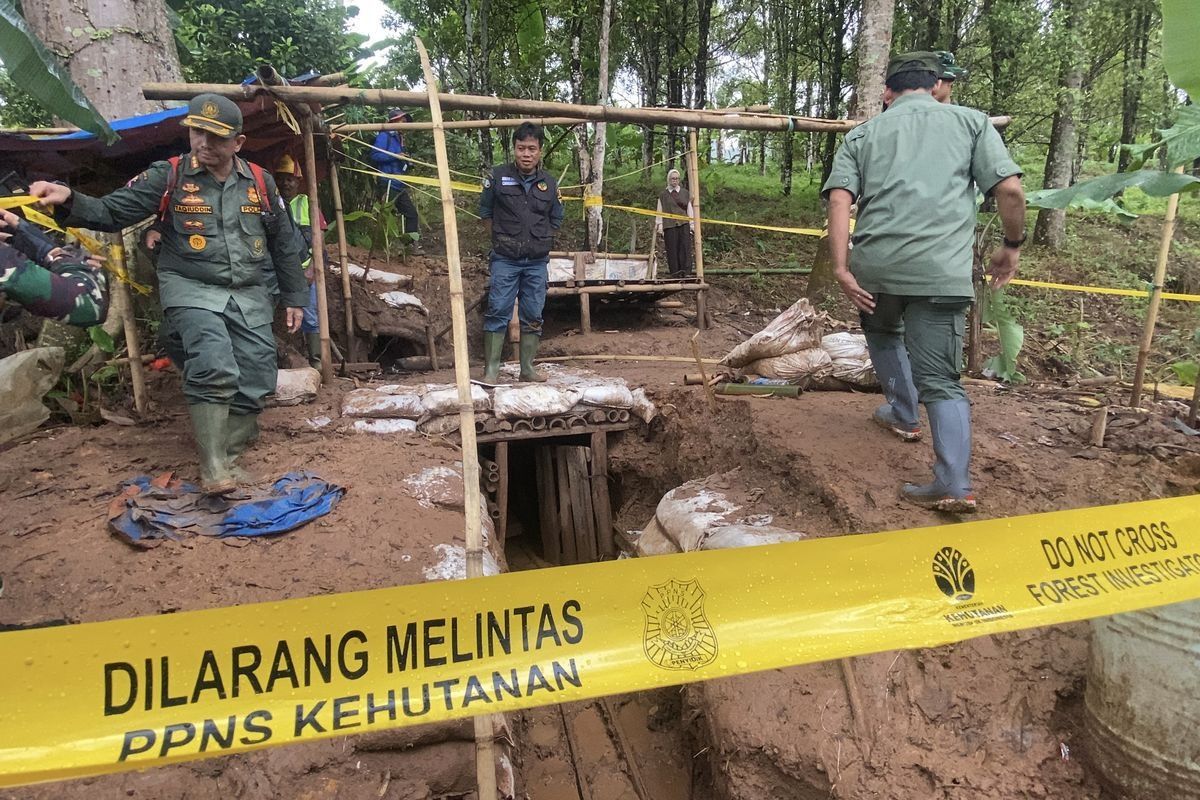
Indonesia's energy ministry has escalated its enforcement action against illegal mining by formally charging 24 foreign nationals as criminal suspects in connection with an unlicensed gold extraction operation centred in the Maluku region. The announcement, made by energy ministry official Jeffri Huwae in a statement on Thursday, June 25, signals a significant crackdown on foreign involvement in Indonesia's shadow mining sector, which has long plagued the resource-rich archipelago.
According to ministry statements, the suspects are accused of constructing and maintaining substantial infrastructure networks specifically designed to facilitate illegal mining activities. The operational hub centred around the Gunung Botak area in Maluku, where authorities identified the construction of roads, processing equipment, and related facilities that were integral to the extraction and preliminary treatment of mined ore. This level of infrastructure development suggests a sophisticated, large-scale operation rather than small-scale artisanal mining, indicating organised criminal involvement and significant capital investment in the scheme.
Indonesian law imposes severe penalties for illegal mining activities, with convictions potentially resulting in imprisonment for up to five years. This maximum sentence underscores the seriousness with which Jakarta treats unauthorised resource extraction, particularly when foreign nationals organise and manage such operations. The penalties serve as a warning not only to those already apprehended but to international criminal networks considering similar ventures in Indonesian territory.
The ministry has declined to disclose the nationalities of the accused individuals or provide estimates of gold quantities extracted through the illegal operation. State news agency Antara reported in May that 24 Chinese nationals discovered working in the Gunung Botak area were detained for questioning. These individuals allegedly operated under the sponsorship and facilitation of a local company, PT Harmoni Alam Manise, which likely provided permits, land access, and cover for the mining enterprise. The involvement of a domestic company raises questions about complicity at the local level and the network of facilitation that enables foreign operators to establish such operations.
A critical challenge confronting Indonesian authorities is the geographic dispersal of the suspects. The ministry confirmed that exactly half of the 24 charged individuals—twelve persons—remain at large and outside Indonesia's jurisdiction. This situation complicates prosecution efforts and suggests that key organisers and decision-makers may have fled the country or never entered it in the first place. The remaining twelve suspects are currently in detention, providing authorities with subjects for interrogation and potential witnesses to the broader operation's structure.
Beyond the 24 foreigners, Indonesian law enforcement has also named two Indonesian nationals as criminal suspects. Their involvement likely encompasses roles as local facilitators, site managers, or operatives who coordinated between foreign principals and local communities. The inclusion of domestic suspects acknowledges that illegal mining schemes require local collaboration and cannot succeed without complicity from Indonesian citizens familiar with terrain, local politics, and regulatory environments.
This enforcement action reflects a recurring pattern of foreign involvement in Indonesia's illegal mining ecosystem. Previous cases have demonstrated the appeal of Indonesian territory to international mining syndicates, particularly those originating from East Asia. The abundance of mineral deposits, combined with limited enforcement capacity in remote regions and opportunities for corruption, creates an environment conducive to illicit extraction.
Indonesia's easternmost region of Papua has emerged as another hotspot for such criminal activity. Police arrested four Chinese nationals operating illegally in the Senggi district during the previous year, underscoring that the Maluku case represents part of a broader phenomenon affecting multiple provinces simultaneously. The geographic spread of these incidents across islands separated by vast distances indicates that law enforcement efforts, while improving, struggle to maintain consistent oversight across the archipelago's complex terrain.
The Maluku operation's discovery reflects intensified monitoring and coordination between different Indonesian agencies responsible for natural resource management and law enforcement. The energy ministry's willingness to publicise enforcement actions suggests a policy shift toward transparency and deterrence, communicating to both foreign operators and local facilitators that consequences for illegal mining are increasingly tangible.
For Malaysian readers and Southeast Asian observers, this case illustrates how illegal mining creates transnational enforcement challenges and demonstrates the scale of foreign capital flows into Asia's informal mining sector. The operation's sophistication—requiring infrastructure development and local partnerships—reveals how criminal organisations view resource-rich developing countries as profitable venues for activities that stricter regulatory environments in their home countries would prohibit.
The half-at-large situation also highlights enforcement limitations that plague the region. Despite Indonesia's demonstrated commitment to prosecution, the ability of suspects to flee raises questions about border control, extradition cooperation, and international coordination mechanisms. For regional governments including Malaysia, which faces comparable pressure from cross-border criminal syndicates, the Maluku case underscores both the shared vulnerability to organised environmental crime and the necessity for strengthened multilateral enforcement cooperation to address networks that operate across maritime boundaries.

