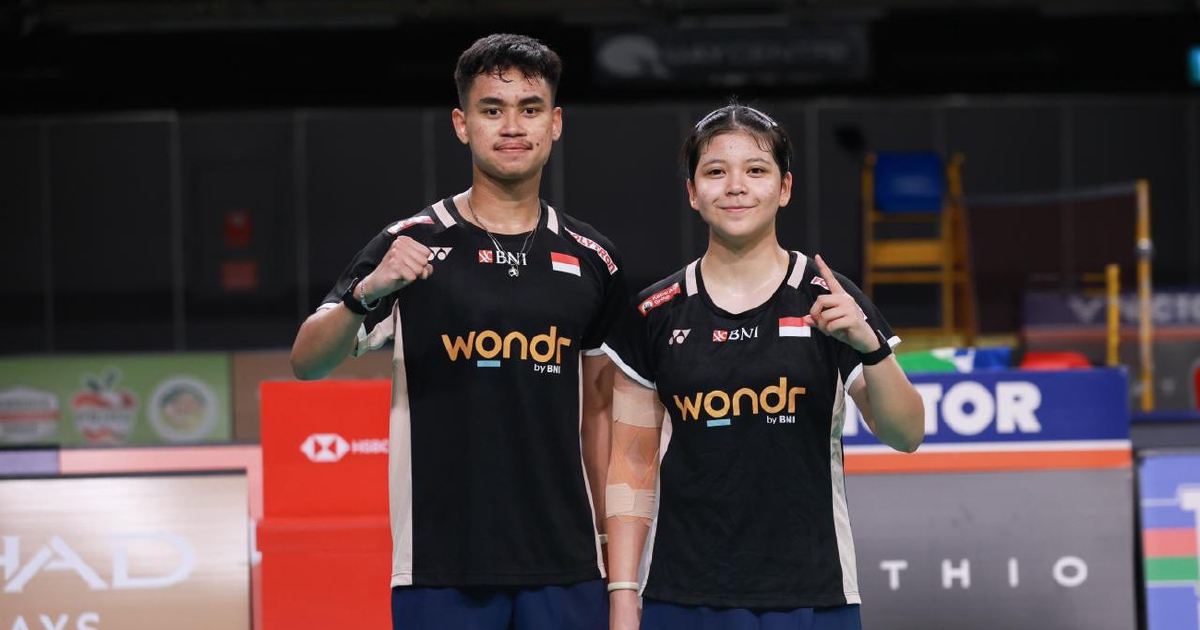
The Indonesia Badminton Association (PBSI) has taken the significant step of withdrawing two mixed doubles pairs from the World Championships scheduled for August 17-23 in New Delhi, a decision stemming from ongoing match-fixing investigations led by the Badminton World Federation (BWF). This withdrawal represents a substantial setback for Indonesia's medal prospects at one of badminton's most prestigious tournaments and underscores the sport's vulnerability to corruption at the highest competitive levels.
Match-fixing investigations in badminton have intensified globally in recent years, with the BWF implementing stricter monitoring and enforcement mechanisms to maintain competitive integrity. The decision by the PBSI to voluntarily bench the pairs demonstrates the association's willingness to cooperate with investigative authorities, signalling that Indonesian badminton is taking these allegations with appropriate seriousness. The sport, which enjoys deep popularity throughout Southeast Asia and Indonesia specifically, faces reputational damage whenever integrity questions surface, affecting fan confidence and the athletes' standing.
Indonesia has historically been a powerhouse in badminton, with numerous world champions and Olympic medalists emerging from the archipelago. The removal of mixed doubles pairs from competition represents not merely a tactical decision but a reflection of systemic concerns within the sport's governance. Mixed doubles badminton has been identified internationally as a category particularly vulnerable to manipulation, given the lower media exposure compared to singles events and the relative ease of orchestrating outcomes through subtle tactical adjustments rather than obvious match-throwing.
The World Championships in New Delhi constitute the sport's most important annual event outside the Olympic Games, attracting elite players from across the globe and serving as a benchmark for ranking progression and sponsorship opportunities. For the affected Indonesian players, this exclusion means a missed chance to accumulate crucial world ranking points at a tournament where such points carry maximum weight. The timing is particularly consequential, as World Championship performances directly influence Olympic qualification timelines for the next Games cycle.
The PBSI's proactive stance in withdrawing its pairs rather than allowing them to compete under a cloud of suspicion suggests the federation prioritises long-term institutional credibility over short-term competitive gains. This approach aligns with international best practices in sports governance, where transparency and demonstrated commitment to clean competition often restore public trust more effectively than defensive posturing. However, the federation now faces the challenge of determining when and how these players might return to international competition, and what additional safeguards it will implement to prevent similar investigations arising in the future.
The broader implications for badminton in Southeast Asia are considerable, as Indonesia's struggles with integrity issues can affect the entire region's reputation in international sports forums. Malaysia, Thailand, and other regional badminton nations may face enhanced scrutiny from the BWF and other oversight bodies, potentially resulting in stricter monitoring of regional tournaments and training camps. This spillover effect makes match-fixing investigations particularly damaging to the region's collective sporting interests.
The BWF has intensified its investigative capabilities in recent seasons, employing sophisticated data analytics to identify suspicious betting patterns and anomalous match statistics. The federation's willingness to pursue investigations across national boundaries and among elite players sends a signal that no federation or individual player is beyond scrutiny. For players, this means career-threatening consequences; for federations, it demands institutional compliance frameworks that go beyond minimal regulatory standards.
The withdrawal of these pairs may also reflect internal PBSI disciplinary processes that remain confidential. Without public disclosure of specific allegations against individual players, the federation operates within legitimate discretion, though this opacity can fuel speculation and gossip within badminton circles. The challenge for sports governance bodies globally is balancing due process protections for accused athletes with public transparency and accountability demands.
Looking forward, Indonesian badminton faces a critical juncture regarding its international standing. The association must demonstrate that match-fixing represents isolated incidents rather than systemic cultural issues within the sport. This requires not only cooperation with investigations but also proactive institutional reforms, including education programs for players and support staff about integrity obligations, enhanced internal monitoring systems, and clear disciplinary frameworks that deter future violations.
For Malaysian readers following badminton closely, this development carries importance as regional competition dynamics shift. Malaysian badminton, while not unaffected by global integrity concerns, has maintained relatively strong governance practices, potentially positioning Malaysian players and the Badminton Association of Malaysia (BAM) more favourably in international competition. The New Delhi World Championships will proceed with Indonesian mixed doubles representation diminished, creating opportunities for other nations to advance further in draws traditionally influenced by Indonesian strength in these pairings.
The incident also underscores the necessity for the BWF to maintain consistent enforcement standards across all nations. Differential treatment or perceived bias in investigation methodology could undermine the federation's legitimacy and create resentment among accused parties and their home countries. Indonesia's cooperation, while necessary, should not result in disproportionate punishment compared to similar violations elsewhere, a consideration that will likely feature in any subsequent appeals or reviews of BWF disciplinary decisions.

