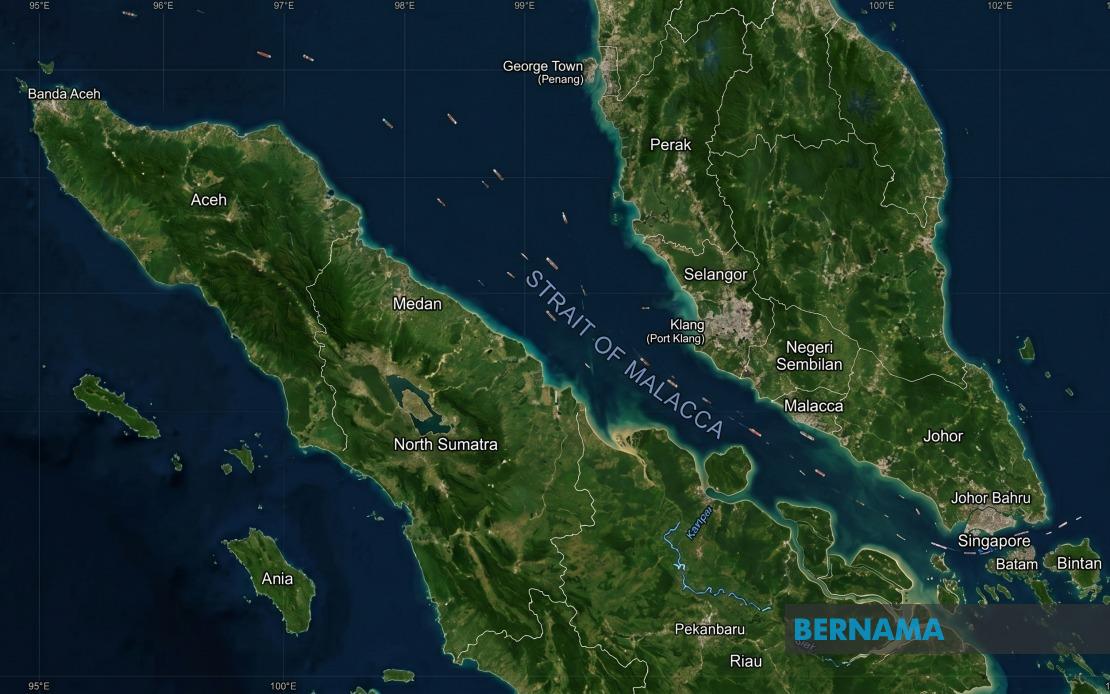
Indonesia and Singapore have jointly committed to safeguarding the Strait of Malacca, one of the world's most critical maritime corridors, during high-level talks in Jakarta on Monday. The bilateral pledge comes as both nations prepare for the 60th anniversary of diplomatic relations next year, underscoring the enduring strategic partnership between Southeast Asia's largest and most developed economies. The reaffirmation represents a broader regional consensus on preserving order in waters that facilitate trillions of dollars in annual trade.
President Prabowo Subianto and Singapore Prime Minister Lawrence Wong met for their second annual Leaders' Retreat at the Istana Merdeka, where they addressed shared interests in maintaining the waterway's openness to international maritime traffic. Prabowo emphasized that Indonesia and Singapore, as direct bordering states of the strait, have fundamental security interests tied to its stability. The two leaders stressed their commitment to upholding the principles enshrined in the 1982 United Nations Convention on the Law of the Sea, the international legal framework governing maritime conduct that both nations have ratified.
The strait's significance extends far beyond bilateral concerns. Approximately one-third of global maritime trade passes through these waters annually, making it indispensable for economies throughout Southeast Asia and beyond. Malaysia controls the western shore while Indonesia spans the eastern approaches, giving both nations dominant roles in corridor management. Singapore, positioned at the southern gateway, serves as a critical hub for regional commerce and maritime services. The collective interest in safeguarding this passage reflects recognition that disruptions would have cascading economic consequences across the region.
Beyond trade considerations, the leaders identified multiple security threats requiring coordinated responses. Piracy, though substantially reduced from its peak in the 2000s, remains a persistent concern demanding continued vigilance. Maritime accidents pose environmental and safety hazards, with the potential for catastrophic oil spills or chemical contamination affecting coastal communities throughout the region. Pollution from shipping activities contributes to broader environmental degradation. The Indonesian and Singaporean presidents acknowledged these interconnected challenges require sustained multilateral cooperation, not unilateral action by individual states.
The commitment to coordinate with Malaysia and Thailand signals Jakarta and Singapore's intent to maintain inclusive frameworks rather than limiting protection mechanisms to bilateral arrangements. Malaysia's role as the western coastal state and Thailand's involvement as a northern regional actor are essential to any comprehensive security architecture. This inclusive posture reflects ASEAN's consensus-based diplomatic traditions and recognizes that effective maritime governance requires buy-in from all stakeholders. Such coordination becomes increasingly important as competing interests and rising geopolitical tensions create new pressures on regional stability.
Prabowo and Wong also discussed broader regional and global issues extending beyond the strait's immediate concerns. Both leaders reaffirmed ASEAN's foundational principle that international disputes should be resolved through peaceful dialogue and diplomacy rather than coercion. This stance carries particular weight given ongoing South China Sea tensions and great power competition in Southeast Asian waters. The leaders' emphasis on resolving misunderstandings through open discussion as friends suggests confidence in bilateral mechanisms while implicitly addressing the need for such approaches across the region.
The annual retreat format itself demonstrates institutional commitment to dialogue at the highest levels. By establishing recurring meetings between the two leaders, Indonesia and Singapore create structured opportunities to address emerging challenges before they escalate. Wong's arrival in Jakarta on Sunday evening preceding the Monday talks reflects the ceremonial importance both nations attach to the relationship. Prabowo's characterization of the partnership as special underscores Indonesia's recognition of Singapore's strategic value despite historical complexities between the two nations.
As the two countries approach six decades of diplomatic relations, their trajectory reflects evolution from post-independence regional positioning toward integrated partnership. The timing of this commitment, ahead of the 2025 anniversary, positions both nations to build momentum through centennial celebrations. Prabowo's confidence that continued cooperation will contribute to regional stability, growth and prosperity articulates a vision extending beyond security narrowly conceived to encompass the broader prosperity agenda that underpins Southeast Asian development.
For Malaysian readers and observers across the region, the Indonesia-Singapore reaffirmation carries important implications. It confirms that major regional powers remain committed to preserving the maritime legal order that benefits all states, particularly smaller economies dependent on open shipping lanes. The explicit mention of Malaysia and Thailand as coordination partners validates their roles while distributing responsibility across the region. However, the emphasis on bilateral leadership between Jakarta and Singapore also implicitly reinforces these nations' dominant positions in determining strait governance, suggesting Malaysia and Thailand's involvement occurs within frameworks shaped by larger neighbors.
The strait's future security depends on maintaining both the technological capacity for maritime domain awareness and the political will for sustained cooperation. As global supply chains recover and expand following pandemic disruptions, traffic volumes continue rising, increasing the complexity of surveillance and safety management. The Indonesian-Singaporean commitment signals readiness to invest in these capacities while relying on diplomatic frameworks to resolve disputes. This balanced approach reflects lessons learned from previous piracy crises and recognition that military solutions alone cannot address maritime security's multifaceted challenges.
The broader geopolitical context cannot be overlooked. Regional tensions involving major powers create pressures to align with competing blocs or strategic partnerships. Indonesia's steadfast commitment to maintaining the strait as open to all parties, combined with its emphasis on ASEAN principles of peaceful resolution, positions the nation as a stabilizing force. Singapore's partnership with Indonesia on this issue reinforces both nations' interest in preserving the rules-based order that enables their prosperity. This consensus, though expressed in diplomatic language, represents a deliberate choice to prioritize functional cooperation over confrontational posturing.
Looking ahead, the Indonesia-Singapore framework established through this commitment will likely deepen through technical cooperation on maritime surveillance, capacity building for coast guard operations, and intelligence sharing on emerging threats. The annual retreat format ensures these relationships remain dynamic and responsive to evolving circumstances. For Southeast Asia more broadly, the reaffirmation demonstrates that despite regional fragmentation on some issues, fundamental agreement persists on preserving the maritime commons that enable regional prosperity and stability.

