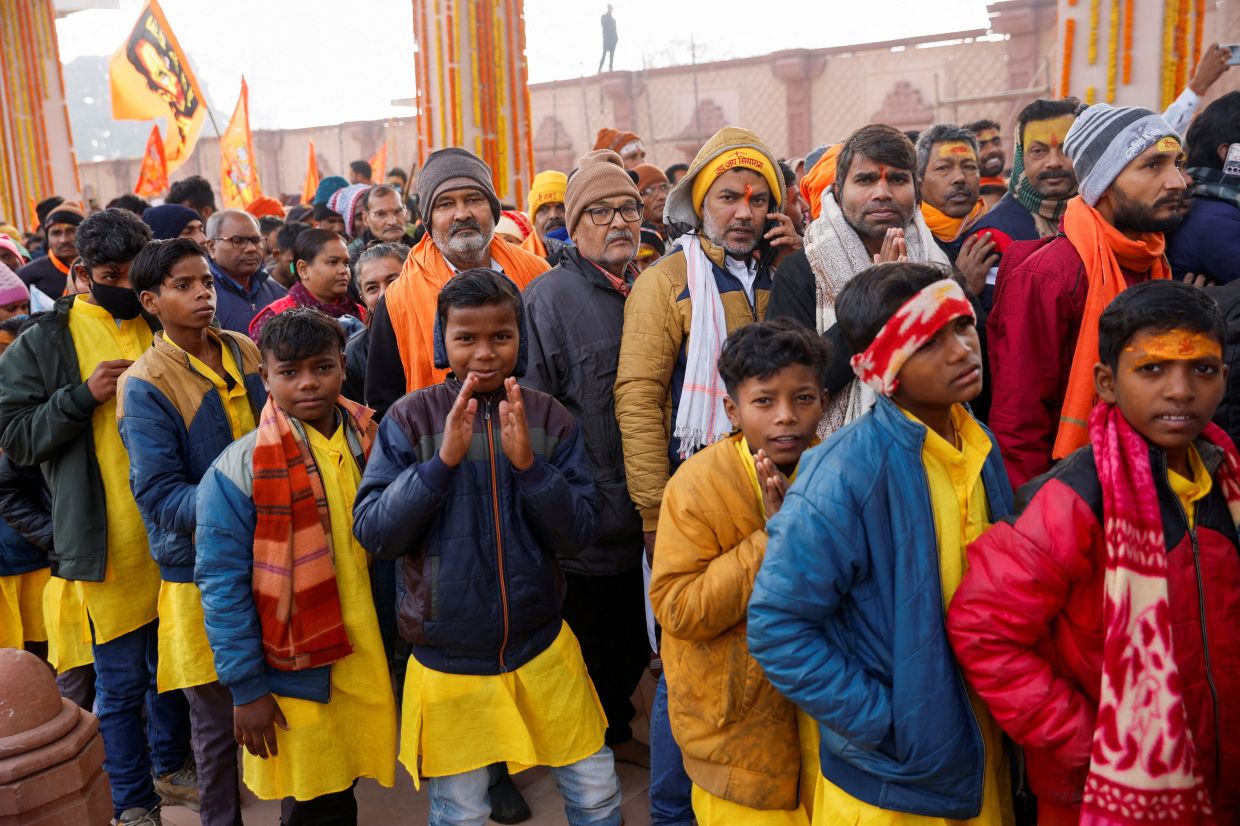
A criminal investigation into missing donations at India's newly inaugurated Ram temple in Ayodhya is forcing uncomfortable questions about financial governance within the country's vast network of religious institutions. Police arrests in June implicated eight staff members responsible for handling contributions, with media estimates suggesting the theft could exceed 30 million rupees—roughly US$314,000. The case underscores a persistent challenge across South Asia's faith sector: the difficulty of securing and accounting for the enormous sums that devotees entrust to temples, mosques, churches, and other shrines.
For ordinary worshippers, the implications of such breaches strike at the heart of their relationship with faith. Ashok Prasad Kushwaha, who drives an auto-rickshaw in Delhi and has made three pilgrimages to the Ram temple over two years, articulates the sense of betrayal many feel when donations disappear. The contributions made by working-class devotees, often representing meaningful sacrifices from modest household budgets, carry spiritual significance beyond their monetary value. When such offerings are diverted through negligence or corruption, the breach extends beyond financial loss to undermine the trust that makes the donation itself meaningful as an act of devotion.
The Ram temple case is hardly isolated. India's major pilgrimage centres have featured repeatedly in donation-related scandals, from the revered Badrinath shrine to the Tirumala Tirupati Devasthanams, which manages assets estimated at US$31 billion and ranks among the world's wealthiest temple trusts. These institutions collectively handle vast flows of cash, gold, jewellery, and other precious items, creating operational complexities that rival those of multinational corporations. Yet many continue to operate with financial systems and oversight mechanisms that remain largely informal, relying on manual processes rather than the digital controls and accountability measures expected in commercial enterprises or government agencies.
Religious scholars and activists have begun articulating the systemic reforms needed to modernise temple finances without undermining spiritual traditions. Rahul Easwar, a Hindu activist and grandson of a former chief priest at Kerala's prominent Sabarimala temple, identifies the root problem as institutional rather than purely criminal. The absence of standardised transparency requirements and accountability mechanisms creates opportunities for mismanagement. Easwar advocates for a comprehensive upgrade in how temples operate financially: mandatory receipts for all donations, computerised accounting systems that generate auditable records, closed-circuit television coverage of donation handling areas, and—critically—independent oversight mechanisms that operate separate from temple management itself.
The vulnerabilities exposed at the Ram temple reflect gaps in basic operational security. Investigating authorities have identified weak protocols in the counting and recording of donations, combined with inadequate surveillance of donation-handling areas. These lapses allowed staff to circumvent existing safeguards. The temple, which opened in 2024 following Prime Minister Narendra Modi's inauguration ceremony, has rapidly become one of India's most significant religious sites, attracting an average of 90,000 visitors daily. The sheer volume of foot traffic generates constant streams of cash donations and precious metal offerings, creating the logistical challenge of securing and accurately recording enormous quantities of small-denomination currency and loose valuables.
The timing and symbolic weight of this scandal carries particular sensitivity within India's political and social context. The Ram temple stands on a site that catalysed one of India's longest-running religious disputes, pitting Hindu and Muslim historical narratives against each other. Hindu devotees venerate it as the birthplace of the god Ram, believed to have been born there over seven millennia ago. A sixteenth-century mosque occupied the location until 1992, when Hindu mobs demolished it in an event that sparked nationwide communal violence claiming more than two thousand lives. The Supreme Court's 2019 decision awarding the site for temple construction resolved the legal battle and launched a nationwide fundraising campaign that ultimately raised approximately US$341 million. That such substantial resources and religious goodwill have been associated with subsequent financial impropriety creates a credibility challenge that extends beyond the temple itself.
India's broader religious economy underscores the magnitude of what is at stake. The country's spiritual and religious market was valued at US$70.14 billion in 2025, with projections reaching US$135.41 billion by 2034 according to consultancy firm IMARC. This expanding sector comprises not merely ancient institutions but increasingly professionalised organisations managing massive budgets, real estate holdings, charitable programmes, and educational facilities. Yet the regulatory framework governing these entities remains fragmented and inconsistent. Legal expert Sonam Chandwani of KS Legal & Associates points out that religious institutions in India operate under multiple overlapping legal frameworks and tax systems that vary by state and religious tradition. No unified national standard prescribes consistent financial transparency requirements across Hindu temples, Islamic endowments, Sikh gurdwaras, Christian churches, and other religious organisations.
The challenge becomes even more pronounced during mass religious gatherings that concentrate donations on an exceptional scale. The Kumbh Mela pilgrimage, which draws millions of devotees over several weeks, presents extraordinary difficulties in securing and recording the volume of offerings generated. Easwar highlights these mass-gathering scenarios as particularly vulnerable to lapses in oversight. The sheer operational scale overwhelms traditional methods of donation management, yet many events still rely on largely manual systems rather than implementing the technological infrastructure that could handle such volumes securely.
Policy analysts argue that religious institutions must evolve their internal governance structures to reflect their contemporary operational reality. Political commentator Anurag Naidu emphasises that temples have transformed from simple houses of worship into complex institutions operating on scales comparable to major corporations. These organisations require institutional systems, professional staff with appropriate training, segregated financial functions with clear reporting lines, and independent oversight mechanisms comparable to what large public institutions employ. Without such structures, the risk of both unintentional mismanagement and intentional malfeasance becomes virtually impossible to eliminate.
The path forward requires balancing institutional modernisation with religious autonomy. Reformers like Easwar stop short of advocating government control over temple finances, instead promoting voluntary adoption of professional standards that preserve autonomy while improving accountability. This could include third-party audits by chartered accountants, oversight boards that include members with financial expertise outside the priesthood, digital payment systems that create transparent records, and public disclosure of annual financial statements comparable to what registered charities provide. Several temples have begun implementing such measures, recognising that transparency ultimately serves rather than threatens spiritual purposes by restoring devotee confidence.
The Ram temple investigation will likely catalyse broader discussions about religious institution governance across India and potentially influence policy in other South Asian countries with substantial temple sectors. For Malaysian readers, the relevance extends beyond cultural interest—Southeast Asia's Hindu temples, Muslim endowments, Buddhist monasteries, and Christian churches manage significant resources and face similar governance challenges. The Indian case provides a cautionary example of how institutional growth can outpace management infrastructure, and a template for how faith communities might adopt contemporary financial practices while maintaining spiritual authenticity.

