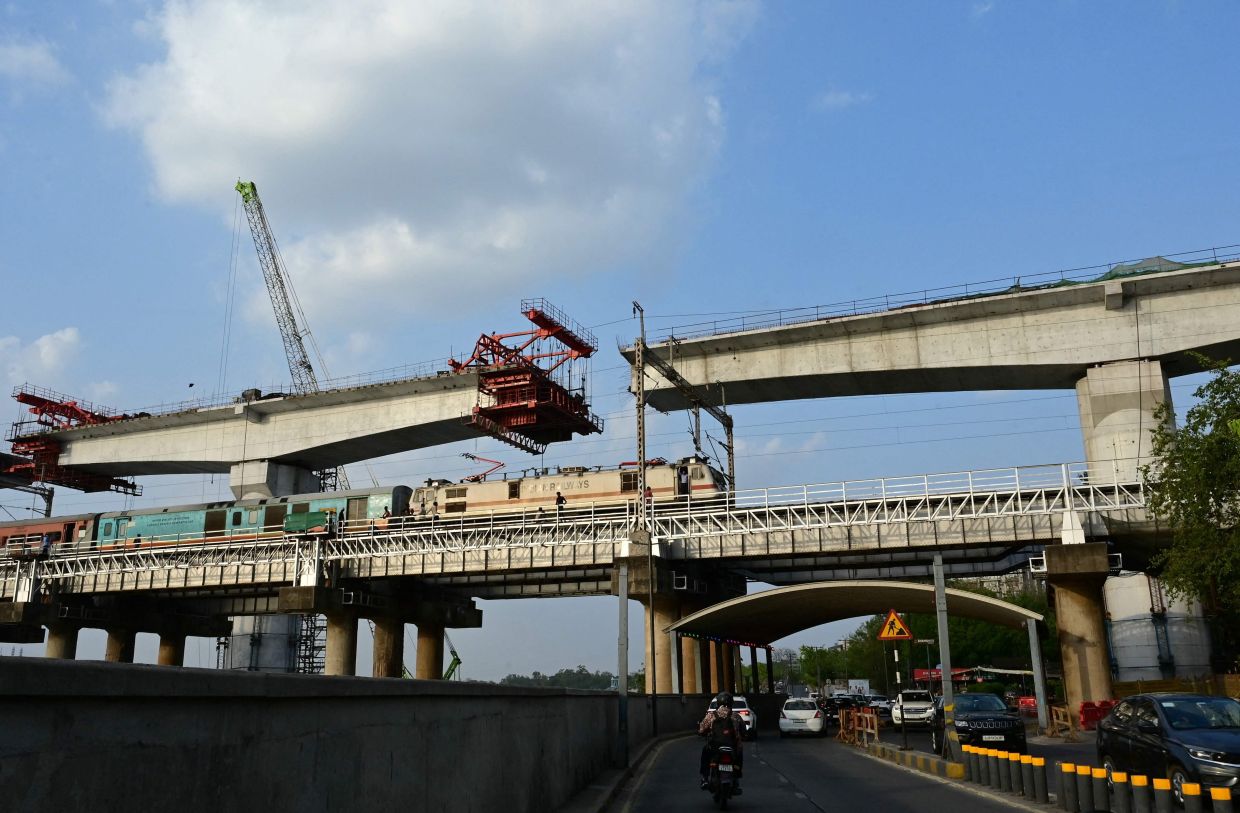
India is finally preparing to bring its long-awaited high-speed rail ambitions to reality, with railway ministry officials confirming that the first operational section of the nation's inaugural bullet train will welcome passengers in 2027, nearly ten years after construction commenced on this transformative infrastructure project. The Mumbai-Ahmedabad High Speed Rail Corridor represents what New Delhi characterises as a watershed moment in modernising the country's railway network, with officials suggesting the venture could catalyse development of multiple high-speed rail arteries spanning the nation.
According to Dharmendra Tewari, additional director general of Indian Railways, significant groundwork across the entire corridor has already reached an advanced stage, setting the stage for the initial operating segment. The first operational stretch will connect the twin commercial hubs of Surat and Vapi, separated by approximately 100 kilometres. Surat, renowned globally as a centre for diamond processing and jewellery, paired with Vapi, an industrial powerhouse in chemical manufacturing and related sectors, forms the proving ground for technology that India hopes will eventually link its major metropolitan areas with unprecedented efficiency.
The project's genesis traces back to 2017, when then-Prime Minister Narendra Modi and Japanese counterpart Shinzo Abe jointly inaugurated the initiative, leveraging cutting-edge Japanese Shinkansen technology to establish India's entry into the global high-speed rail community. Originally envisioned for completion by 2023, the venture has encountered substantial impediments including cost escalations tied to land acquisition complexities and protracted administrative procedures. Nevertheless, the Japanese government remains invested in the corridor's success, with the Japan International Cooperation Agency providing loan financing covering 81 per cent of the estimated 17 billion dollar project cost.
India's railway infrastructure has undergone remarkable transformation since the historic 1853 maiden passenger steam service departed from what is now Mumbai, marking the subcontinent's railway genesis. Contemporary investment has sought to remediate the colonial inheritance of ageing systems through comprehensive modernisation campaigns addressing safety protocols, station amenities, and operational speeds across the sprawling network. The Indian railway system, spanning roughly 85,000 kilometres capable of speeds exceeding 110 kilometres per hour, currently transports 7.41 billion passengers annually whilst managing 1.67 billion tonnes of freight, positioning it among the world's most heavily utilised networks measured by passenger volume.
Domestic innovation has also gained prominence through the Vande Bharat express trains, christened "Salute to India," which achieve operational speeds of 180 kilometres per hour and transported approximately 40 million passengers throughout the previous year. Yet the bullet train project occupies a distinctly elevated status within India's rail modernisation hierarchy, designed to achieve maximum speeds of 350 kilometres per hour with operational cruising velocity of 320 kilometres per hour. When fully operational, this corridor will compress the journey between Mumbai, India's 22-million-strong financial metropolis, and Ahmedabad, the principal city in Modi's native Gujarat, from six hours via conventional rail to just under two hours, substantially outpacing both ground transportation and air travel accounting for airport procedures.
The technical engineering demands have proven formidable, necessitating the construction of a 21-kilometre mountain tunnel alongside India's maiden undersea railway tunnel, with the latter remaining under development. These infrastructure achievements underscore the ambitious scope of bringing international high-speed rail standards to Indian geographical and geological conditions. Officials indicate the complete corridor should become operational by the end of 2028, conveniently aligning with Ahmedabad's scheduled hosting of the 2030 Commonwealth Games, a positioning widely interpreted as strategic groundwork toward India's broader objective of securing the 2036 Olympic Games.
The bullet train initiative directly fulfils commitments Modi articulated upon his 2014 election to the prime minister's office, when he pledged to establish a comprehensive high-speed rail network across India. Building upon anticipated successful completion of the first corridor, New Delhi has initiated more expansive planning for seven additional high-speed rail corridors spanning approximately 4,000 kilometres collectively. These projected networks represent what government planners term "growth connectors," infrastructure designed to integrate regional economic centres whilst facilitating inter-state mobility and commercial exchange.
The envisioned expansion encompasses an east-west route traversing from New Delhi through Varanasi, Modi's parliamentary constituency and one of Hinduism's most sacred destinations, extending to Siliguri, the strategic gateway connecting India's northeastern states to the remainder of the nation. A complementary north-south trajectory would link Ahmedabad and Mumbai before penetrating southeastward through major metropolitan centres including Pune, Hyderabad, and Chennai, the technology sector hubs anchoring India's knowledge economy. Such comprehensive connectivity could fundamentally reshape economic geography, enabling faster personnel mobility and facilitating business integration across traditionally fragmented regional markets.
For Malaysia and other Southeast Asian economies, India's high-speed rail development carries significant strategic implications regarding regional connectivity and the broader architecture of intra-Asian transport networks. Should India successfully establish a modern rail system comparable to those in East Asia, the resultant economies of scale and operational efficiencies could catalyse broader regional initiatives toward integrated transportation corridors spanning South and Southeast Asia. The Japanese involvement through technology transfer and financing similarly demonstrates how regional powers can collaborate on transformative infrastructure whilst generating technology expertise with applicability across multiple jurisdictions.
However, scepticism regarding project timelines remains warranted given the significant delays already accumulated. Media reports suggest actual expenditures may substantially exceed the officially stated 17 billion dollar figure, with escalating land acquisition costs and construction complexity potentially driving expenses considerably higher. These budgetary pressures reflect chronic challenges in India's infrastructure implementation capacity, where ambitious visions frequently encounter friction from land rights complexities, regulatory coordination difficulties, and geographical obstacles.
The psychological and economic significance of the 2027 opening cannot be understated, as successful establishment of even a preliminary high-speed corridor would validate the technological and organisational capacity required for more ambitious expansion. Japanese Premier Sanae Takaichi, succeeding Shinzo Abe as Japan's leader, is scheduled to visit India this week, an opportune moment for reinforcing bilateral commitment to this signature infrastructure project. Her presence signals continued Japanese political backing during a critical implementation phase, particularly given Japan's substantial financial stake in the corridor's ultimate success and the demonstration effect on Japan's broader Indo-Pacific infrastructure initiatives.
Looking forward, the bullet train project will likely function as both a practical transportation improvement and a symbolic marker of India's emergence as a modern infrastructure-capable economy. Should the initial Surat-Vapi segment achieve its projected 2027 opening, momentum toward the wider network envisioned by New Delhi could accelerate, transforming India's transportation landscape and establishing regional precedents for high-speed rail development. Conversely, further delays would validate persistent concerns about India's implementation capacity and dampen enthusiasm for the broader corridor expansion programme currently existing only in planning documents.

