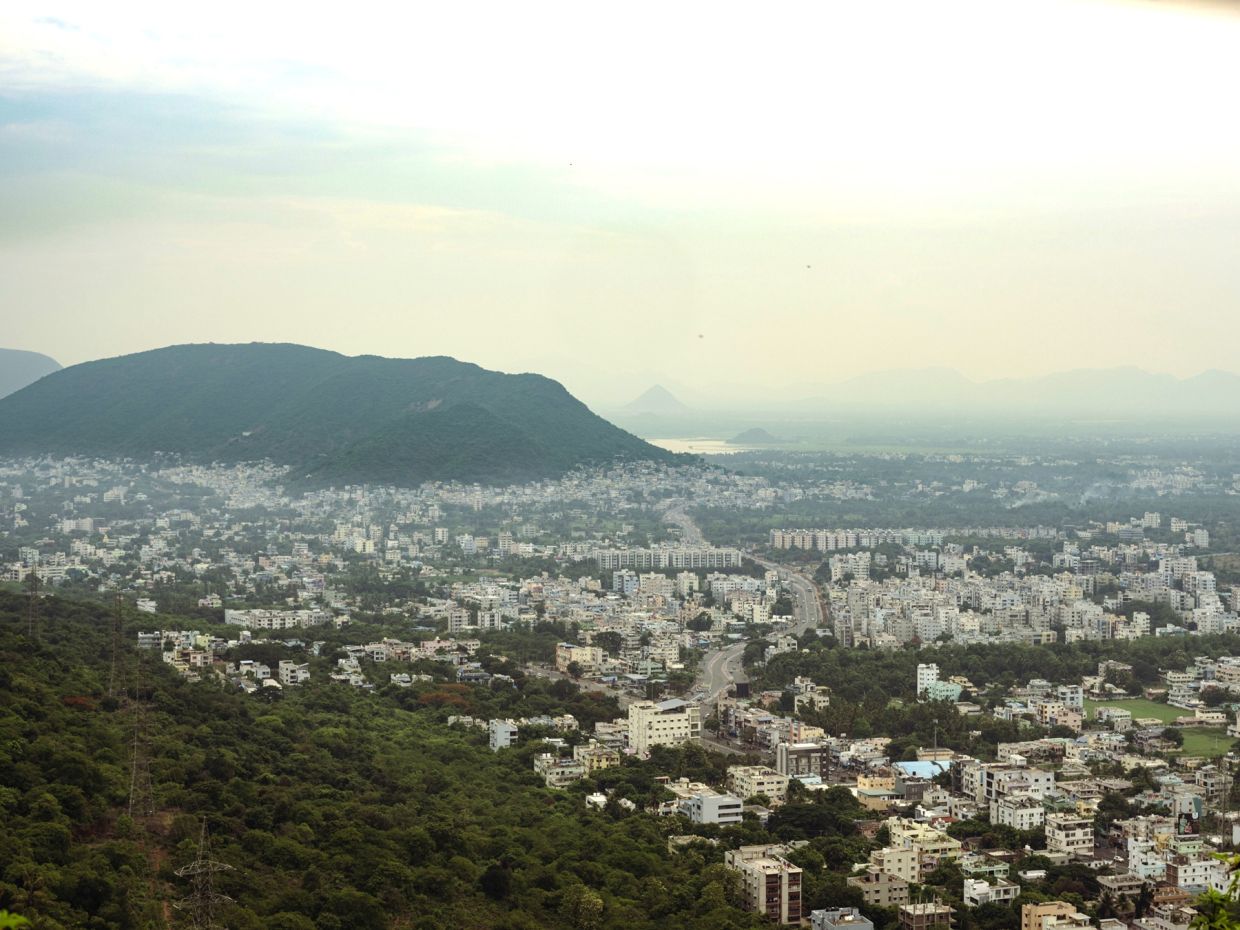
India is banking heavily on data centres to secure its footing in the artificial intelligence race, with two massive infrastructure projects now under way in the coastal city of Visakhapatnam in Andhra Pradesh state. Google, partnering with billionaire Gautam Adani, is leading a US$15 billion initiative that includes constructing a one-gigawatt data centre alongside subsea cable infrastructure. Alongside this, Reliance and Brookfield Asset Management are developing an equally substantial facility. Together, these projects will more than double India's existing data centre capacity, signalling the government's determination to transform the nation from a technology services provider into an infrastructure powerhouse.
The Indian government has rolled out an aggressive incentive package to attract these investments, offering Google and the Adani Group sweeping concessions including discounted land, subsidised energy rates, reduced water costs, and extensive tax exemptions. These sweeteners reflect New Delhi's acute awareness that India lags significantly behind regional competitors in establishing the foundational infrastructure necessary for artificial intelligence development and deployment. A Morgan Stanley report characterised India's current position as that of a "laggard" despite the nation's vast domestic market and abundant software engineering talent. This perception that India is losing ground has become a driving force behind state-level competition, with southern states particularly eager to attract foreign investment as they position themselves against northern regions they view as less business-friendly.
Andhra Pradesh's information technology minister Nara Lokesh has framed the data centre projects as catalysts for broader economic transformation. Beyond the facilities themselves, he envisions an ecosystem of supporting manufacturing enterprises—power electronics suppliers, air conditioning manufacturers, building materials producers—establishing operations within the state. This represents a deliberate strategy to move India beyond its traditional role as a destination for back-office services and software development toward becoming a hub for hardware-intensive technology infrastructure. The vision aligns with Prime Minister Narendra Modi's broader industrial policy ambitions, though it rests on assumptions about multiplier effects that remain unverified.
However, the pace and opacity surrounding these projects have triggered considerable unease among Visakhapatnam residents, environmental activists, and former government officials. Hyperscale data centres are notoriously resource-intensive facilities—they consume enormous quantities of electricity for computing and cooling, and demand substantial volumes of fresh water for climate control systems. Critically, these operations generate minimal direct employment relative to their capital requirements, a contradiction that has already provoked fierce resistance in the United States, where communities in states like Texas, Ohio, and elsewhere have blocked or delayed billions of dollars in data centre development.
The Indian context makes these concerns more acute. Visakhapatnam sits in a water-stressed region where summer months bring severe supply disruptions, yet project documents reveal minimal transparency about where the facilities will source their water and electricity. Critics argue that environmental clearance procedures have been expedited and potentially compromised to accelerate construction in ecologically sensitive zones. VS Krishna, a campaigner with the Human Rights Forum operating in the region, articulated the fundamental grievance: "This is not a defence deal, this is a developmental project. Why should it be shrouded in this opacity?" He emphasised that local communities are being asked to absorb substantial infrastructure costs and environmental risks without meaningful public consultation or debate.
The close relationship between Gautam Adani and Prime Minister Modi looms large in this conversation. Adani's wealth has expanded dramatically during Modi's 12 years in office, and his corporate group has acquired a reputation for successfully navigating government approvals for major projects. The perception that Adani benefits from privileged access to state resources and regulatory pathways has fuelled suspicion that ordinary citizens will ultimately bear the costs of subsidies and infrastructure expansion that privately benefit large corporations. EAS Sarma, a former senior official in India's finance and energy ministries, voiced this concern bluntly: "Google is very clever—it has joined hands with Adani, because Adani can clear anything here in the government of India."
Google and Adani representatives counter these criticisms by asserting that project design has incorporated measures to shield local communities from burdens. They claim the facilities will employ cooling technologies that minimise water consumption while remaining independent of the potable water supply serving residential areas and businesses. Additionally, Google has committed to investing in clean energy generation infrastructure and guaranteeing that "no costs are passed on to local households, local businesses, or the state government." These assurances, however, have done little to convince sceptics who question both the technical feasibility of these claims and the track record of similar projects globally.
Government officials cite projections of approximately 120,000 jobs during the construction phase and roughly 60,000 permanent positions after completion. Yet critics question the mathematical basis of these figures, noting that documented employment patterns at comparable data centre facilities globally do not support such large numbers. Project environmental clearance documents themselves contain internal inconsistencies, detailing infrastructure specifications—parking requirements, toilet water volume—that suggest total employment would represent only a fraction of official projections. This discrepancy raises fundamental questions about either the accuracy of government estimates or the actual design specifications of these facilities.
India's labour market dynamics compound these concerns. The nation faces persistent challenges in generating sufficient quality employment for its population of 1.4 billion people, a problem the International Monetary Fund has warned could worsen dramatically as artificial intelligence and automation technologies proliferate. The tech services industry, which has provided stable middle-class employment for millions of Indians, faces existential disruption from AI-driven productivity improvements. Paradoxically, India is simultaneously pursuing aggressive automation-intensive data centre development precisely when its economy needs to create jobs for hundreds of millions of people entering the workforce.
The structural contradiction at the heart of India's AI strategy reflects a broader tension between national-level ambitions and local-level consequences. New Delhi perceives data centre capacity as essential infrastructure for participating in the global artificial intelligence economy, and the capital flows attached to these projects carry genuine significance for India's development trajectory. Yet this strategic imperative arrives in communities that already struggle with water scarcity, electricity reliability, and environmental degradation. The government's determination to move quickly, combined with limited transparency and traditional suppression of dissent, has prevented the public deliberation necessary to build legitimacy around these projects.
EAS Sarma articulated the financial reality underlying these arrangements: "Every subsidy is a cost for the society." He specifically flagged the expense of building new electrical transmission infrastructure, which will ultimately appear on consumers' electricity bills regardless of whether the government formally acknowledges it as a cost to the state. This logic extends to water infrastructure, maintenance of environmental remediation, and management of industrial waste—all expenses that government incentive packages effectively transfer to the broader population. For Visakhapatnam residents, the fundamental question remains unanswered: Will the promised development and employment gains materialise as claimed, or will the region absorb the environmental costs and infrastructure burdens while benefits accrue primarily to corporate investors and national-level political leaders?

