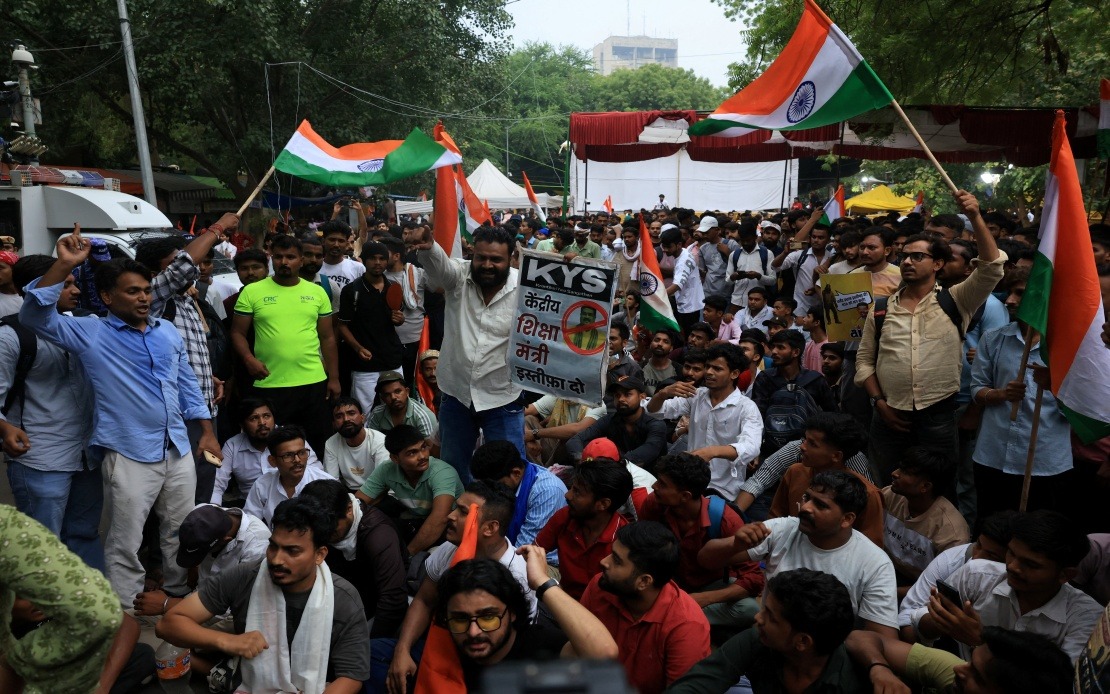
Thousands of demonstrators converged on New Delhi on Monday in a bid to reach the Parliament building, prompting Indian authorities to establish barricades and deploy crowd-management tactics to contain the gathering. The protest, organised as a "Sansad Chalo" or march-to-parliament initiative, reflected mounting frustration among younger Indians over the structure and effectiveness of the country's educational institutions. The rally coincided with the commencement of Parliament's Monsoon Session, a period traditionally associated with heightened security measures and restricted public access to government buildings.
The youth-driven movement that organised the protest has rapidly mobilised supporters through digital platforms, claiming to represent millions of engaged followers across various online channels. This digital-first approach represents a notable shift in how grassroots movements are orchestrated in India, bypassing traditional institutional communication pathways and appealing directly to younger demographics through social media networks. The organisers framed their demonstration as a legitimate exercise in democratic participation, though authorities imposed strict limitations on public gatherings in the vicinity of Parliament.
Educational reform has emerged as a significant rallying point for Indian youth, who have articulated concerns about curriculum relevance, examination pressures, teaching methodologies, and employment preparedness within the existing system. These grievances extend beyond mere academic concerns to encompass broader questions about how India's educational framework prepares citizens for contemporary challenges in an increasingly competitive global economy. The protesters view systemic change as essential to addressing skill gaps and ensuring that educational institutions remain responsive to evolving workplace demands.
As police worked to manage the dense crowds gathering near parliamentary precincts, tensions escalated when protesters attempted to breach security cordons placed strategically to prevent direct access to the legislature. Authorities deployed standard crowd-control procedures, though the precise nature and intensity of police response remains subject to varying media characterisations. The incident underscores the delicate balance Indian authorities must maintain between permitting legitimate democratic expression and maintaining security around sensitive government infrastructure.
Prime Minister Narendra Modi departed the Parliament complex in an official convoy as police intensified their management operations in surrounding areas. The timing of the protest, overlapping with the opening day of the Monsoon Session, ensured maximum visibility and demonstrated the organisers' strategic understanding of how to capture public and political attention. Parliamentary sessions typically attract heightened security protocols, making Monday's events particularly noteworthy from a logistics and security coordination perspective.
The incident prompted authorities to strengthen security arrangements across multiple key locations throughout India's capital city. This precautionary escalation reflects standard procedure following large-scale public demonstrations, particularly those targeting Parliament or senior government officials. Such measures, while intended to prevent disruption and ensure safety, simultaneously illustrate the challenge governing authorities face in accommodating protest activity while maintaining institutional stability.
For Southeast Asian observers, the New Delhi protest carries several instructive dimensions. Educational reform remains a pressing concern across the region, with Malaysia, Indonesia, Thailand, and other nations grappling with similar questions about curriculum modernisation, teaching standards, and graduate employability. The digital mobilisation tactics employed by Indian youth organisers offer a template that resonates with younger populations throughout Asia, who increasingly leverage social media to coordinate political action independent of traditional party structures.
The movement's rapid online growth demonstrates how educational grievances can crystallise into organised political action when channelled through accessible digital infrastructure. This pattern reflects broader trends across Asia, where youthful populations express frustration with institutions they perceive as unresponsive to contemporary needs. The Indian case suggests that educational discontent, when adequately mobilised, possesses sufficient force to command political attention and disrupt normal governmental operations.
The Monsoon Session's opening day clash between demonstrators and police also highlights how different phases of parliamentary activity create distinct opportunities and constraints for protest movements. New Delhi's experience will likely inform future protest strategies not only within India but across the region, as activist networks share observations about security postures, police tactics, and optimal timing for maximising political impact. The incident demonstrates that even in established democracies with constitutional protections for assembly and expression, governments carefully calibrate access to parliament and senior officials.

