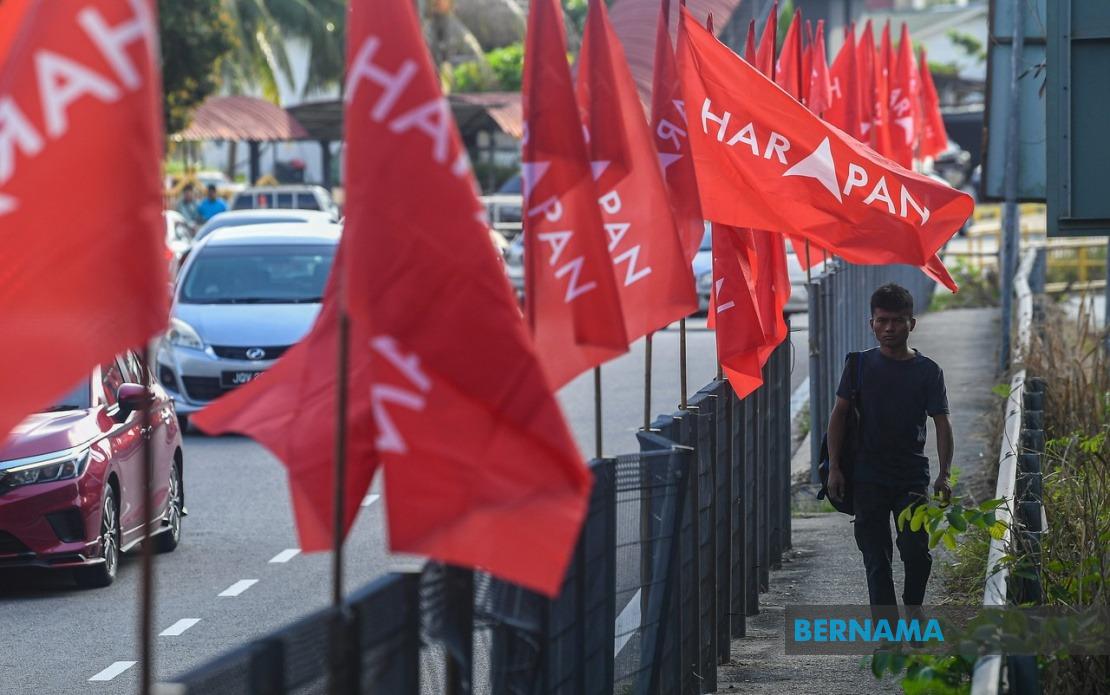
In the run-up to Johor's state election on July 11, Pakatan Harapan is making an explicit pitch to the Indian community to help secure victory and maintain Malaysia's political trajectory. Dr Gunaraj George, a PKR Central Leadership Council member and Sentosa assemblyman, has framed the contest not as a routine electoral exercise but as a referendum on whether Malaysia continues its reform path or slides back into political instability. His argument speaks to broader regional anxieties about governance and investor confidence at a time when Southeast Asian economies face mounting headwinds.
Despite comprising a numerical minority in Johor, the Indian community holds outsized electoral leverage across approximately 25 mixed and marginal state legislative assembly seats where vote distribution could easily tip the balance. This arithmetic is crucial to understanding why PH is directing targeted appeals to this demographic rather than assuming bloc loyalty. The outcome in these marginal constituencies could determine whether the coalition maintains control of the state or faces a setback that reverberates nationally. Such constituencies typically reflect diverse voter populations, making them sensitive to swing voting patterns and specific policy messaging that resonates beyond established party lines.
The broader context framing PH's campaign emphasises economic vulnerability and institutional stability. With global trade tensions, geopolitical volatility, and domestic cost-of-living pressures bearing down on Malaysian households, Dr Gunaraj contends that investors and businesses require predictable governance. Political turmoil, he argues, undermines the confidence necessary for foreign direct investment, job creation, and wage growth—concerns that hit hardest within middle and working-class communities. For Indian voters, many of whom work in manufacturing, services, and small business sectors, this message connects local electoral choices to household economic prospects.
A centrepiece of PH's appeal rests on concrete allocations to programmes targeting the Indian community. Most prominently, the Malaysian Indian Transformation Unit (MITRA) budget has increased from RM100 million to RM150 million after remaining static for nearly a decade under previous administrations. Prime Minister Datuk Seri Anwar Ibrahim has further committed to progressively raising this allocation in response to evolving needs. This spending reversal carries symbolic weight—it signals acknowledgment of long-standing neglect and commitment to course correction. Beyond aggregate figures, Dr Gunaraj emphasises that MITRA's administration has become more transparent and accountable, with programme implementation and expenditure now systematically tracked and reported to Parliament, addressing past criticism about opaque fund management.
Education funding forms another pillar of PH's outreach. Tamil National-Type Schools (SJKT) have received enhanced budgetary allocations, addressing longstanding complaints about under-resourcing in vernacular education. Simultaneously, the government has expanded Technical and Vocational Education and Training (TVET) pathways, which have historically provided alternative routes to employment for students unable to access or navigate traditional university systems. These initiatives directly affect the pathway prospects of Indian youth and their families' economic mobility. Coupled with maintenance allowances for religious and community places of worship, including temples, these policies address both material and cultural dimensions of community life.
Social safety nets have also been widened under the MADANI framework. The Sumbangan Tunai Rahmah (STR) and Sumbangan Asas Rahmah (SARA) cash assistance programmes provide direct financial relief to struggling households, including Indian families navigating inflationary pressures. Support for micro, small, and medium enterprises (MSMEs) is particularly relevant to Indian communities, where petty trading, small workshops, and family-operated businesses remain significant employment sources. By targeting these segments, PH attempts to demonstrate tangible benefits flowing from its governance rather than abstract promises.
The political economy of Malaysian elections reveals that such community-specific appeals, when backed by measurable programme spending, exert genuine influence on swing voters. However, the effectiveness of these messages depends partly on whether beneficiaries perceive allocations as substantive or token gestures. Dr Gunaraj's emphasis on transparency and parliamentary accountability appears designed to overcome historical scepticism about political promises. The doubling of MITRA allocation and commitments to further expansion provide quantifiable benchmarks against which voters can assess sincerity.
From a broader Southeast Asian perspective, Malaysia's handling of minority community relations carries significance beyond national borders. Singapore and other regional states observe how multiethnic democracies navigate resource allocation and political representation. Successful management of minority communities' concerns demonstrates institutional maturity and inclusive governance that strengthens democratic legitimacy. Conversely, perceived marginalisation or backtracking on community benefits can fuel grievances that destabilise governing coalitions and weaken investor confidence across the region.
The timing of Dr Gunaraj's appeals also reflects awareness that Indian voters in Johor may be comparing PH's record with alternative options. If opposition parties attempt to position themselves as better defenders of Indian interests, PH's counter-narrative must establish tangible distinctions. The specific mention of MITRA's increase, SJKT enhancements, and temple maintenance assistance provides concrete talking points that can be articulated at grassroots levels through community networks and institutions.
Johor's electoral dynamics carry state and national implications simultaneously. As Malaysia's second-most populous state and an economic powerhouse, Johor's political direction influences perceptions of MADANI's viability nationwide. A PH victory would validate the coalition's claim that voters endorse institutional reform and political stability. Conversely, significant losses might embolden parties questioning the government's mandate or economic competence, potentially encouraging defections or fractious coalition politics. The Indian community's role as a decisive swing group in marginal seats means that how effectively PH mobilises this vote reflects both community-specific outreach capacity and the coalition's broader organisational strength.
Looking ahead to the July 11 poll, the electoral mathematics appear tight enough that community-specific vote aggregation genuinely matters. Dr Gunaraj's framing of this election as a choice between stability and uncertainty, between continued reform and political uncertainty, attempts to elevate the contest beyond conventional seat-by-seat competition. Whether this high-minded approach resonates depends on whether Indian voters perceive their immediate material circumstances aligning with the government's reform narrative or feel that policy benefits announced in press statements have not meaningfully transformed daily lives.

