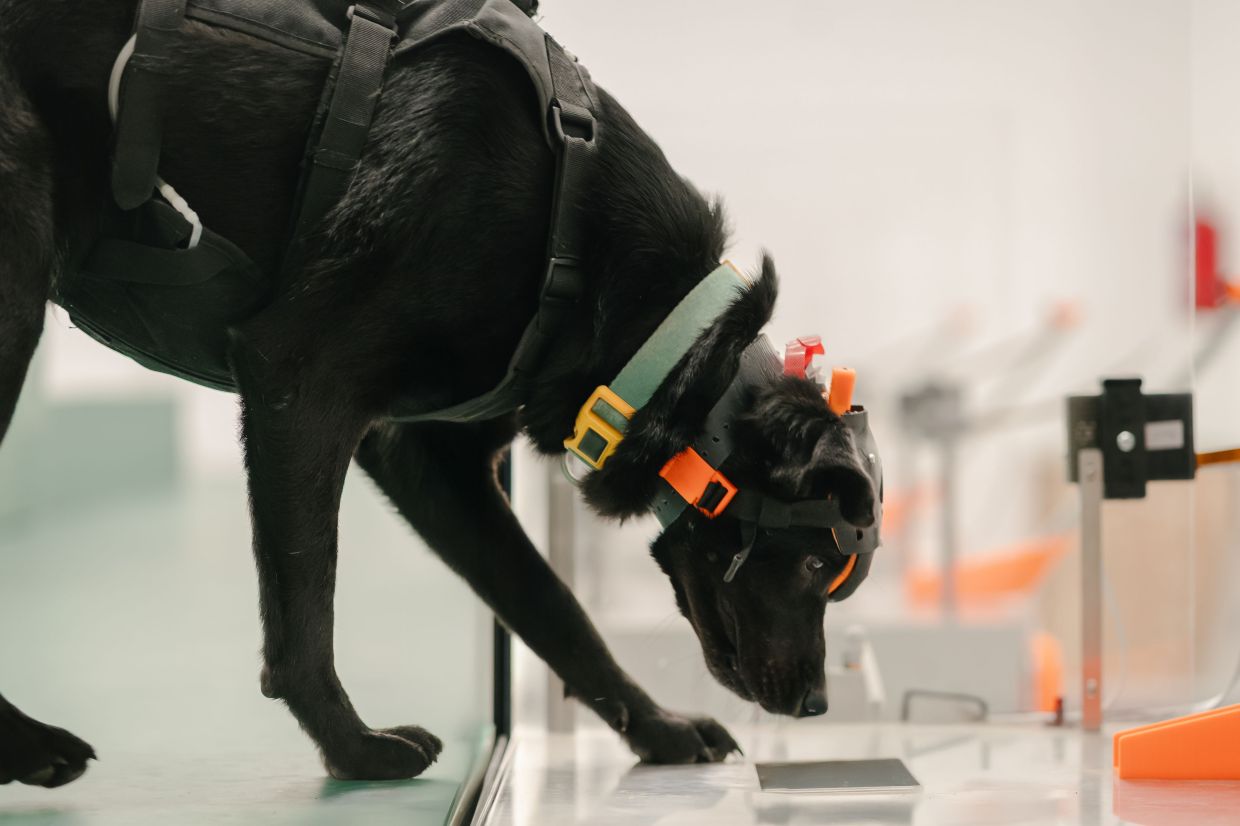
Outside Bengaluru, a team of beagles, labradors and Dutch shepherds is clocking in to work each day at a startup challenging how the world approaches cancer detection. The animals—Billy, Jessie and Banu among them—have been recruited by Dognosis to sniff breath samples for traces of cancer, transforming a biological capability traditionally used for drug and explosive detection into a potential mass-screening solution. Rather than relying on conventional imaging, blood tests or invasive biopsies, the company has built a system where patients exhale into masks that are sent to the facility, and the dogs' responses—captured through sensors measuring movement, respiration, brain activity and body language—are interpreted by artificial intelligence algorithms to flag possible malignancy.
The two-year-old venture operates from a two-acre farm and laboratory complex where the animals receive regular exercise, playtime and approximately 30 minutes to an hour daily on the detection platform, with work structured as a game rewarded with treats. During recent sessions, a two-year-old beagle named Whiskey demonstrated the process: working through 10 samples, she paused and circled at the sixth before the system registered a positive result. This blend of biological sensing and computational analysis represents an unconventional yet scientifically grounded approach to a persistent global health challenge. The dogs have shown the ability to recognize patterns across cancer types they have never encountered during training, suggesting their olfactory processing taps into fundamental biochemical signatures rather than mere memorization.
Dognosis's credentials rest partly on published research from a Phase 2 study in the Journal of Clinical Oncology, which reported approximately 90 percent sensitivity for early-stage cancers spanning seven broad categories and more than 20 cancer types, including breast cancer. The company has secured backing from early-stage investors including Accel India and San Francisco-based Caffeinated Capital, raising US$1.5 million in a pre-seed round during 2024 and an additional undisclosed amount more recently. According to co-founder Akash Kulgod, this funding provides runway for approximately two years on the company's planned development trajectory. The fundamental appeal lies in addressing a critical gap: dogs' exceptional olfactory capabilities—possessing roughly 300 million olfactory receptors compared to six million in humans—can theoretically enable detection of disease biomarkers before they manifest clinically.
India presents both an urgent opportunity and formidable challenge for such technology. The country ranks third globally in new cancer case prevalence, with the International Agency for Research on Cancer documenting 1.5 million new diagnoses and over 900,000 deaths in 2024 alone. Statistically, roughly one in ten Indians face cancer risk before age 75. Breast cancer leads the incidence table, followed by cancers affecting the lip, oral cavity, lung and cervix. Yet screening rates remain devastatingly low: only 1.9 percent of Indian women surveyed between 2019 and 2021 had undergone cervical cancer screening, while just 0.9 percent had been screened for breast or oral cancer. Among men, merely 1.2 percent reported ever receiving oral cancer screening. This screening deficit means countless cases progress undetected until advanced stages when treatment becomes complex and prognosis poor.
Dognosis aims to penetrate this gap by launching an at-home multi-cancer prescreening test in India next year at a cost measured in a few thousand rupees, dramatically undercutting conventional diagnostic imaging and laboratory testing. The company's expansion roadmap includes processing one million tests annually, expanding its canine workforce from the current team to 30 dogs and reducing turnaround time to one week. Longer-term ambitions encompass opening a facility in the United States by late 2027 or early 2028, with similar ventures like New Jersey-based SpotitEarly reporting comparable trial results, though commercialization remains pending for competitors. The company's ability to navigate regulatory frameworks reflects the distinction between prescreening tools and diagnostic devices—Kulgod contends the former does not require Indian regulatory approval, only the latter being regulated in India, though this interpretation may face scrutiny as the technology scales.
The critical test arrives now, as Dognosis has launched its Phase 3 trial in April across 10 hospitals throughout India, planning to recruit approximately 10,000 participants over 12 months. This study will enroll both asymptomatic individuals at elevated cancer risk and survivors vulnerable to recurrence. Those flagged by the canine-AI system will receive conventional confirmation through imaging and biopsy, establishing whether the screening methodology maintains accuracy beyond controlled laboratory conditions. The logistics of scaling breath sample collection, transport, storage and processing across India's diverse geography and healthcare infrastructure present substantial operational challenges. Building trust among physicians, patients and health administrators accustomed to established diagnostic paradigms represents an equally formidable hurdle.
Experience suggests measured optimism is warranted but not certainty. Pankaj Chaturvedi, deputy director of the Centre for Cancer Epidemiology at Tata Memorial Centre in Mumbai, cautioned that emerging technologies should strengthen rather than replace existing screening infrastructure. His perspective reflects legitimate concern that enthusiasm for novel approaches could inadvertently divert resources from proven strategies still unevenly deployed. Dognosis envisions launching in Bengaluru next year before expanding through partnerships with diagnostic chains and healthcare providers across India. The company's strategy depends not only on scientific validation but on demonstrating economic sustainability—generating sufficient volume at the target price point to support operations including canine care, veterinary oversight, handler training and technological maintenance.
For Malaysian healthcare stakeholders and Southeast Asian health systems more broadly, Dognosis's trajectory warrants close attention. The region faces comparable cancer detection challenges, with screening rates lagging developed economies and populations often presenting at advanced disease stages. Singapore, Malaysia and Thailand have marginally better screening infrastructure than India, yet gaps persist particularly in lower-income communities. If Dognosis achieves its Phase 3 objectives and subsequent commercial validation in India, the model could be adapted for regional deployment through partnerships with existing diagnostic centers and telehealth platforms. The fundamental economics of canine-based screening—requiring live animal management, handler training and local AI implementation—would require recalibration for each market's cost structure and healthcare delivery networks.
The venture exemplifies how emerging biotechnology increasingly transcends traditional disciplinary boundaries, combining veterinary science, artificial intelligence and public health. Whether this particular approach becomes mainstream diagnostic practice or remains a specialized niche offering depends on factors beyond pure scientific performance: regulatory clarity, economic viability, practitioner acceptance and ultimately whether populations trust screening systems built around animal intermediaries. Kulgod's observation that humanity already depends on dogs in life-or-death situations—detection dogs for security, assistance animals for disabilities—suggests the psychological barrier may prove surmountable. The genuine constraint has always been standardization and scaling, moving from anecdotal success stories to reproducible, economically viable systems. If Dognosis navigates these transitions successfully, it may unlock a vastly underutilized biological resource for one of global health's most persistent challenges.

