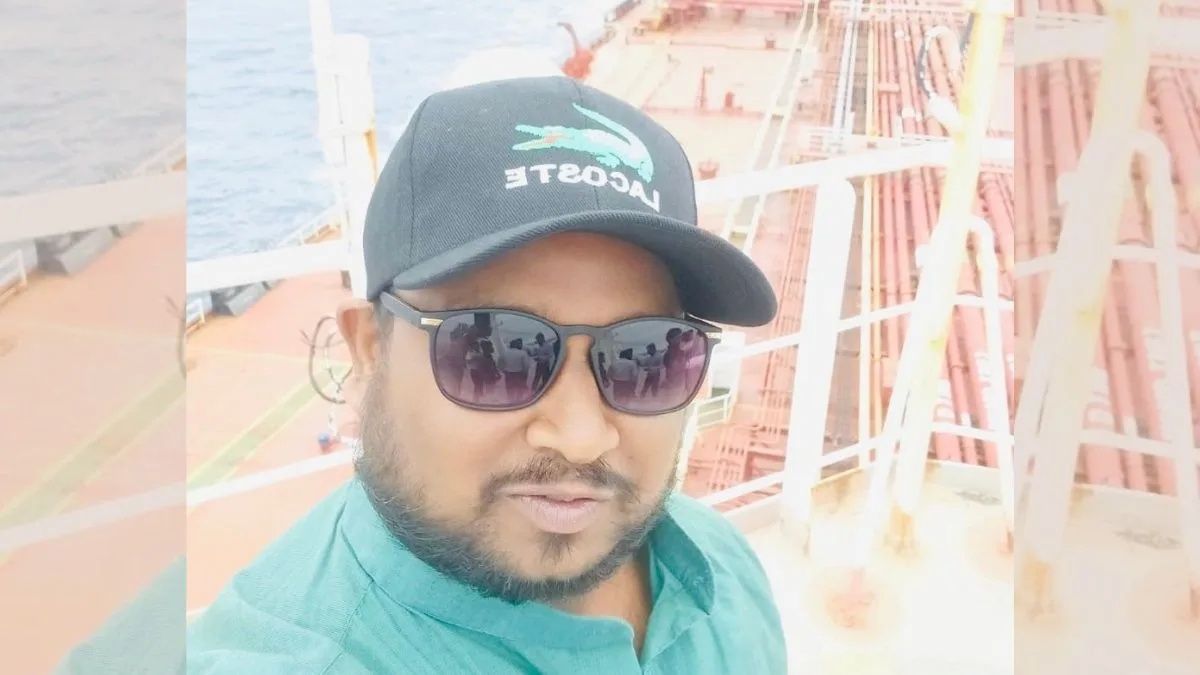
The unexplained death of a 33-year-old Indian seafarer working aboard a merchant vessel in Venezuelan waters has triggered alarm within India's maritime community and raised uncomfortable questions about worker safety and institutional accountability. Rakesh Chauhan from Deoria district in Uttar Pradesh travelled to South America in November 2025 to join the crew of a commercial ship, but within months his family would be grappling with a series of troubling inconsistencies surrounding his death and the repatriation of his remains.
According to the account provided by Chauhan's family, the initial communication from the shipping company suggested a straightforward workplace accident. They were informed that he had sustained injuries from a fall while onboard and was receiving medical treatment. The situation deteriorated rapidly: within hours, company representatives conveyed that survival odds had plummeted to just five per cent, and by the same evening, notification came that Chauhan had succumbed to complications from the fall. The company subsequently assured the family that his body would be returned to India within a week—a promise that would prove misleading, as his remains did not arrive until early June, nearly thirty days after his reported death in May.
When the body finally reached Uttar Pradesh, the circumstances became significantly more disturbing. Medical professionals in Deoria initially hesitated to perform an autopsy upon observing visible evidence that the body had apparently already undergone post-mortem examination abroad. However, following intervention by the District Magistrate, a fresh examination was conducted. The findings documented in the Indian post-mortem report revealed an extensive pattern of surgical incisions: a prominent suture line ran from the neck down to the pubic symphysis, whilst a second set of stitches extended across the back of the head from ear to ear. The report also indicated the body had been stored in deep freeze from early May through to early June.
The autopsy's most striking discovery concerned what was entirely absent rather than what remained. Systematic examination revealed that virtually all of the body's vital organs had been removed. The missing components included the brain, heart, both lungs, liver, kidneys, spleen, pancreas, stomach, intestines, thyroid gland, hyoid bone, larynx, and trachea, along with major blood vessels and numerous other tissue structures. This absence of critical organs rendered medical determination of the cause of death impossible—a conclusion the pathologists were forced to document in their official report.
The Federation of Seafarers' Unions of India, which represents workers in the maritime sector, responded to these findings with statements characterising the case as unacceptable and symptomatic of broader vulnerabilities facing seafarers. The federation emphasised that Chauhan's body had been returned without accompanying autopsy documentation or official explanation from Venezuelan authorities regarding the circumstances of his death. In public statements circulated through social media, the organisation highlighted the extent of organ removal, noting the specific count of sutures and underscoring that no evidence of ante-mortem injuries had been documented despite the stated cause being injuries from a fall.
Beyond the organ removal itself, several additional irregularities have surfaced that have intensified suspicions within Chauhan's family and maritime labour organisations. The receipt accompanying the body bore a name inconsistent with the individual reportedly authorising the handover—documentation listed "Anjana Chauraisya" rather than "Ranjana Chaurasiya," whom the federation identified as acting on behalf of Chauhan's wife. Furthermore, discrepancies emerged between the vessel identified in Chauhan's employment documentation and the actual vessel upon which he was deployed. The federation has characterised these inconsistencies as raising "grave suspicions of foul play and a possible cover-up."
These revelations have prompted the federation to raise concerns extending beyond the immediate circumstances of Chauhan's death to encompass broader questions about organ trafficking and systematic exploitation within international maritime labour. The combination of organ removal, documentation irregularities, extended delays in repatriation, and absence of transparent Venezuelan autopsy records has created a framework of suspicion that Indian maritime authorities and the government cannot simply ignore without damaging credibility with seafarers and their families.
The case highlights a vulnerability particular to Indian workers employed aboard international vessels operating in distant waters. Maritime workers occupy a legal grey zone when abroad—far from immediate family oversight and governmental protection, dependent upon employer documentation and foreign institutional processes that operate without transparent Indian scrutiny. The absence of a Venezuelan autopsy report provided to the family before repatriation means Indian authorities had no independent verification of what had been done to the body, facilitating the concealment of systematic organ removal.
The Federation of Seafarers' Unions of India has articulated a comprehensive set of demands: full investigation by Venezuelan authorities with Indian government intervention, immediate diplomatic engagement by India's embassy in Caracas, release of the complete Venezuelan autopsy report, transparent disclosure of circumstances surrounding Chauhan's death, and compensation for the family. These demands reflect recognition that maritime workers require institutional safeguards extending beyond traditional labour protections to encompass oversight of their physical safety and dignified treatment of remains.
For Malaysian readers and Southeast Asian maritime communities more broadly, the Chauhan case represents a cautionary example of institutional vulnerabilities that transcend borders. Indian seafarers operate alongside Malaysian and other Southeast Asian crews aboard vessels throughout global shipping routes. The systemic failures evident in this case—inadequate documentation, family exclusion from post-mortem processes, unexplained delays, and apparent manipulation of records—could theoretically extend to workers of any nationality subjected to similar circumstances. This incident underscores the necessity for regional maritime labour organisations and governments to establish stronger protocols ensuring that workers' remains are treated with transparency and accountability, regardless of where death occurs.
The Indian government's response to these demands will carry significance beyond Chauhan's case. Effective intervention would signal to millions of Indian seafarers that their interests receive governmental priority even in distant jurisdictions. Conversely, inadequate action would reinforce perceptions that maritime workers, particularly those from developing nations, receive insufficient institutional protection when circumstances threaten their safety or dignity. The Federation of Seafarers' Unions of India has positioned itself as the advocate ensuring this case does not recede from public attention without resolution, reflecting an increasingly assertive civil society presence within Indian labour advocacy.

