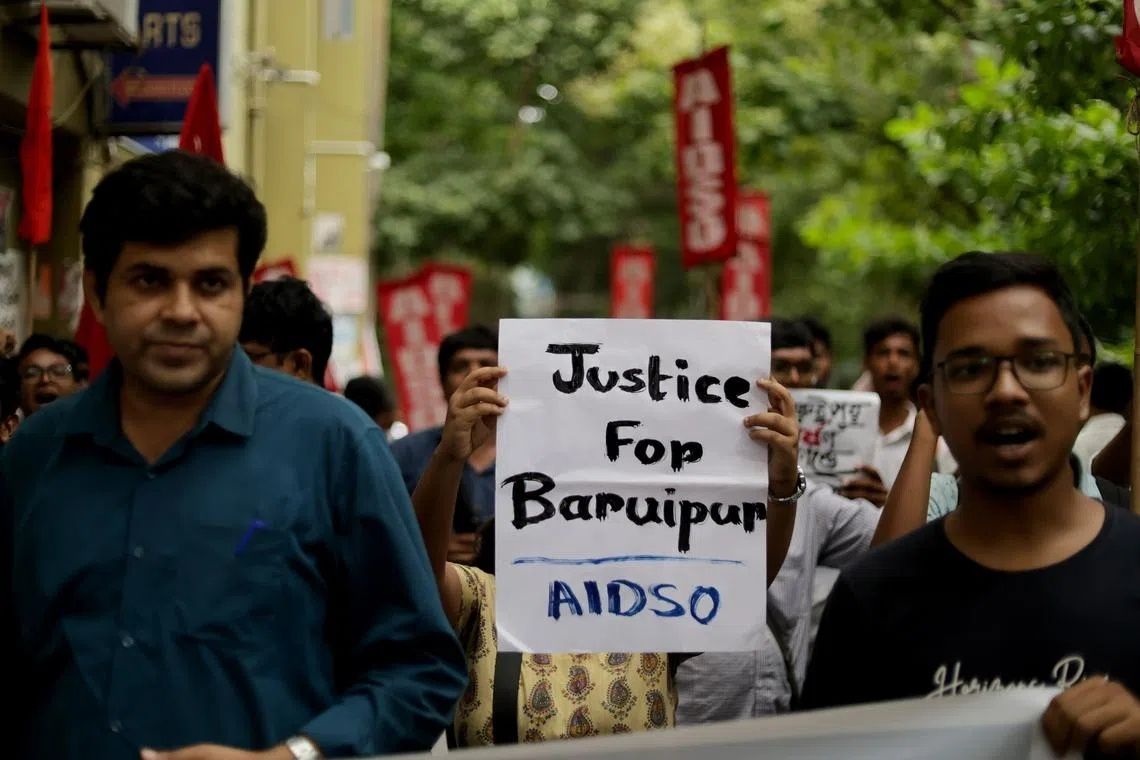
An 11-year-old girl's death in West Bengal has triggered a cycle of rage, vigilantism, and official crackdowns that underscores the volatile intersection between public fury over gender crimes and law enforcement response in India. Police in the eastern state announced on Friday that they had detained 35 individuals accused of violence and destruction as angry crowds took to streets following the discovery of the child's body in a pond in Baruipur, a city roughly 30 kilometres from Kolkata, on July 5—a day after she vanished.
The eruption of public anger reflected the extreme distress surrounding the crime. Protesters blocked roads and set vehicles ablaze after learning of the girl's murder and sexual assault. The intensity of these demonstrations touched the raw nerve of a society increasingly alarmed by crimes against women and children. Senior state police officer Arvind Kumar Anand told Reuters that authorities continued identifying additional suspects through videos that circulated online, suggesting that police investigations would expand significantly beyond those already in custody.
Amongst the darker elements of this case, police revealed that one innocent bystander was killed by the protesting crowd in what amounts to mob justice. This detail exposes a troubling reality: as public desperation for justice grows, legal systems struggle to contain the fallout, sometimes punishing those uninvolved. The tragedy became compounded when institutional responses themselves veered into controversial territory.
Police shooting an accused rapist and murderer named Prabhas Mondal in the early hours of July 8 while he allegedly attempted escape from a crime scene investigation raised questions about the proportionality of law enforcement tactics. Officials stated that Mondal was being taken to the location where the crime occurred as part of their investigative process when he tried to flee, prompting officers to open fire. Such encounters, termed "encounters" in Indian policing terminology, have long drawn criticism from human rights groups concerned about extrajudicial killings masked as escape attempts.
Mondal's mother's refusal to accept his body and her public statement in a television interview that her son "did not do anything good" and had "received punishment" for his actions revealed the profound social stigma attached to such crimes. Her words, while expressing maternal anguish, also reflected broader acceptance of the notion that swift punishment, even outside formal judicial processes, holds legitimacy when crimes are perceived as sufficiently heinous.
Police stated that four men in total had been arrested in connection with the rape and murder. However, questions about the accuracy of these arrests emerged when Indian media reported that the family of one accused disputed his involvement, claiming he had been detained due to mistaken identity. The absence of public statements from families of the other two suspects left significant gaps in understanding the strength of evidence against them, raising concerns about whether anger-driven investigations might ensnare innocent people alongside the guilty.
The newly installed West Bengal administration, led by Chief Minister Suvendu Adhikari following the Bharatiya Janata Party's electoral victory in May state polls, seized the moment to demonstrate toughness on crime. Adhikari promised "no leniency" for perpetrators of sexual violence and for those engaging in mob violence, and pledged that the government would pursue criminals "to the fullest extent of the law." His statement on July 9 via social media sought to project strength while simultaneously acknowledging that vigilante action against "innocent and blameless" people represented an equally serious concern demanding state attention.
This case resonates beyond West Bengal's borders because it reflects a national pattern of escalating public distrust in formal justice mechanisms. India implemented stricter laws following the 2012 Delhi gang rape and murder case, which involved the violent assault and killing of a 22-year-old woman. That case catalysed nationwide demonstrations and ultimately led to the execution of four perpetrators, yet decades later, women and girls continue facing threats to their safety with alarming regularity.
West Bengal itself has faced intense international scrutiny over gender-based violence following the 2024 rape and murder of a trainee doctor at Kolkata's RG Kar Medical College and Hospital. That incident sparked nationwide protests demanding greater accountability and systemic change to protect women in institutional settings. The trainee's death exposed vulnerabilities in workplace safety and triggered broader conversations about how institutions—particularly those entrusted with women's welfare—failed in their protective duties.
The pattern visible across these cases suggests that while legislative frameworks have hardened, implementation remains inconsistent and public confidence in the system continues eroding. When citizens believe formal justice will not arrive swiftly or fairly, they increasingly take matters into their own hands, creating the dangerous situations witnessed in Baruipur where innocent people became collateral damage in expressions of collective outrage.
For Malaysian observers, this case illustrates challenges common across South Asia regarding effective law enforcement during communal crises and the difficult balance authorities must maintain between demonstrating responsiveness to public concern and preventing mob violence. The shooting death of a suspect during investigation, the detention of potentially innocent individuals, and the killing of an uninvolved bystander all point to systemic pressures that mount when legal systems appear unable to deliver swift justice. As India continues grappling with these deeply troubling patterns, questions linger about whether tougher laws and punitive police actions address root causes or simply manage symptoms of institutional dysfunction that permits gender-based violence to persist.
The tragedy in Baruipur thus serves as a mirror reflecting both the gravity of violence against women and children in South Asia and the profound challenges confronting societies attempting to balance accountability, justice, and restraint.

