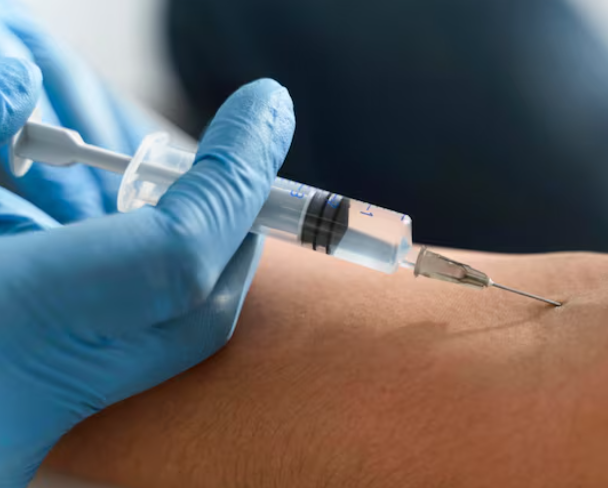
A nursing professional employed at a private hospital in Telangana's Nizamabad district has been taken into custody on suspicion of murdering her spouse using a lethal injection administered through medical tubing, according to police investigations. The case, which unfolded across late June in the southern Indian state, reveals a chilling sequence of events that began with a violent attempted homicide and culminated in a poisoning carried out under the guise of medical care at home.
The accused, identified as Sandhya, allegedly killed her 35-year-old husband Dayini Prashanth on June 30 by injecting a toxic combination of toilet cleaning liquid and pulverised sedative medication directly into an intravenous line. Investigators determined that Sandhya's primary motivation stemmed from her desire to maintain an extramarital relationship with a man named Anil, also 35 years old, without spousal interference. Anil's associate, Venkat Sai (also known as Bunty), played a supporting role in the alleged conspiracy.
Prashanth's death might have gone unexamined as merely another tragedy following a domestic accident, had it not been for the vigilance of his mother. Living separately from her son, she grew suspicious about the official narrative surrounding his demise and filed a formal complaint with authorities. This maternal intervention triggered the investigation that unravelled the elaborate scheme. Police records indicate that the initial murder plot originated when Prashanth, who had been employed in the Gulf region for two years, announced his intention to remain permanently in India rather than returning to his overseas position. This decision fundamentally altered the family dynamic and, according to police, convinced Sandhya that her husband represented an insurmountable obstacle to her relationship with Anil.
The conspiracy's first stage unfolded on June 29, when Sai visited the family residence with deliberate purpose. Following a script apparently developed with Sandhya, Sai encouraged Prashanth to consume substantial quantities of alcohol before shepherding him onto the building's terrace. Once there, at Sandhya's telephonic direction, Sai pushed Prashanth from the elevated structure. Remarkably, the victim survived the fall, sustaining serious injuries but retaining consciousness. At this critical juncture, Sandhya's nursing acumen came into play as she convinced her injured husband that his injuries resulted from accidental intoxicated stumbling rather than deliberate assault, a deception that temporarily derailed suspicion.
Following the failed rooftop attempt, the family admitted Prashanth to a government hospital, where he received treatment for his substantial injuries. Subsequently, they transferred him to a private medical facility before eventually discharging him to recover at home. Sandhya leveraged her nursing background to convince Prashanth and potentially other family members that she could safely manage his post-discharge medical requirements at home, including the administration of intravenous fluids—a justification that positioned her perfectly to execute the second murder attempt.
On the morning of June 30, Sandhya prepared the lethal injection by combining toilet cleaning chemicals with crushed sleeping tablets, substances that would prove fatal when introduced directly into the bloodstream. Using the cannula—a small tube providing intravenous access—she administered this toxic mixture while Prashanth remained under the influence of the sedatives already flowing through his medical apparatus. To obscure the cause of death and eliminate evidence of her involvement, she then physically forced him from the cot on which he lay, creating the impression that a secondary fall had occurred.
Investigators found that Sandhya initially attempted to attribute her husband's death to natural complications arising from his earlier terrace fall, counting on authorities and family members to accept this explanation without deeper scrutiny. Her professional standing as a nurse may have lent credibility to her account of his medical deterioration. However, the persistence of Prashanth's mother in questioning the circumstances of her son's death initiated the formal inquiry that exposed the layered deception.
The case illuminates the potential vulnerability of patients receiving in-home medical care, particularly when administered by individuals with both medical knowledge and personal motivation for harm. Prashanth's two-year employment abroad and his final decision to remain in India created domestic instability that, according to police, proved fatal. His mother's geographical separation from the household—whilst initially leaving her unaware of the day-to-day circumstances—ultimately positioned her as the sole person equipped to recognise inconsistencies in the death narrative. The investigation revealed how medical access and professional credibility can be weaponised when combined with premeditation and accomplices willing to participate in violent schemes.

