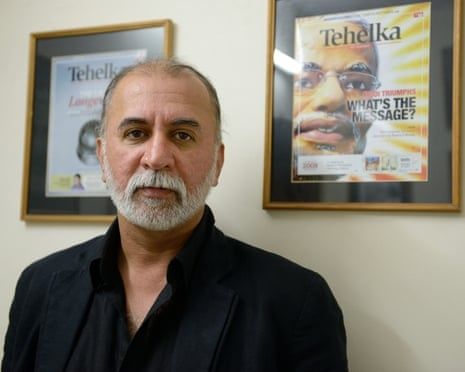
An Indian court has convicted Tarun Tejpal, the 63-year-old founder and former editor of Tehelka magazine, of raping a junior journalist colleague in a case that has captivated national attention and raised serious questions about accountability within India's media establishment. The Bombay High Court delivered its verdict on Thursday, August 6, reversing a 2021 trial court acquittal and finding Tejpal guilty of the charges brought against him more than a decade after the alleged incident. The conviction represents a significant legal turning point in a lengthy judicial process that has spanned multiple courts and appeals, underscoring the complexity of prosecuting high-profile figures in India's justice system.
The alleged assault occurred in November 2013 at a five-star hotel in Goa during a media event, when Tejpal is accused of attacking the complainant in a lift. The journalist came forward publicly with her allegations, setting in motion an investigation that initially resulted in Tejpal's arrest and seven months of incarceration before the Indian Supreme Court granted him bail. That early detention marked a crucial moment in the case, demonstrating that Indian authorities took the allegations seriously despite Tejpal's prominence and status within the country's news industry. However, the subsequent trajectory of the legal proceedings proved far more complicated and frustrating for the accuser and her supporters.
In 2021, the trial court in Goa delivered a verdict that appeared to end the matter decisively, acquitting Tejpal of all charges including rape, sexual harassment, and wrongful restraint. The acquittal shocked many observers who had followed the case closely and represented a potential miscarriage of justice in the eyes of women's rights advocates. Rather than accepting this outcome, the Goa government chose to challenge the verdict before the Bombay High Court, a decision that proved instrumental in ultimately achieving a conviction. This appellate intervention demonstrates that persistent legal action, even after initial setbacks, can sometimes yield accountability in India's judicial system, though the protracted timeline raises questions about whether justice delayed remains justice effectively served.
Sunita Sawant, the police investigator who led the original probe, welcomed Thursday's verdict publicly, emphasising its significance beyond the individual case. According to Sawant, the conviction carries symbolic importance for working women across all professional sectors in India, as it represents a situation where a complainant stood firm in asserting her fundamental rights against a powerful and influential man. This framing highlights how sexual assault cases involving prominent figures inevitably acquire broader social meaning, extending beyond the specific facts to encompass questions about power dynamics, institutional protection, and systemic accountability. The investigator's comments suggest that the conviction may inspire other women in precarious employment situations to come forward with allegations, though the decade-long timeline of this particular case might conversely deter those seeking swift resolution.
Tejpal maintains his innocence and has signalled his intention to appeal the conviction in a higher court, ensuring that legal proceedings will continue and potentially reach India's Supreme Court. This appeal process could extend the case even further, providing no immediate closure to the complainant or resolution to questions that have hung over India's media industry for over ten years. The convicted editor's ability to pursue appellate remedies is a fundamental aspect of India's legal framework, but it also means that the determination of ultimate guilt or innocence may remain uncertain for years to come. The timing of his sentencing, which occurred separately from Thursday's guilty verdict, adds another layer of complexity to an already protracted process.
Tehelka magazine, the publication Tejpal founded and led for many years, has become irrevocably associated with this sexual assault case, a cruel irony given the magazine's historical commitment to investigating injustice and championing women's rights. The outlet built its reputation on aggressive investigative journalism that held powerful institutions and individuals accountable for wrongdoing, making Tejpal's own alleged criminal conduct particularly damaging to its credibility and moral authority. The magazine's readers and observers have grappled with the contradiction between its editorial mission and its founder's alleged actions, a tension that has never been fully resolved. This contradiction illustrates how institutions built on principles of transparency and accountability can be fundamentally undermined when their leaders violate those very principles in their personal conduct.
Since the 2013 incident and subsequent legal proceedings, Tehelka has continued operating under new leadership and management, but the publication has never recovered its previous influence or standing within India's media landscape. The institutional damage inflicted by the case extended far beyond Tejpal himself, affecting the magazine's reputation, advertiser relationships, and reader confidence. Many observers within India's journalism community view the publication's decline as a direct consequence of the sexual assault allegations and the broader questions they raised about workplace safety and gender dynamics within news organisations. The magazine's struggle to regain prominence serves as a cautionary tale about how institutional credibility, once damaged, proves extraordinarily difficult to restore.
The Tejpal case emerged and developed during a particularly significant period in India's national conversation about sexual violence. The conviction occurred nearly a decade after the December 2012 fatal gang rape of a 23-year-old student on a New Delhi bus, an atrocity that triggered unprecedented nationwide protests and substantial international condemnation. That catastrophic incident prompted the Indian government to substantially strengthen its rape laws and improve procedural protections for complainants, reforms that were meant to facilitate prosecutions and support survivors. The legal reforms implemented in response to the 2012 case may have indirectly influenced how prosecutors approached Tejpal's case, though the decade-long process suggests that institutional change often moves slower than legislative reform.
The Tejpal conviction carries particular significance for media workers across Southeast Asia, where questions about workplace gender-based violence remain substantially under-addressed in many countries and organisations. Indian media organisations have begun more seriously examining internal policies, complaint mechanisms, and accountability structures in recent years, partly in response to high-profile cases like this one. The case has prompted broader conversations within regional journalism circles about power imbalances, the vulnerability of junior staff, and the responsibility of senior figures to maintain professional boundaries. Malaysia's own media industry could draw valuable lessons from India's experience, particularly regarding the establishment of robust internal complaint procedures and external accountability mechanisms that protect vulnerable employees from exploitation by senior staff.
The conviction of a prominent media figure represents a rare instance where wealth and status did not insulate an accused person from accountability, though the appeal process ensures this judgment remains provisional. The case demonstrates both the possibility and the difficulty of achieving justice in high-profile sexual assault cases, where institutional loyalty, power dynamics, and legal complexity often combine to thwart accountability. For the complainant, the conviction may provide some measure of vindication after more than a decade of legal struggle, though the trauma associated with the original incident and the protracted legal process cannot be undone by any judicial verdict. The larger implications for India's media industry and working women across South and Southeast Asia will likely continue to unfold as the case moves through higher courts and as other media organisations respond to the broader lessons this case presents about institutional responsibility and worker protection.

