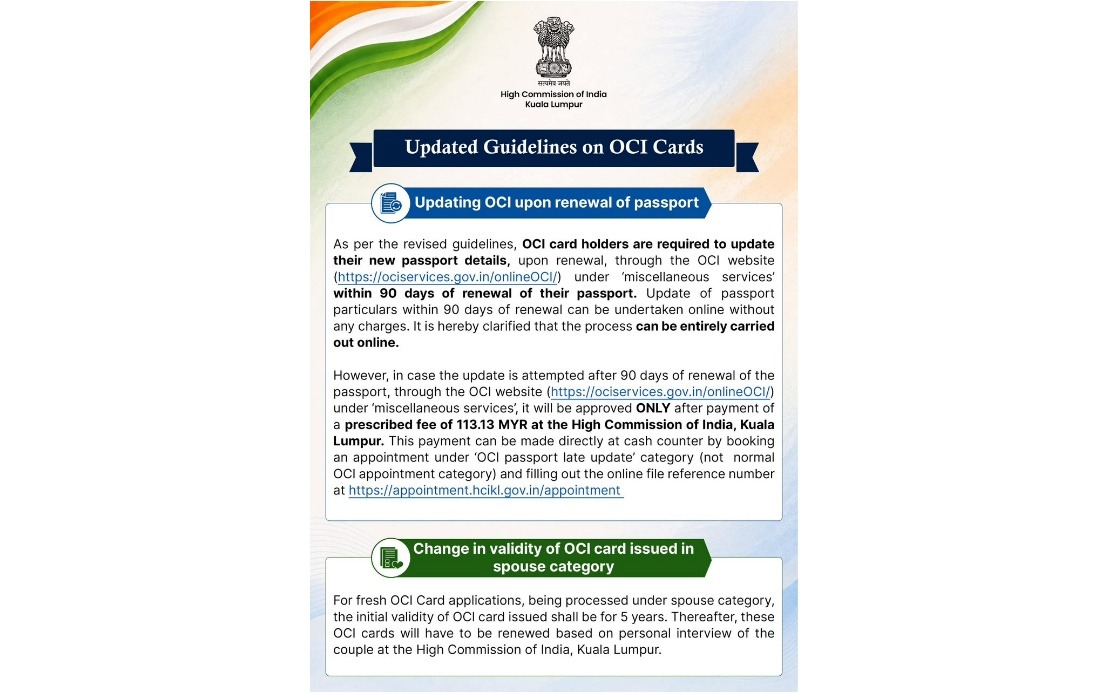
The High Commission of India in Kuala Lumpur has rolled out new administrative requirements for Overseas Citizen of India cardholders, introducing a tight deadline for passport information synchronisation and imposing penalties for delayed compliance. The revised framework signals a shift toward stricter documentation standards, reflecting India's efforts to maintain accurate records of overseas citizens while streamlining consular operations across its network of diplomatic missions in Southeast Asia.
Under the fresh guidelines, OCI cardholders must register updated passport particulars within 90 days of securing a new passport through the official OCI online portal, selecting the "miscellaneous services" option. This window provides a grace period for administrative alignment, allowing cardholders to avoid additional charges by completing the process digitally without visiting the mission in person. The emphasis on online processing reflects broader digitalisation trends within Indian consular services, reducing foot traffic and enabling faster processing across multiple jurisdictions simultaneously.
The High Commission has clearly stated that updating passport details during this 90-day window incurs no charge, making immediate compliance financially attractive. However, once this period lapses, the mission will levy a prescribed fee of RM113.13 for any belated updates, creating a financial incentive structure designed to encourage timely compliance. This tiered fee system is common across diplomatic missions managing large diaspora populations, and it underscores how procedural changes translate into cost implications for affected individuals.
For those who miss the initial deadline, the process still remains manageable but requires in-person engagement. Applicants must schedule an appointment specifically under the "OCI passport late update" category rather than the standard OCI appointment classification, providing their online file reference number before paying the fee at the mission's cash counter. This distinction streamlines administrative workflow, allowing the High Commission to differentiate between routine and exceptional requests, thereby optimising resource allocation within constrained staffing environments.
Parallel to passport procedures, the Indian High Commission has substantially restructured terms governing OCI status for individuals applying under the spouse category. Previously, such cardholders enjoyed longer validity periods, but the revised framework now caps initial validity at five years for newly approved applications in this classification. This reduction represents a significant change in benefit duration, potentially requiring earlier renewal cycles and more frequent consular engagement.
The spousal category OCI status has historically served Indian diaspora members who married overseas citizens or foreign nationals, representing a unique pathway to maintaining ties with India despite settling abroad. By limiting initial validity to five years, the mission introduces a mechanism for reassessing spousal applications before renewal, effectively creating a checkpoint in the relationship trajectory. The decision to mandate personal interviews for both spouses at the High Commission during renewal further tightens oversight, suggesting administrative concerns about potential misuse or documentation inconsistencies within this category.
For couples seeking renewal, the requirement for face-to-face interviews represents a substantial shift from previous protocols, potentially increasing administrative burden and travel expenses for renewal applicants. This approach allows consular officials to verify spousal relationships directly, cross-check current documentation, and assess continued eligibility before authorising extended validity. While intended to enhance integrity, such measures may create delays for legitimate applicants, particularly those residing outside Kuala Lumpur or facing visa restrictions for travel to Malaysia.
The timing of these revisions reflects India's broader strategy toward strengthening oversight of overseas citizen programmes while managing administrative constraints. Southeast Asia remains home to substantial Indian diaspora communities, with Malaysia hosting significant populations engaged in commerce, technology, healthcare, and education. Tighter documentation standards align with global trends emphasising identity verification and reducing fraud risks across immigrant and dual-citizenship frameworks.
Malaysian residents contemplating OCI status should note these requirements immediately, as the 90-day window for passport updates commences from the date of new passport issuance. Those holding OCI cards under the spouse category should understand that future renewals will entail personal appearance requirements alongside the reduced initial validity period. The High Commission has made comprehensive details available through the official OCI portal and its appointment scheduling website, ensuring accessibility for affected applicants.
These administrative changes underscore the evolving landscape of consular services in Malaysia, where competing demands for efficiency, security, and accessibility shape policy implementation. Malaysian Indian diaspora members maintaining ties through OCI status will need to adjust their compliance strategies accordingly, particularly those with family structures involving recent marriages or passport renewals. The implementation reflects international patterns wherein overseas citizenship programmes face increasing scrutiny from both home and host countries regarding documentation accuracy and eligibility verification.

