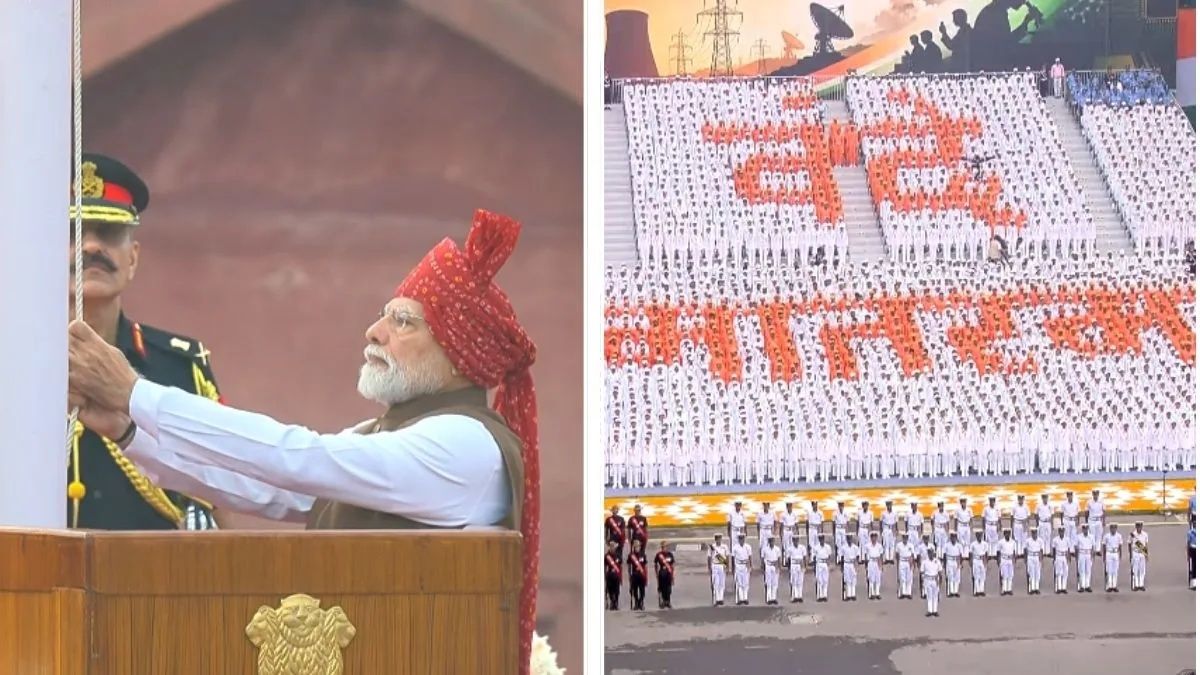
Prime Minister Narendra Modi has articulated a sweeping development roadmap for India, declaring that the nation will attain developed country status by 2047 in a significant Independence Day address delivered from New Delhi's historic Red Fort. The ambitious timeline coincides with India's centennial year of independence, framing the achievement as a defining national objective. Speaking on the country's 80th Independence Day, Modi positioned the 'Viksit Bharat' or developed India vision as a galvanising force that would reshape both domestic aspirations and India's standing in global affairs. The articulation of this long-term goal suggests a deliberate effort to transcend short-term political cycles and anchor India's development trajectory within a broader historical narrative.
The Prime Minister's rhetoric centred on the necessity for Indians to transcend conventional thinking and embrace transformative ambitions. Modi emphasised that modest aspirations would prove inadequate for a nation of India's scale and demographic weight, explicitly urging citizens to "dream big" and resist self-imposed limitations. This philosophical repositioning reflects an attempt to shift public consciousness toward viewing India's development not as a technical exercise constrained by resources or capacity, but as a volitional undertaking rooted in collective determination. By framing the vision in psychological and motivational terms, Modi sought to mobilise citizen engagement around the 2047 target, suggesting that realising this goal hinges as much on mindset transformation as on policy implementation.
India's recent economic trajectory provides contextual weight to this pronouncement. Modi highlighted the country's evolution from membership in the "Fragile Five"—a designation once applied to emerging economies facing vulnerability to capital flight and external shocks—to its current position as a major and rapidly expanding economy. This repositioning reflects India's improved macroeconomic fundamentals and its enhanced clout in global economic forums. The acknowledgment of past constraints, where Modi noted that "we could not push ourselves earlier, we were stuck," suggests a self-aware assessment of the structural barriers India confronted during earlier decades of independent statehood. The implicit narrative arc—from vulnerability to momentum—establishes a foundation for arguing that sustained institutional and policy improvements have created conditions conducive to transformational development within the next two decades.
Modi substantiated his optimism by cataloguing sectoral achievements accomplished over the previous dozen years. Defence manufacturing has expanded fourfold, a significant development for a nation traditionally dependent on defence imports and eager to advance indigenous military capability. Khadi and Gramodyog production, rooted in India's pre-independence self-sufficiency movement, has grown fivefold, suggesting renewed vitality in traditional craft sectors. Electronics manufacturing has surged sevenfold, reflecting India's strategic push to attract global manufacturing away from China and establish itself as an alternative production hub. Mobile phone manufacturing, virtually non-existent in India two decades prior, has expanded by one-third, demonstrating the country's ability to develop complex manufacturing ecosystems. Digital transaction growth of 100 percent over this period underscores India's progress in financial inclusion and digital infrastructure, foundational elements for modern developed economies.
For Malaysian readers and Southeast Asian observers, India's development agenda carries significant regional implications. India's evolution toward developed nation status would enhance its capacity to invest across Southeast Asia, expand technological partnerships, and deepen economic integration within the region. A wealthier, more technologically advanced India would intensify competition for regional influence and trade, while simultaneously offering opportunities for collaborative ventures in areas such as renewable energy, digital infrastructure, and semiconductor manufacturing. The 2047 timeline suggests India is thinking in terms of a quarter-century horizon, implying sustained commitment to institutional reforms, infrastructure investment, and human capital development regardless of electoral cycles.
The ceremonial dimensions of Modi's address carried symbolic weight beyond mere protocol. The full rendition of 'Vande Mataram,' India's national song, was performed at the Red Fort for the first time since independence, an acknowledgment of its historical significance during India's nationalist movement. Modi characterised this moment as historic, suggesting deliberate efforts to weave nationalist sentiment and cultural continuity into the development narrative. The flag hoisting ceremony, synchronised with a 21-gun salute delivered by the 1721 Field Battery using indigenous 105mm Light Field Guns, underscored India's emphasis on indigenous defence manufacturing capability—a cornerstone of the 'Atmanirbhar Bharat' or self-reliant India initiative.
The Prime Minister's rhetorical strategy positioned the developed nation goal alongside more immediate humanitarian concerns, particularly the flooding that had recently devastated portions of the country. By assuring flood-affected families of national support whilst simultaneously articulating a 2047 vision, Modi attempted to balance short-term crisis response with long-term strategic orientation. This duality reflects the inherent tension between addressing immediate citizen welfare needs and pursuing transformational development objectives requiring sustained investment and institutional commitment.
India's 2047 vision must contend with substantial structural challenges that remain inadequately addressed. While manufacturing growth in defence and electronics sectors is noteworthy, India's per capita income remains significantly below developed nation thresholds. Infrastructure deficits persist across rural and semi-urban areas, where the majority of India's population resides. Educational outcomes, healthcare accessibility, and environmental sustainability remain areas requiring fundamental improvement. The aspiration to achieve developed status within two decades necessitates not merely incremental improvements but systemic transformations across governance, human capital development, and institutional quality.
The international context shapes India's development prospects significantly. Global economic uncertainties, potential trade disruptions, and geopolitical tensions could constrain growth trajectories. Conversely, India's strategic importance to Western nations seeking to counterbalance China may accelerate technology transfer and investment flows. The alignment of India's development timeline with broader geopolitical realignments suggests that achieving developed nation status represents not merely an economic achievement but a strategic repositioning within an evolving multipolar international order.
Modi's 2047 vision encapsulates India's determination to leverage demographic dividends, institutional improvements, and manufacturing capabilities to achieve transformational development within a defined historical timeframe. The articulation of this goal at a moment of 80 years of independence, referencing the centennial as the target moment, invests the objective with symbolic resonance and generational significance. Whether India's institutions, governance frameworks, and policy implementation prove adequate to sustaining the momentum required for such transformation remains an open question. Nevertheless, the explicit articulation of a national development vision, accompanied by concrete sectoral achievements and forward-looking institutional reform, signals India's intent to reshape its development trajectory and enhance its global standing substantially over the coming decades.

