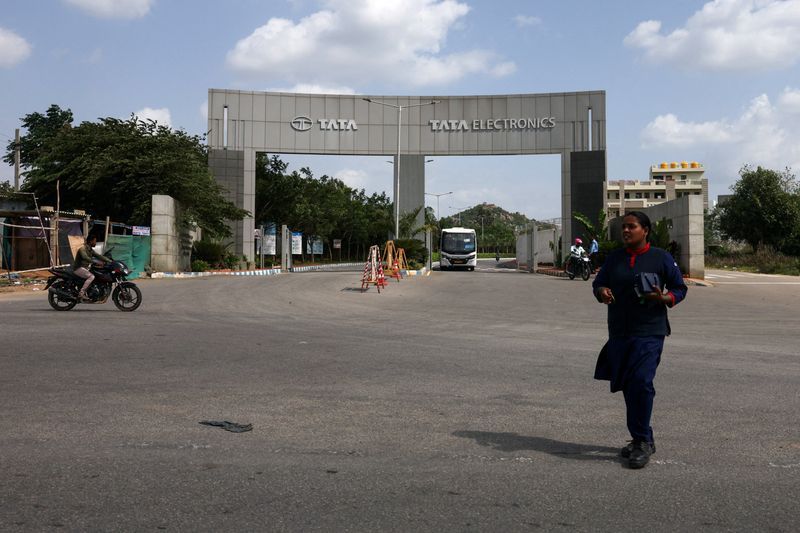
India's government has opened a formal investigation into a major cybersecurity incident involving Tata Electronics, one of Apple's principal manufacturing partners in the region, after confidential documents pertaining to the forthcoming iPhone 18 Pro surfaced on the dark web. The Ministry of Electronics and Information Technology confirmed on Thursday that it is actively examining the breach, marking the first official acknowledgement of what has become one of the technology industry's most significant recent security lapses. S. Krishnan, the ministry's IT secretary, disclosed that authorities have been notified and the matter has been escalated to India's Computer Emergency Response Team, the government body responsible for coordinating responses to computer security incidents across the nation.
The data cache released by an organised ransomware group includes exceptionally sensitive materials that strike at the heart of Apple's closely guarded supply chain operations. Component specifications, detailed supplier listings, and photographic documentation of iPhone 18 Pro prototypes were all exposed, representing an intelligence haul that competitors and bad actors would find extraordinarily valuable. The leaked files specifically identify which manufacturers are producing particular components for the flagship model—information that Apple deliberately withholds from its publicly available supplier roster to maintain competitive advantage and protect proprietary manufacturing relationships. With at least six documents containing such granular operational details now accessible to anyone with dark web access, the Cupertino company faces a significant strategic vulnerability.
The timing amplifies the sensitivity of this incident. Apple intends to unveil the iPhone 18 Pro and Pro Max in September, a launch window that leaves the company vulnerable to industrial espionage and competitive intelligence gathering during the critical pre-release period. Any leak of component sourcing, manufacturing specifications, or design details during this phase can inform competitors' own product development strategies and allow supply chain actors to potentially position themselves strategically. The premature exposure of supplier relationships also risks disrupting Apple's carefully balanced ecosystem of manufacturers, many of whom rely on confidentiality agreements and exclusive arrangements that the leak has now compromised.
This breach illuminates the persistent vulnerabilities within India's technology manufacturing sector, even as the nation positions itself as an increasingly important alternative to China in global supply chains. Tata Electronics, part of the diversified Tata conglomerate, occupies a critical position in Apple's Indian operations. The company's security infrastructure failure represents a potential embarrassment for India's ambitions to become a trusted hub for sensitive technology manufacturing. Government authorities and industry observers are now scrutinising whether adequate safeguards exist across India's electronics manufacturing ecosystem, particularly for companies handling classified product information from multinational corporations.
Tata's response has included engaging international forensic consultants to conduct a comprehensive audit of its security systems and determine how the breach occurred. However, the incident extends beyond Apple's products. The ransomware group responsible has also posted stolen documents from Tesla, Qualcomm, and TSMC on underground forums, suggesting either a sophisticated, multi-layered attack campaign or that several major technology companies rely on similar vulnerable infrastructure. This pattern indicates that the problem transcends any single organisation's security protocols and may reflect systemic vulnerabilities in how sensitive manufacturing data is protected across the region.
The broader implications for Southeast Asian technology manufacturing are substantial. As multinational corporations diversify their production away from China and toward countries including India, Vietnam, and Thailand, questions about cybersecurity and data protection become increasingly urgent. Governments and companies must demonstrate that operations relocated to these regions offer not merely cost advantages but equivalent or superior security protections. A major breach at a respected manufacturer like Tata Electronics raises concerns about whether the region's infrastructure can adequately protect the intellectual property and proprietary information entrusted to it.
Ransomware attacks targeting technology manufacturers have become increasingly sophisticated and financially lucrative. Threat actors employ a dual-extortion model: encrypting victims' systems while simultaneously threatening to publicly release stolen data unless substantial payments are made. The fact that this group has followed through on its threat to publish materials suggests either the ransom was not paid or the attackers intended to maximise the incident's publicity value regardless of negotiation outcomes. For Apple and other affected companies, the financial implications extend beyond potential ransom payments to include reputational damage, competitive disadvantage, and the costs of incident response and security remediation.
India's Computer Emergency Response Team now faces pressure to demonstrate that the nation takes cybersecurity seriously and can manage incidents involving multinational corporations' sensitive operations. The agency's investigation will likely focus on determining the attack vector, identifying whether the breach resulted from external exploitation or insider involvement, and establishing whether adequate incident response protocols were followed. The outcomes of this investigation will substantially influence multinational companies' confidence in India as a secure manufacturing destination and may prompt broader policy discussions about minimum security standards for sensitive technology operations.
For Malaysian readers and the broader Southeast Asian context, this incident serves as a cautionary tale. As the region competes to attract electronics manufacturing operations from multinational corporations, particularly in semiconductors, consumer electronics, and components manufacturing, the Tata breach demonstrates that geographic relocation alone does not guarantee security. Malaysia, which hosts significant operations for Intel, AMD, and other technology firms, must ensure that its cybersecurity infrastructure, both at the government and corporate levels, can withstand sophisticated attacks. The incident underscores the necessity for regional cooperation on cybersecurity standards, information sharing about threats, and coordinated responses to ransomware campaigns that increasingly target the technology manufacturing ecosystem across Asia.

