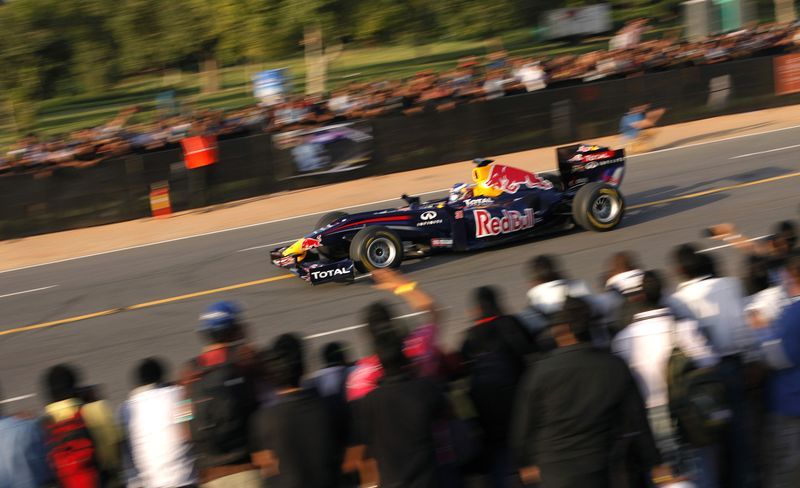
India's government is mounting a comprehensive push to bring Formula One back to Indian soil by 2028, signalling renewed political commitment to reviving one of Asia's most ambitious motorsport ventures. The comeback bid centres on the Buddh International Circuit located on the outskirts of New Delhi, a venue that hosted some of the sport's most memorable races before regulatory complications and taxation disputes forced its exit from the F1 calendar in 2013. The interval represents a significant gap in India's sporting calendar, and the resurrection effort reflects growing confidence among policymakers that the structural obstacles which derailed the previous era can now be addressed.
India's first Formula One Grand Prix took place at Buddh International Circuit in 2011, marking a landmark moment for the nation's motorsport ambitions and continental aspirations. The inaugural event demonstrated the country's capacity to host a world-class sporting spectacle, attracting global attention and establishing India as a serious player in international racing. However, the subsequent three-year run proved turbulent. By the time the third and final edition concluded in 2013, the combination of complex administrative requirements, unresolved tax classifications, and disputes between various governmental bodies had made the race economically unviable for promoters. The collapse underscored a broader challenge facing India's effort to host mega-events: the friction between sporting ambition and regulatory maturity.
The contemporary revival strategy reflects lessons learned from that period. Sports Minister Mansukh Mandaviya has convened key stakeholders, including the Adani Group—which is acquiring ownership of the Buddh circuit facility—and officials from India's national motorsports federation, to chart a different course. Rather than attempting to launch the event immediately, policymakers are investing time in structural problem-solving, a methodical approach suggesting greater sophistication than the earlier attempt. The formation of a dedicated task force represents institutional recognition that F1's return requires inter-agency coordination and systematic elimination of bureaucratic friction.
The taxation issue looms largest among the barriers the task force must navigate. India's complex and sometimes ambiguous tax treatment of international sporting events has historically created uncertainty for promoters and governing bodies alike. Formula One operations involve intricate cross-border financial flows, equipment importation, foreign personnel movement, and broadcast revenue distribution—each generating tax questions that India's revenue authorities have struggled to address consistently. The previous Grand Prix fell victim partly to disagreements over how racing operations should be classified and taxed, a fundamental uncertainty that deterred investment. The new task force's explicit inclusion of India's tax authorities signals that policymakers have identified this technical matter as the essential foundation for any successful revival.
Regulatory harmonisation beyond taxation also demands attention. Formula One imposes exacting standards regarding circuit safety, medical facilities, security protocols, and accommodation infrastructure. These requirements must align with Indian regulations governing public assembly, environmental protection, and workplace safety—requirements that do not always mesh seamlessly. The Buddh circuit itself requires assessment against contemporary F1 specifications, potentially necessitating upgrades and modifications that carry substantial cost implications. The task force's broad mandate covering infrastructure and policy interventions suggests planners are conducting a comprehensive audit of what the venue needs to meet current standards.
The Adani Group's involvement substantially raises the commercial viability calculus. As one of India's largest industrial conglomerates with extensive experience in port operations, infrastructure development, and managing special economic zones, the company brings both financial capacity and operational sophistication. Karan Adani, managing director of Adani Ports and Special Economic Zone Limited, has publicly stated his personal engagement with the F1 revival project, signalling high-level corporate commitment. This contrasts with the earlier promotional structure, where management remained uncertain and inconsistent. The Adani stake transforms the venture from a governmental aspiration into a coordinated public-private endeavour with genuine industrial backing.
Formula One itself has acknowledged receptivity to India's overtures. Stefano Domenicali, the sport's chief executive, recently confirmed F1's substantial interest in returning to India while cautioning that substantial preparatory work remains necessary. His emphasis on finding appropriate promoters and ensuring correct timing reflects the sport's own trauma from the previous cycle—F1 has learned not to commit prematurely to arrangements with uncertain foundations. Domenicali's statement that resolution will not occur in the very short term implies F1 leadership accepts that 2028 represents a realistic rather than optimistic timeframe, one that allows for methodical resolution of technical and financial prerequisites.
The 2028 target date itself carries strategic significance. By scheduling the revival sufficiently far in the future—roughly four years from the announcement—planners have created a window for addressing structural issues without accepting impossible deadlines. This horizon allows time for the task force to complete its diagnostic work, draft policy recommendations, secure inter-ministerial agreements, establish new regulatory frameworks around taxation and licensing, and permit the Adani Group to complete infrastructure upgrades. The timeframe also positions a resurrected Indian Grand Prix to benefit from growing motorsport interest across South Asia and renewed international focus on emerging market events.
For Southeast Asian observers, India's F1 revival carries broader implications. The region hosts no other Formula One Grand Prix currently, making India's success potentially transformative for continental motorsport profile. A functioning Indian Grand Prix would anchor Asia's racing calendar and generate economic activity through tourism, hospitality, and broadcast revenue. The political will and institutional coordination that Delhi is now demonstrating suggests Asian governments are becoming more sophisticated in managing the complex intersection of sporting ambition, regulatory environment, and commercial viability. Malaysia's own experience hosting Grand Prix racing, meanwhile, provides relevant context—the evolution of regulatory and tax frameworks since Malaysia's earlier F1 experiences underscores that such knowledge accumulates across the region.
The next phases will test whether India's current institutional approach proves more robust than its 2011-2013 predecessor. The task force's work on taxation and regulatory harmonisation will determine whether the structural barriers that previously seemed insurmountable can genuinely be resolved. The Adani Group's execution on circuit upgrades and venue management will indicate whether commercial confidence translates into concrete preparation. Formula One's continued engagement and willingness to provide technical guidance will establish whether global sporting bodies consider the conditions genuinely ripe for return. Should these elements align as planned, India could restore its place in F1's championship calendar by the end of the decade, reversing a significant gap in its sporting portfolio and demonstrating that institutional learning and political commitment can overcome obstacles that once seemed permanent.

