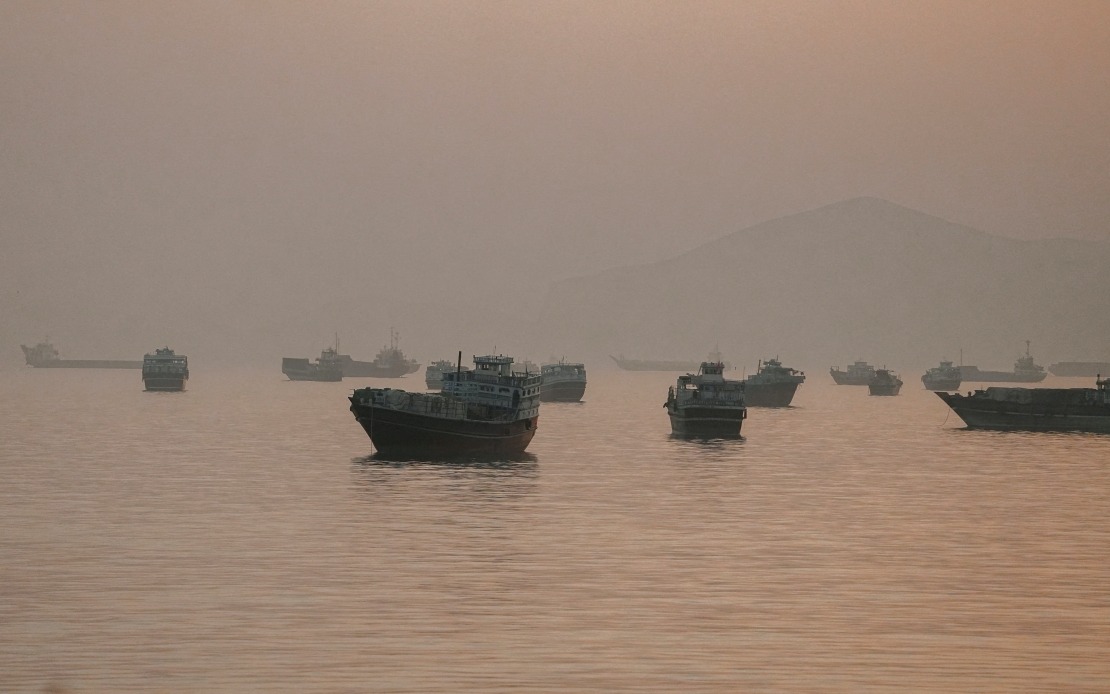
India has taken decisive action to protect its maritime workforce by ordering all shipping companies, vessel managers, and crew recruitment agencies to refrain from posting Indian seafarers on ships navigating the Strait of Hormuz. The directive, issued late Wednesday by the Directorate General of Shipping—India's principal maritime regulatory body—represents a significant step by New Delhi to shield its nationals from the mounting dangers in one of the world's most strategically vital waterways.
The escalation of hostile activities targeting commercial shipping has created an untenable situation for seafarers working in the corridor. In the preceding seventy-two hours alone, two Indian mariners lost their lives during coordinated attacks on merchant vessels transiting the channel, while several others sustained injuries. These incidents underscore the gravitas of the security challenge facing vessels and crews operating in the region, prompting the Indian government's protective intervention.
Tensions in the Persian Gulf have intensified sharply following renewed confrontation between Washington and Tehran. The deteriorating geopolitical climate has destabilised what was already a precarious operating environment for international shipping. The Strait of Hormuz, through which approximately one-third of global maritime petroleum trade passes, has become a flashpoint where military posturing and commercial activity collide with potentially fatal consequences for those at sea. The heightened hostilities have created a cascading effect on insurance costs, voyage planning, and crew safety protocols across the shipping industry.
For Malaysia and other Southeast Asian nations, India's restrictions carry significant ramifications. The region's maritime sector depends heavily on integrated crewing networks that span the Indian Ocean and beyond. Indian seafarers constitute a substantial proportion of crews aboard vessels registered in Southeast Asian jurisdictions and operating international routes. The withdrawal of Indian nationals from Hormuz-bound voyages will force shipping companies to reconfigure their crewing strategies, potentially increasing operational costs and creating logistical complications for carriers serving Middle Eastern trade routes.
The Indian government's position reflects a broader recalibration of risk tolerance within the region's maritime community. Previous years witnessed seafaring organisations and insurers developing protocols to manage Persian Gulf dangers, but the recent violence has crossed a threshold that single-nation regulatory action now seems justified. India's decision may catalyse similar responses from other significant seafaring nations, creating a domino effect that could fundamentally alter shipping patterns and crew deployment strategies throughout South and Southeast Asia.
Shipping companies face a complex adjustment period as they respond to the Indian directive. Vessel operators must now identify alternative crew sources or reroute affected voyages away from the Strait of Hormuz—a costly proposition given the geographic realities of Gulf trade. Some companies may seek to deploy crews from nations not yet implementing comparable restrictions, whilst others might invest in enhanced security measures and hazard insurance to offset risks. This operational flexibility comes at a premium, ultimately affecting freight rates and supply chain costs for businesses dependent on Gulf region commerce.
The safety imperative driving India's decision cannot be understated. Mariners represent the frontline of global trade, and their vulnerability in conflict zones has historically received insufficient policy attention. By mandating operational changes, the Directorate General of Shipping prioritises human welfare over commercial convenience—a stance that merits recognition even as it complicates logistics for the shipping industry. The two fatalities recorded in recent days represent not merely statistical casualties but individual tragedies with profound impacts on families and communities across India.
From a Malaysian perspective, these developments warrant close monitoring given the nation's status as a major maritime hub and the presence of Malaysian-flagged vessels and crews operating internationally. The shipping industry represents a cornerstone of Malaysia's maritime economy, and disruptions to crewing arrangements or route viability can cascade through port operations, shipyard activities, and ancillary services. Malaysia's port authorities and maritime regulators may face pressure to address similar crew safety concerns or coordinate regional approaches to the Hormuz situation.
The broader geopolitical dimension cannot be divorced from this maritime issue. The Strait of Hormuz remains fundamentally important to global energy security and international commerce. When major shipping nations begin withdrawing personnel from the region due to safety concerns, it signals a dangerous escalation that extends far beyond maritime policy into the realm of regional stability. The economic costs of circumventing the Strait—whether through alternative routing, increased insurance, or reduced trade volume—ripple across global supply chains and ultimately affect consumer prices and economic growth rates worldwide.
Looking ahead, the Indian government's directive likely represents an interim measure pending either diplomatic resolution or further security developments. If violence continues, other nations will face mounting pressure to implement comparable restrictions, potentially creating a bifurcated shipping industry where crew nationality significantly influences route accessibility. Conversely, if tensions diminish, the restriction may be lifted, though the reputational and operational disruptions will take time to reverse. The maritime sector and policymakers across Southeast Asia should prepare for both scenarios while advocating for de-escalation through regional diplomatic channels.

