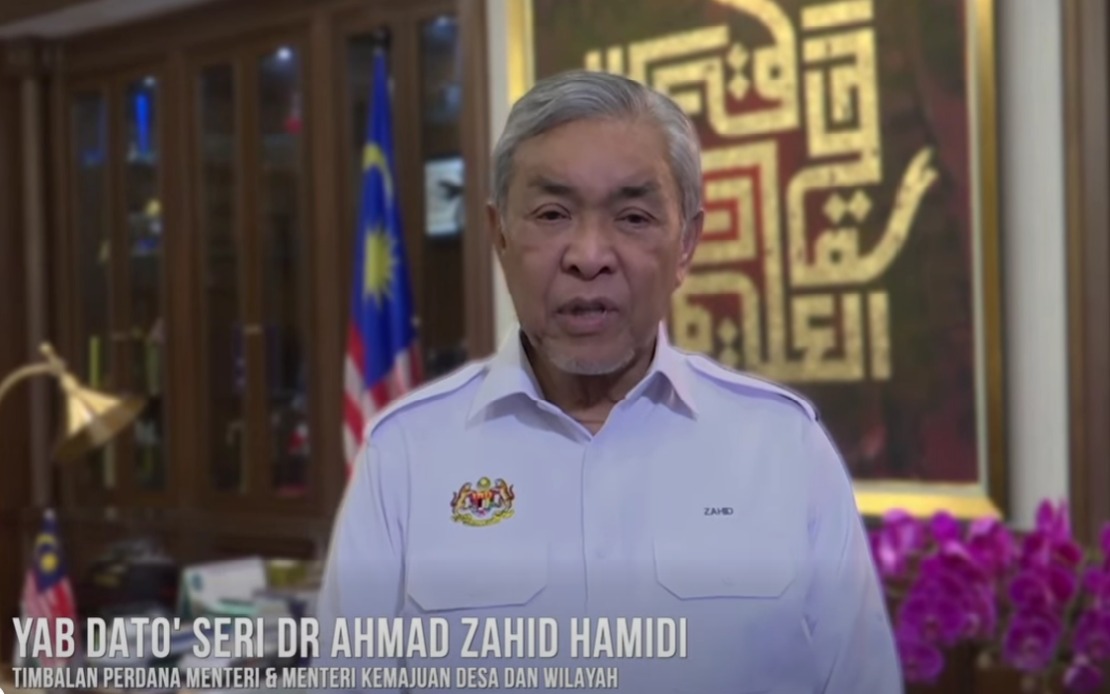
Deputy Prime Minister Datuk Seri Dr Ahmad Zahid Hamidi has reframed the significance of Malaysia's independence for the modern era, arguing that the achievement of freedom from colonial rule nearly seven decades ago must now be measured by how prosperity and opportunity reach ordinary Malaysians. In a National Day message released on social media, he articulated a vision where independence transcends historical commemoration to become a lived reality encompassing economic mobility, skills development, and inclusive nation-building.
The deputy premier's perspective reflects a shifting discourse around national progress. Rather than viewing independence solely as a political milestone reached in 1957, Ahmad Zahid positioned it as an ongoing commitment to ensure that the fruits of development benefit citizens across all strata of society. This framing carries particular resonance in Malaysia, where regional disparities between urban centres and rural communities remain a persistent policy challenge. His emphasis on bringing development beyond city boundaries addresses longstanding concerns about unequal resource distribution and economic opportunities.
Central to Ahmad Zahid's articulation of modern independence is the role of technical and vocational education and training (TVET). He highlighted that equipping young Malaysians with specialised skills represents a contemporary expression of independence, enabling them to compete for well-remunerated positions in evolving labour markets. This focus acknowledges Malaysia's positioning within a rapidly changing global economy where traditional manufacturing-based employment has given way to knowledge-intensive and service-oriented sectors. For Malaysian readers, this signals government prioritisation of workforce development as essential infrastructure for national competitiveness.
The deputy premier also connected independence to entrepreneurial opportunity, particularly for small business operators seeking to expand and achieve economic advancement. By framing entrepreneurship as integral to independence's meaning, Ahmad Zahid acknowledged the role of micro and small-medium enterprises in generating household income and reducing reliance on formal employment. This perspective aligns with broader Southeast Asian economic trends where informal and semi-formal entrepreneurship remains a critical livelihood pathway for millions.
In his capacity as Rural and Regional Development Minister, Ahmad Zahid underscored that genuine national development cannot concentrate geographically without compromising the nation's fundamental character. His assertion that greatness derives not from infrastructure alone but from inclusive progress speaks to persistent urbanisation patterns and resource concentration that characterise Malaysia's development landscape. The ministry's mandate to extend development to villages and remote areas represents a counterbalance to market-driven investment that typically clusters around established urban centres.
Ahmad Zahid employed evocative examples to illustrate how modest interventions transform communities—a road connecting isolated villages, electricity enabling basic services, education facilities nurturing future potential. These concrete illustrations ground abstract notions of independence in tangible infrastructure and services that directly affect quality of life. For Malaysian and regional readers, this language resonates with experiences where foundational development remains incomplete, and basic connectivity and services still represent aspirational rather than guaranteed provisions.
The halal industry featured prominently in Ahmad Zahid's independence narrative, representing an economic sector where Malaysia holds comparative advantage. By positioning halal development as both a source of national pride and a pathway to global market integration and livelihood creation, he connected national identity to economic strategy. Malaysia's established credentials in halal certification and production offer a distinctive niche in global supply chains, generating export revenue and employment across production, logistics, and services domains.
Meanwhile, co-Deputy Prime Minister Datuk Seri Fadillah Yusof offered a complementary perspective emphasising the psychological and social dimensions of independence. His appeal for Malaysians to transcend division, hatred, and prejudice addresses the internal challenges threatening national cohesion. Fadillah's framing presents independence not merely as political separation from external powers but as psychological liberation from destructive internal attitudes that fragment the polity.
Fadillah's invocation of Malaysia's multicommunal character as a unifying rather than dividing force reflects constitutional principles embedded in Malaysia's founding documents. His emphasis on shared homeland, future, and hope despite religious, cultural, and linguistic diversity articulates an integrative vision of national identity. This messaging becomes particularly pertinent in contexts where identity-based mobilisation and communal tension periodically surface, threatening the delicate intercommunal arrangements that underpin Malaysia's stability.
The reference to the Rukun Negara—Malaysia's founding national principles—connects contemporary challenges to historical consensus around nation-building. By urging Malaysians to uphold these principles amidst technological change and information flux, Fadillah suggested that rapid social transformation necessitates renewed commitment to shared foundational values. The invocation carries particular weight in an era where social media amplifies grievances and enables rapid community mobilisation around contested issues.
Fadillah's articulation of Malaysia MADANI—the government's overarching policy framework—as encompassing not merely economic advancement but equitable distribution of well-being represents an explicit commitment to inclusive prosperity. This formulation acknowledges that growth unaccompanied by broad-based improvement can generate social friction and undermine national cohesion. For Malaysian policymakers and citizens, the MADANI framework positions equity alongside efficiency as legitimate development objectives.
Both deputy premiers converged on the principle that independence's meaning extends beyond historical achievement to ongoing obligation. Their complementary messages—Ahmad Zahid's emphasis on economic inclusion and infrastructure, Fadillah's focus on social harmony and psychological liberation—articulate a comprehensive vision of independence as multidimensional. This framing acknowledges that modern nations face challenges distinct from colonial subjugation, requiring sustained commitment to inclusive development, social cohesion, and equitable opportunity distribution across all communities and regions.

