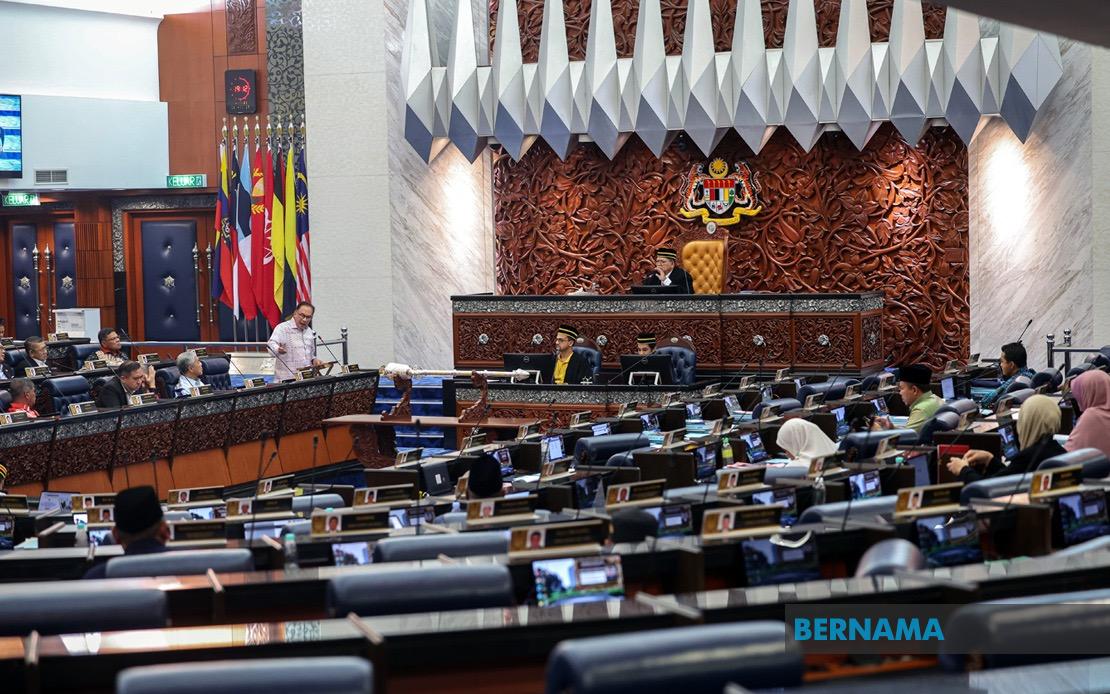
The People's Income Initiative, a targeted assistance programme run by Malaysia's Economy Ministry, has extended support to 7,787 households since its launch almost three years ago. The scheme represents a significant component of the government's integrated approach to poverty reduction, working alongside existing welfare mechanisms to tackle interconnected challenges facing vulnerable communities across the country.
Designed to complement rather than replace conventional poverty alleviation frameworks, the initiative tackles three primary objectives: strengthening food security among at-risk populations, generating sustainable employment pathways, and reducing the financial strain households face from rising living costs. These aims reflect policymakers' recognition that poverty is multidimensional, requiring interventions that address immediate hardship while building pathways toward economic self-sufficiency.
According to the ministry's parliamentary response, early outcomes have proved encouraging, with particular success stories emerging from beneficiary households that have crossed important income thresholds. Some participants have managed to achieve monthly earnings of more than RM2,000, a figure that marks meaningful progress in lifting families out of poverty cycles. These income gains suggest the programme's underlying mechanisms—whether through income supplementation, skills training, or employment facilitation—are creating tangible economic improvement for at least a segment of participants.
The relatively modest beneficiary numbers invite scrutiny regarding the programme's scale and penetration. With Malaysia's poverty rate affecting hundreds of thousands of households, reaching 7,787 families in three years indicates either a carefully targeted pilot approach or capacity constraints limiting broader rollout. Understanding which factor predominates matters significantly for assessing whether the initiative represents a model for scaled expansion or reflects resource limitations that may need addressing.
The programme's emergence reflects evolving thinking about poverty reduction in Southeast Asia's context. Rather than relying solely on cash transfers or subsidy schemes, the IPR attempts to combine immediate relief with mechanisms encouraging productive participation and income generation. This approach aligns with international development trends emphasizing agency and economic inclusion alongside social protection, recognising that sustainable poverty reduction requires both safety nets and opportunity creation.
Complementing the IPR's household-level interventions is the government's broader digitization initiative through the Main Data Base, known as PADU. The integration strategy aims to ensure that poverty programmes reach eligible populations efficiently by consolidating household information across government agencies. As of June 2026, 204 government agencies have implemented continuous data sharing arrangements through PADU, creating an unprecedented information infrastructure for policy implementation.
This data integration represents a significant governance advancement for Malaysian policymaking. The 27 approved data-sharing applications enable evidence-based programme design and targeting, theoretically eliminating duplicative assistance while ensuring those most in need receive support. For a middle-income country managing multiple overlapping assistance schemes, this coordination capacity substantially improves resource allocation efficiency and reduces leakage to ineligible beneficiaries.
The digitization framework also serves broader institutional objectives beyond poverty reduction. Enhanced data sharing supports service innovation, accelerates the government's digital transformation agenda, and creates opportunities for rigorous programme evaluation through longitudinal household tracking. These secondary benefits—improved public service delivery architecture and evidence generation capabilities—may ultimately prove as valuable as the direct assistance the IPR provides.
Regional observers will note that Malaysia's multi-pronged approach combines direct income support, employment facilitation, and digital governance infrastructure. This integration model offers lessons for other Southeast Asian countries navigating similar pressures from rising living costs and unequal income distribution. The emphasis on data-driven targeting and inter-agency coordination represents institutional sophistication that complements straightforward transfer mechanisms.
However, the programme's modest absolute reach warrants consideration of expansion pathways. At current implementation rates, reaching even one million households would require over 125 years, suggesting either dramatic acceleration or that policymakers envision the IPR as a demonstration or pilot initiative rather than the primary poverty response mechanism. Clarifying the intended scale and longer-term trajectory would help stakeholders understand whether this represents foundational institution-building or a limited-scope intervention.
Looking forward, the IPR's success in generating income gains above poverty thresholds provides evidence that purposefully designed programmes combining income support, employment linkages, and targeted services can produce measurable household-level improvements. Whether these gains prove sustainable, how they affect broader inequality measures, and whether the model can be expanded without encountering diminishing returns remain important unresolved questions that will shape the initiative's evolution. The ministry's reported satisfaction with early results suggests confidence in the approach, though independent evaluation would provide clearer assessment of effectiveness relative to costs and opportunity expenses.

