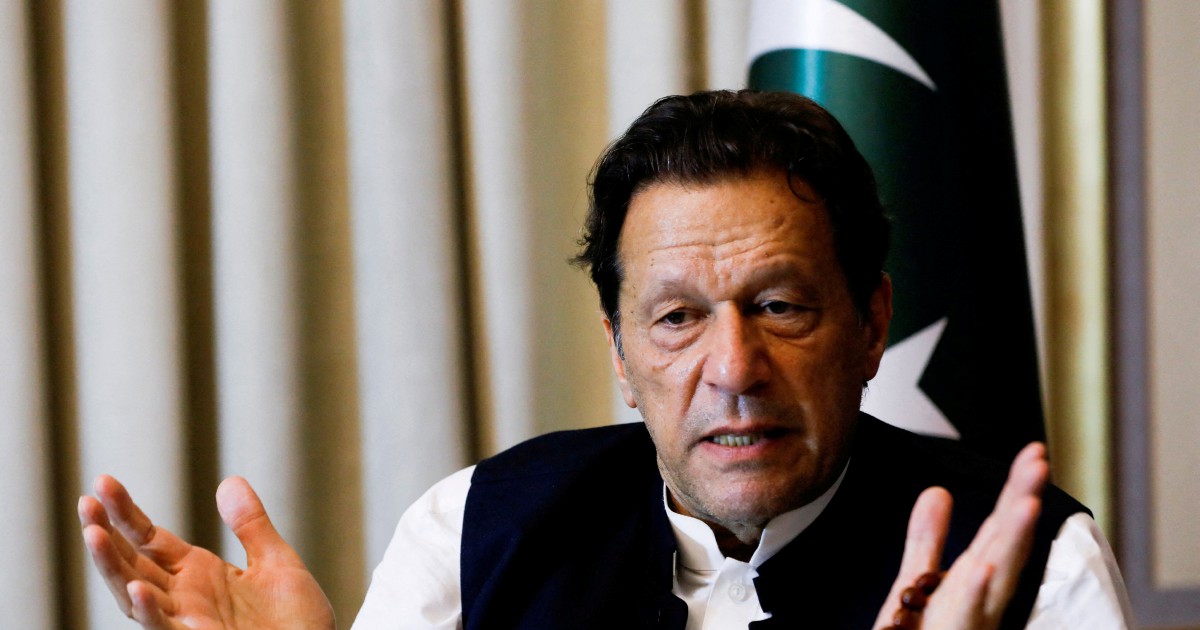
Imran Khan, Pakistan's ousted prime minister, returned to custody on Friday following a court-ordered medical assessment at a healthcare facility in the capital, Islamabad, according to statements from senior government officials. The examination, conducted under judicial supervision, marked another procedural step in the high-profile legal case that has consumed Pakistani politics since Khan's dramatic fall from power in April 2022.
The reincarceration underscores the precarious legal position facing Khan, whose detention has become emblematic of deeper political divisions within Pakistan. Since his removal through a no-confidence vote in parliament, Khan has faced mounting legal challenges, including allegations spanning national security matters, financial impropriety, and defamation. These charges, which Khan and his Pakistan Tehreek-e-Insaf (PTI) party dismiss as politically motivated persecution, have kept the former cricket star frequently cycling through detention and bail arrangements.
The medical examination itself signals ongoing judicial scrutiny of Khan's health and physical condition during confinement. Such examinations are standard procedure in Pakistani law, particularly when prolonged detention raises questions about prisoners' wellbeing. The fact that a court specifically ordered this check suggests either Khan's legal team raised concerns about his health in custody, or the judiciary moved proactively to document his condition and ensure compliance with detention standards.
Imran Khan's trajectory from national icon to imprisoned dissident has profound implications for Pakistan's democratic stability and rule of law. His supporters contend that the charges represent a coordinated campaign by entrenched military-political elites to neutralise a rival who built his political movement on anti-corruption messaging. Detractors argue that his defiance of established institutions and inflammatory rhetoric have warranted legal action. This polarisation mirrors broader Southeast Asian debates about political accountability, institutional power, and the weaponisation of courts.
The timing and pattern of Khan's legal proceedings also raise questions about judicial independence in Pakistan. His repeated detention, bail denials, and the pace of cases—some proceeding with unusual speed while others stall indefinitely—have drawn criticism from international human rights organisations. Observers note that similar patterns of using the judiciary against political rivals occur across South and Southeast Asia, where incumbent power structures often view opposition leaders as existential threats rather than legitimate democratic participants.
Khan's detention carries implications for Malaysia and the broader regional security landscape. Pakistan's political instability reverberates through South Asia and influences extremist networks operating across borders. A destabilised Pakistan, wracked by internal conflict between civilian and military power centres, could exacerbate terrorism and refugee flows that eventually affect Southeast Asian security arrangements and economic cooperation. Pakistan remains a major economy in South Asia, and political dysfunction threatens the economic interdependencies that benefit regional trade.
The medical examination also reflects practical realities of Pakistan's prison system, where conditions are notoriously overcrowded and health facilities inadequate. Whether such checks protect detainees' rights or serve as performative compliance with international standards remains contested. For Malaysian observers tracking democratic backsliding across Asia, Pakistan's experience offers cautionary lessons about how even elected leaders with popular mandates can find themselves stripped of political voice and confined through legal mechanisms.
Imran Khan's PTI party, meanwhile, remains mobilised despite his incarceration. The party continues organising demonstrations and mounting legal defences, keeping the question of his release in constant public view. Khan's continued detention rather than conviction also extends uncertainty—he remains in limbo, neither finally adjudicated nor fully released, which keeps political tensions elevated and prevents any conclusive resolution to the underlying conflict.
The relationship between Pakistan's military establishment, civilian government, and judiciary remains opaque, but Khan's legal ordeal illustrates how power operates in post-colonial South Asia. Unlike Southeast Asian nations where constitutional courts sometimes check executive excess, Pakistan's institutional arrangements have historically allowed those controlling security services to shape judicial outcomes. For Malaysia, which also grapples with military-civil relations and judicial independence debates, Pakistan's struggles underscore the importance of institutional architecture and checks-and-balances.
As Khan remains in custody, his case continues to fester as a focal point of Pakistani grievance. The question is not merely whether he will be convicted or released, but whether Pakistan can develop democratic norms robust enough to channel political competition through elections and debates rather than detention and courtroom theatrics. Regional observers recognise that Pakistan's political stability ultimately depends on establishing rules accepted as legitimate by major political actors—a foundation still visibly cracking as Khan's case reveals.
The medical examination and re-detention, though procedurally routine, therefore symbolise something larger: a political system struggling with the transition from personalised power and institutional loyalty toward genuine rule of law. Until these deeper issues are addressed, Khan's cycling through custody will likely persist, with each court appearance and detention highlighting Pakistan's democratic deficits.

