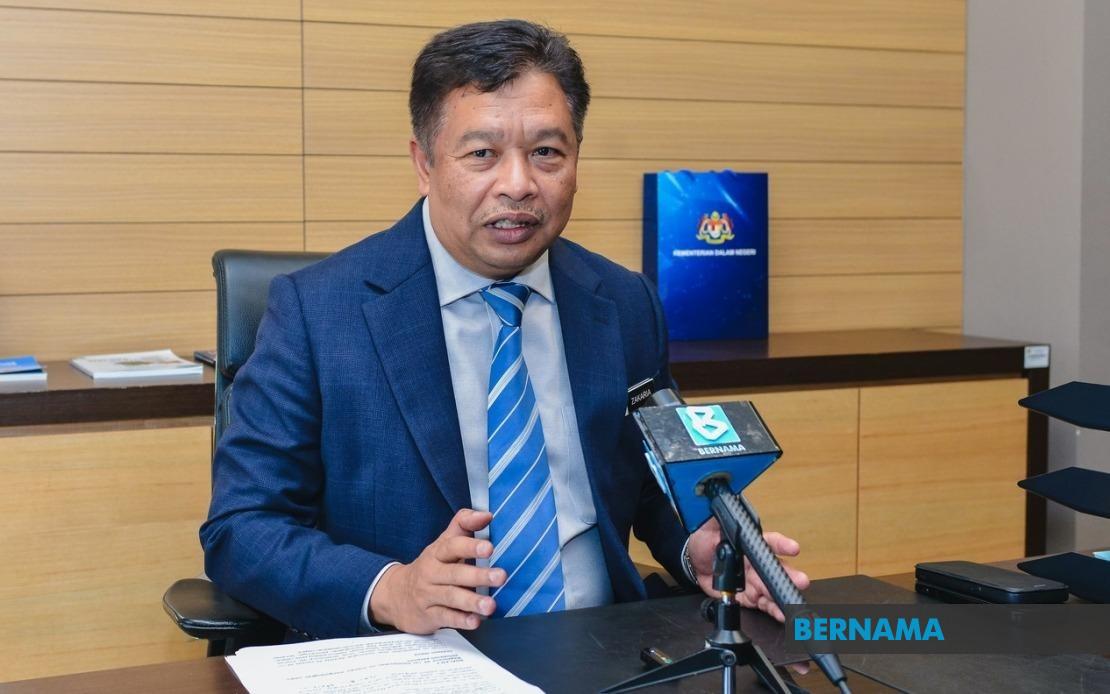
The Immigration Department (JIM) has escalated its operational readiness to maximum capacity as polling day approaches for the Johor State Election, with particular emphasis on managing the substantial flow of voters crossing the Malaysia-Singapore border. Immigration Department director-general Datuk Zakaria Shaaban confirmed that inspection facilities at both the Sultan Abu Bakar Complex (KSAB) in Tanjung Kupang and the Sultan Iskandar Building (BSI) near Johor Bahru are functioning optimally, ensuring that citizens working across the Causeway can return to cast their ballots without encountering administrative delays.
The two major entry points represent critical infrastructure for the election process, given their role as primary transit hubs for the tens of thousands of Malaysians employed in Singapore who maintain voting rights in their home constituencies. KSAB, accessed via the Malaysia-Singapore Second Link (Linkedua), and BSI, which connects JB Sentral with Woodlands, together process approximately 300,000 travellers daily under normal circumstances. This volume underscores both the significance of these checkpoints for regional commerce and the logistical complexity of accommodating an anticipated surge during the voting period.
Jakarta emphasised that the Immigration Department is maintaining its established inspection systems rather than implementing new technologies that could introduce untested variables during the critical election period. The decision reflects a pragmatic approach prioritising reliability over innovation, with existing infrastructure that has proven its capacity to handle high-volume traffic now dedicated to election support. This conservative stance acknowledges that any system failures during polling could disenfranchise Malaysian voters in Singapore and potentially affect election outcomes in constituencies with significant transnational populations.
Recognising the potential for technical disruptions, JIM has established comprehensive contingency protocols whereby manual inspection procedures would immediately supersede automated systems should any technical failures occur. This layered approach demonstrates institutional preparedness across multiple scenarios, ensuring that even partial system failures would not compromise border operations. The Immigration Department's technical team will maintain round-the-clock surveillance of system performance, with staff positioned to diagnose and resolve issues within minimal timeframes to prevent bottlenecking at the border.
Home Minister Datuk Seri Saifuddin Nasution Ismail has previously given assurances that the Ministry of Home Affairs stands committed to facilitating unobstructed travel for Malaysian voters working in Singapore, with broader mitigation strategies prepared to address potential complications. This ministerial-level commitment reflects the government's recognition that the voting process depends partly on its ability to accommodate the geographical dispersion of the electorate across international boundaries. The coordination between immigration authorities and ministerial oversight represents an effort to integrate election administration with border security and cross-border mobility management.
The Johor State Election constitutes a substantial political contest, with 172 candidates competing across 56 seats, making the participation of overseas voters potentially consequential for electoral outcomes in certain constituencies. Early voting is scheduled for July 7, providing an alternative pathway for voters unable to return on the primary polling day of July 11, though this option does not eliminate the need for efficient border processing. The staggered voting arrangement distributes pressure across the immigration system, though the majority of voter traffic is expected to concentrate around the weekend polling date.
The significance of this election extends beyond Johor's borders, as it carries implications for broader Southeast Asian labour mobility and regional integration. Johor's proximity to Singapore and its role as a major employment destination for cross-border workers creates a distinct electoral dynamic rarely seen in other Malaysian states. The election becomes a test case for how Malaysian electoral administration manages voter populations whose daily lives span multiple jurisdictions, a challenge that will likely increase as regional economic integration deepens.
For Malaysian workers in Singapore, the election presents both civic opportunity and logistical challenge. Many have established lives across the border, with family, employment, and civic responsibilities distributed between two countries. The efficiency of border crossings during this period directly affects their ability to participate in democratic processes without incurring significant personal cost or time disruption. Immigration Department preparations thus carry weight beyond routine border management, touching on questions of accessibility and equity in political participation.
The reliance on existing rather than upgraded systems, while cautious, may raise questions about long-term modernisation of Malaysia's border infrastructure. These two checkpoints serve as gateways for both election voters and regular commercial traffic, suggesting that any permanent improvements to processing capacity would benefit not merely this election but regional trade and labour mobility more broadly. The current approach prioritises immediate election security over infrastructure advancement, a choice reflecting institutional risk-aversion during politically sensitive periods.
Looking ahead to polling day, the coordination demonstrated by immigration authorities, ministerial oversight, and technical contingency planning represents institutional confidence in managing the cross-border voting process. However, the success of these preparations depends partly on factors beyond government control, including unexpected technical failures, unusual traffic surges, or security incidents. The comprehensive planning announced suggests recognition of these risks and commitment to minimising disruption to voter participation, establishing a precedent for how future elections in border-proximate constituencies might be administered as Malaysian electoral engagement increasingly extends across international boundaries.

