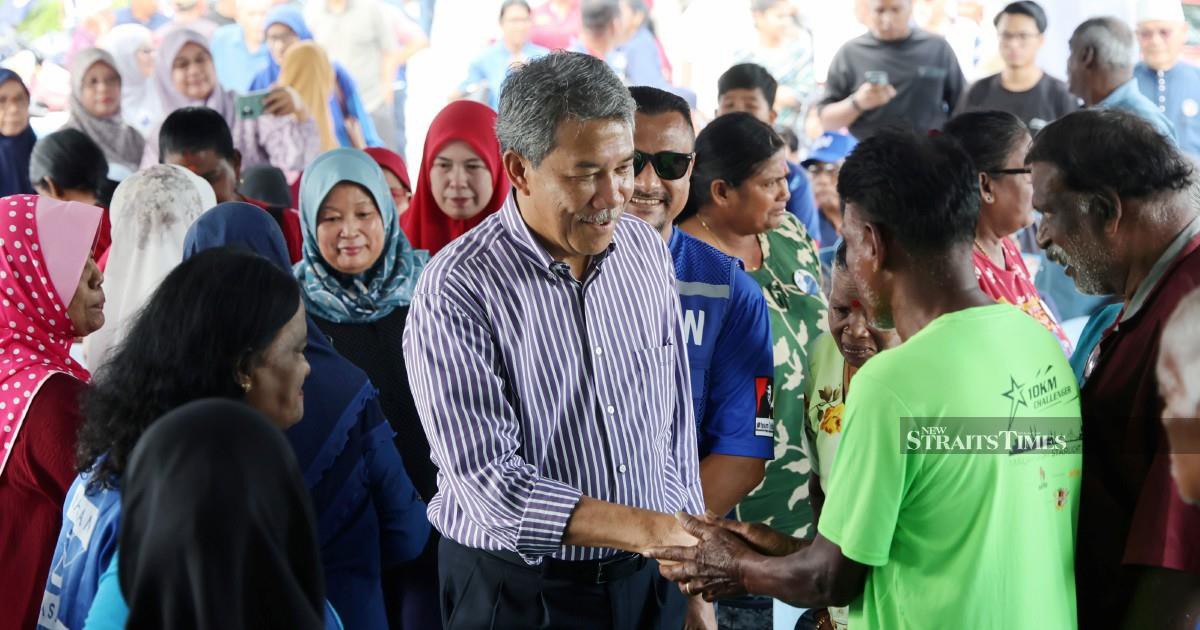
In an unexpected moment of candour from a senior government figure, Foreign Minister Datuk Seri Mohamad Hasan has publicly stated that he stands prepared to surrender his cabinet post whenever Prime Minister Datuk Seri Anwar Ibrahim determines it necessary. The statement, made in Rembau, reflects the hierarchical nature of Malaysia's executive structure where cabinet members ultimately serve at the pleasure of the prime minister and can be removed at will.
The Foreign Minister's declaration carries particular weight given the sensitive nature of his portfolio. Overseeing diplomatic relations, international negotiations, and Malaysia's standing on the global stage, the foreign affairs ministry represents one of the more high-profile positions within the cabinet. Such candid acknowledgement of subordination to the PM's will demonstrates a clear understanding of ministerial responsibilities and the constitutional framework governing Malaysia's government.
In Malaysia's system, prime ministerial authority over cabinet composition remains largely unfettered. Ministers do not require parliamentary approval to be removed and can be dismissed without public explanation. This discretionary power has historically been used sparingly, though ministerial resignations and reshuffles remain a recurring feature of Malaysian politics. Mohamad Hasan's explicit endorsement of this principle suggests he is either demonstrating loyalty to Ibrahim or, conversely, attempting to manage potential speculation about his position.
The timing of such a statement raises questions about the political climate within government. While cabinet reshuffles occur regularly in any administration, a senior minister's public readiness to step aside might indicate underlying pressures or an abundance of caution. Alternatively, it could reflect Mohamad Hasan's confidence in his current standing, using such pronouncements to deflect any perception of tension between himself and the Prime Minister.
Mohamad Hasan brings considerable experience to the foreign ministry. His political trajectory, spanning multiple decades in the Umno-led administrations and his involvement in various state-level and federal portfolios, provides him with deep knowledge of Malaysia's diplomatic landscape. His tenure in the foreign affairs position has encompassed navigating complex regional relationships, managing bilateral ties with major powers, and representing Malaysian interests in international forums.
The Foreign Ministry itself faces an increasingly demanding agenda. Southeast Asia's geopolitical positioning, tensions in the South China Sea, economic partnerships, and Malaysia's role within ASEAN all demand careful stewardship. Additionally, Malaysia continues to balance relationships with traditional allies, emerging powers, and neighbours with varying interests. The person holding this portfolio must possess not only diplomatic finesse but also political acumen to navigate these competing demands effectively.
From a practical governance standpoint, ministerial uncertainty can complicate foreign policy implementation. Diplomacy operates most smoothly when foreign ministers enjoy sufficient tenure to build relationships with counterparts and execute long-term strategic initiatives. Frequent changes at this level can disrupt continuity and signal instability to international partners. Mohamad Hasan's statement, while superficially suggesting vulnerability, might paradoxically be designed to shore up his position by demonstrating unquestioning loyalty to Ibrahim.
The Prime Minister's own position has faced scrutiny in recent months as coalition politics in Malaysia remain volatile. The government's stability rests partly on managing intra-coalition tensions between Umno, PKR, DAP, and other member parties. Reshuffles and ministerial appointments become tools for managing these relationships and rewarding or disciplining coalition members. In this context, a foreign minister's explicit deference to the PM's authority gains added significance.
Mohamad Hasan's Rembau constituency, located in Negeri Sembilan, holds its own political importance. As a representative of one of the smaller states in Malaysia's federation, his voice carries weight within the Umno power structure. His willingness to step down, if requested, maintains harmony within party structures while affirming the primacy of the premier's authority in government formations.
International observers closely monitor ministerial stability in key portfolios such as foreign affairs. Malaysia's ability to conduct consistent and credible diplomacy depends partly on sustained leadership in the foreign office. Foreign governments develop relationships with specific ministers and maintain institutional memory through repeated interactions. Excessive turnover can undermine these carefully cultivated relationships and Malaysia's diplomatic standing in the region.
The broader context for Mohamad Hasan's statement reflects Malaysia's ongoing political maturation following years of considerable turbulence. The country has experienced multiple government changes, political crises, and institutional stress in recent years. Within this environment, declarations of ministerial accountability and loyalty to constitutional hierarchy serve important symbolic functions, reinforcing norms around democratic governance.
Moving forward, observers will watch whether this statement translates into genuine security of tenure or signals impending changes. Cabinet politics in Malaysia remain fluid, driven by coalition calculations, performance assessments, and factional considerations within the ruling parties. Mohamad Hasan's explicit readiness to serve at the Prime Minister's discretion positions him as a team player within Ibrahim's administration, though whether this translates into long-term stability depends on broader political developments and government performance on both domestic and international fronts.

