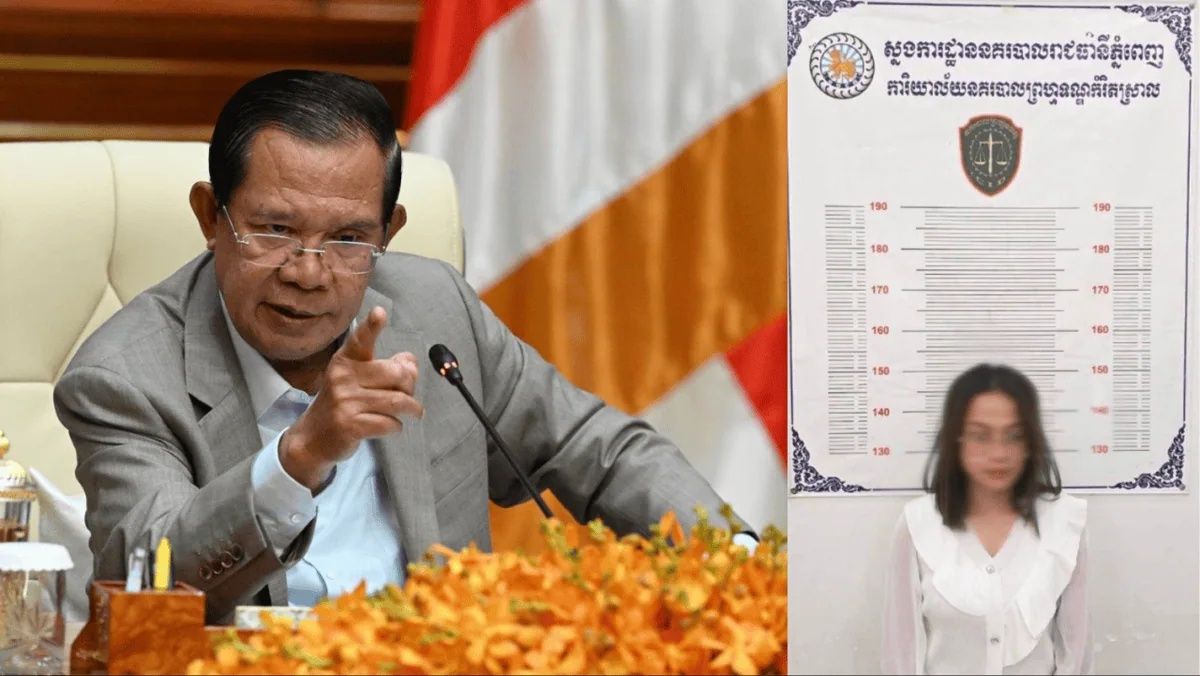
Cambodian Prime Minister Hun Sen has instructed the National Council for Women to serve as plaintiff in civil lawsuits targeting individuals accused of using offensive language that disparages women and undermines traditional Khmer social standards. The directive came during a Friday meeting with a delegation from the council, signalling a significant expansion of state involvement in policing speech deemed disrespectful to women and state institutions.
The initiative reflects Hun Sen's stated concern over what he characterises as degrading conduct in public discourse. He cited an unnamed woman who allegedly used profanities against government bodies and officials, noting that authorities had already compelled both her and her spouse to provide written apologies. This case served as the catalyst for the broader enforcement mechanism, suggesting that existing informal pressure proved insufficient in the Prime Minister's assessment of maintaining social standards.
A second high-profile example underpinning the policy involves Chenda Sovannary, a woman accused of verbally insulting a soldier during a dispute over a mobile phone transaction. Hun Sen used this incident to illustrate what he views as unjustifiable disrespect toward authority figures and public servants. His rhetorical questioning—why would someone demean a soldier over a consumer matter—framed the issue as one of proportionality and appropriate social hierarchy rather than as a free speech concern.
The enforcement architecture Hun Sen envisions requires close inter-agency coordination. He instructed the National Council for Women to collaborate with the Ministry of Interior, Ministry of Information, Ministry of Culture and Fine Arts, and Ministry of Post and Telecommunications to develop a unified mechanism for identifying and prosecuting cases involving alleged attacks on women's dignity and Khmer values. This multi-ministry approach suggests systematic monitoring rather than ad hoc responses to complaints.
Central to the policy rollout is Hun Sen's framing that such measures do not constitute authoritarianism or rights restriction. Instead, he characterised the initiative as analogous to community standards enforced by social media platforms globally. By invoking corporate content moderation as precedent, he sought to normalise state-directed speech policing as a routine aspect of maintaining social cohesion. The comparison notably omits the distinction that private companies apply standards to their own platforms, whereas state enforcement operates through legal coercion.
The emphasis on monitoring social media, particularly Facebook, indicates that digital spaces are the primary target. Hun Sen specifically requested the formation of a dedicated team to track cases involving "cursing and insults" on the platform. This focus reflects how online communication has become a flashpoint in Southeast Asian governance, where governments increasingly cite social media as a venue for coordinated challenges to state authority and traditional values.
For Malaysian observers, Hun Sen's approach offers a cautionary case study in how national dignity and women's protection rhetoric can be deployed to expand state control over expression. While safeguarding women from harassment and abuse represents a legitimate policy objective shared across the region, the mechanism proposed—enlisting state women's councils as active prosecutors of speech cases—blurs the distinction between victim advocacy and state surveillance. The institutional setup potentially transforms women's affairs bodies from neutral service providers into enforcement arms of a broader speech regulation architecture.
The broader implications for Southeast Asia warrant consideration. Countries across the region have similarly justified speech restrictions through appeals to protecting women, maintaining social harmony, or defending national values. Malaysia's own regulatory frameworks around sedition, defamation, and online conduct share comparable justifications, though implemented through different institutional channels. Hun Sen's model of formalising women's councils as plaintiffs represents a particular innovation in how state power can operate through ostensibly civilian institutions.
The policy also raises questions about evidentiary standards and due process. Hun Sen's examples—an unnamed woman and a named individual—suggest cases may proceed with limited transparency about the alleged conduct or the justification for legal action. The expectation that apologies be extracted before formal proceedings underscores the deterrent rather than purely remedial purpose of the framework. When state institutions pursue cases on grounds of protecting collective dignity, individual defendants face pressure distinct from ordinary civil disputes.
Cambodia's move reflects broader regional anxieties about social fragmentation and the perceived challenge to traditional authority structures from digital communication. Yet the mechanism conflates genuine harms—such as targeted harassment—with political or cultural criticism that officials find objectionable. The vagueness of terms like "social morality" and "women's values" creates wide discretion in determining which speech warrants prosecution, potentially ensnaring criticism of government policies or commentary on gender roles.
For regional media freedom advocates, the policy underscores how language rights protections can be selectively invoked. While defending women's dignity commands widespread support, deploying state legal machinery to enforce particular conceptions of appropriate speech establishes precedent that extends beyond the ostensible protective purpose. Hun Sen's framing that the measures protect rather than restrict rights will likely influence how other Southeast Asian governments justify similar initiatives.
The Cambodian initiative also highlights how women's empowerment institutions can be instrumentalised. Women's councils genuinely focused on victim support and advocacy may find themselves operating as enforcement bodies within state speech regulation systems. This institutional capture complicates the work of genuine women's rights advocates attempting to distinguish between legitimate protection measures and politically motivated speech policing disguised in protective rhetoric.
Longer term, Cambodia's approach may establish a regional precedent for how states can activate women's affairs institutions within broader governance frameworks. The comparative ease of pursuing civil litigation against speech—compared to criminal prosecution—offers governments a flexible tool for suppressing expression while maintaining the appearance of proportional response. For Southeast Asia, where women's rights advocacy increasingly intertwines with governance questions, distinguishing between authentic protection and instrumental state control remains an urgent analytical challenge.

