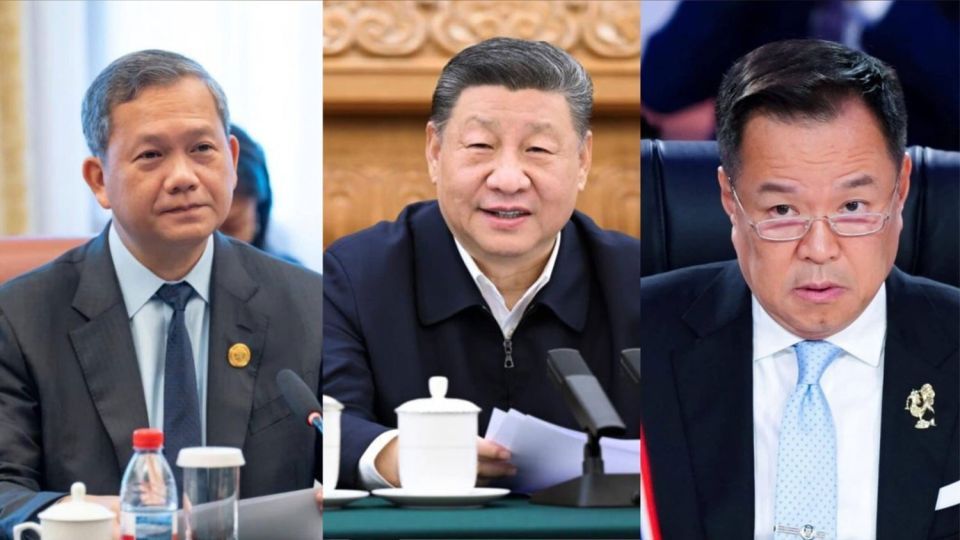
Prime Ministers Hun Manet of Cambodia and Anutin Chanvirakul of Thailand are both scheduled to attend the opening of the World AI Conference 2026 in Shanghai on July 17, following personal invitations from Chinese President Xi Jinping. The dual attendance at this high-profile technology summit offers a rare diplomatic opportunity in Southeast Asia, particularly given the entrenched tensions separating the two neighbours and the absence of formal negotiations between them since December last year. Whether this Shanghai platform will facilitate meaningful dialogue on their contested border remains an open question, though regional analysts and observers are increasingly looking to Beijing as a potential facilitator in breaking the current stalemate.
The Cambodian delegation travelling from July 15 to 17 will include significant government figures alongside Hun Manet. Foreign Minister Prak Sokhonn, Defence Minister Tea Seiha, and Sun Chanthol, the first vice-chairman of the Council for the Development of Cambodia, will comprise the official party. This composition reflects Cambodia's intent to signal seriousness about its bilateral relationship with China and its openness to discussing matters spanning diplomacy and defence. Thailand's delegation will similarly include its foreign minister, Sihasak Phuangketkeow, indicating Bangkok's parallel commitment to strengthening ties with Beijing.
Both leaders are scheduled for separate bilateral meetings with Xi and Premier Li Qiang during the Shanghai visit. The Cambodian foreign ministry framed the trip as an affirmation of the enduring partnership between Phnom Penh and Beijing, emphasising the deepening of what it termed their "long-standing friendship" and the promotion of mutual cooperation. The official statement specifically referenced Cambodia's intention to advance implementation of the Comprehensive Strategic Partnership of Cooperation and to bolster the Diamond Cooperation Framework, while nurturing what it described as an "all-weather Cambodia-China Community with a Shared Future in the new era."
Thailand's foreign ministry issued a comparable statement, though couched in slightly different language. Bangkok's formulation stressed strengthening the Thailand-China Comprehensive Strategic Cooperative Partnership for mutual benefit, underscoring the importance of bilateral engagement without explicit reference to regional dispute resolution. These carefully worded announcements reveal both capitals' desire to maintain cordial relations with Beijing while avoiding public commitment to any predetermined outcomes regarding their own bilateral issues.
The two prime ministers previously encountered one another during the 3rd ASEAN Future Forum held in Hanoi in early June this year. Although their meeting generated the obligatory handshake for photographers, no substantive dialogue materialised regarding the border tensions that continue to plague their relationship. This pattern of cosmetic civility masking underlying conflict underscores the depth of mistrust between Bangkok and Phnom Penh and suggests that progress requires external intervention rather than bilateral goodwill alone.
China's economic leverage over both nations positions Beijing as a natural mediator in this dispute. As a major trading partner for Cambodia and Thailand alike, Beijing possesses considerable influence to incentivise negotiated settlement. Regional observers suggest that Shanghai may provide the backdrop for quieter diplomatic efforts, with Chinese officials potentially using bilateral meetings to encourage compromise and a return to the negotiating table. The symbolic weight of meeting on Chinese soil, during a globally significant technology conference, creates an environment where face-saving compromises might become more palatable to both sides.
The core obstacle to resolution, however, may lie within Thailand's own governance structure. Kin Phea, director of the International Relations Institute at the Royal Academy of Cambodia, points to Thailand's military as the fundamental impediment to progress. According to Phea, the Thai armed forces have consistently refused to implement agreements negotiated between civilian Thai officials and their Cambodian counterparts, effectively maintaining a veto over government policy through their control of territory and military operations along the contested border.
"The Thai military has not implemented the measures that their civilian government agreed with their Cambodian counterparts. They allow the military to arbitrarily carry out their actions, including encroaching on Cambodian sovereign territory," Phea stated, highlighting the disconnect between Thai civilian commitments and military conduct that has repeatedly derailed diplomatic progress. This institutional fracture within Thailand's own decision-making apparatus has proven more intractable than the official diplomatic disagreements between the two governments.
Phea advocates for a more assertive Chinese role in mediating the dispute, urging Beijing to ensure both nations return to formal talks and respect the Fuxian Consensus reached in December 2025, which was itself brokered by China. He emphasises that Thailand must withdraw its military forces from occupied Cambodian territory and actively participate in the Joint Boundary Commission without further delay. This framework, built on international law and peaceful dispute resolution mechanisms, ostensibly enjoys both nations' endorsement but remains unfulfilled.
The humanitarian dimension underscores the urgency. Approximately 20,000 Cambodian civilians remain unable to return to their homes in territories currently under Thai military control or occupation. These communities exist in a state of prolonged displacement, their futures suspended pending a political resolution that remains elusive. The humanitarian toll accumulates with each passing month of continued occupation, adding moral weight to calls for swift negotiated resolution.
Regional observers view the Shanghai conference as a critical moment for China to leverage its diplomatic capital and trading relationships toward a breakthrough. The convergence of Hun Manet and Anutin at a prestigious international gathering, coupled with their scheduled separate meetings with Xi and Li, creates multiple diplomatic channels through which compromise might be brokered. Whether China chooses to actively intervene in pushing both nations toward substantive border negotiations, or whether it simply facilitates the appearance of engagement while allowing underlying tensions to persist, will reveal much about Beijing's strategic priorities in Southeast Asia and its willingness to risk bilateral relationships in pursuit of regional stability.

