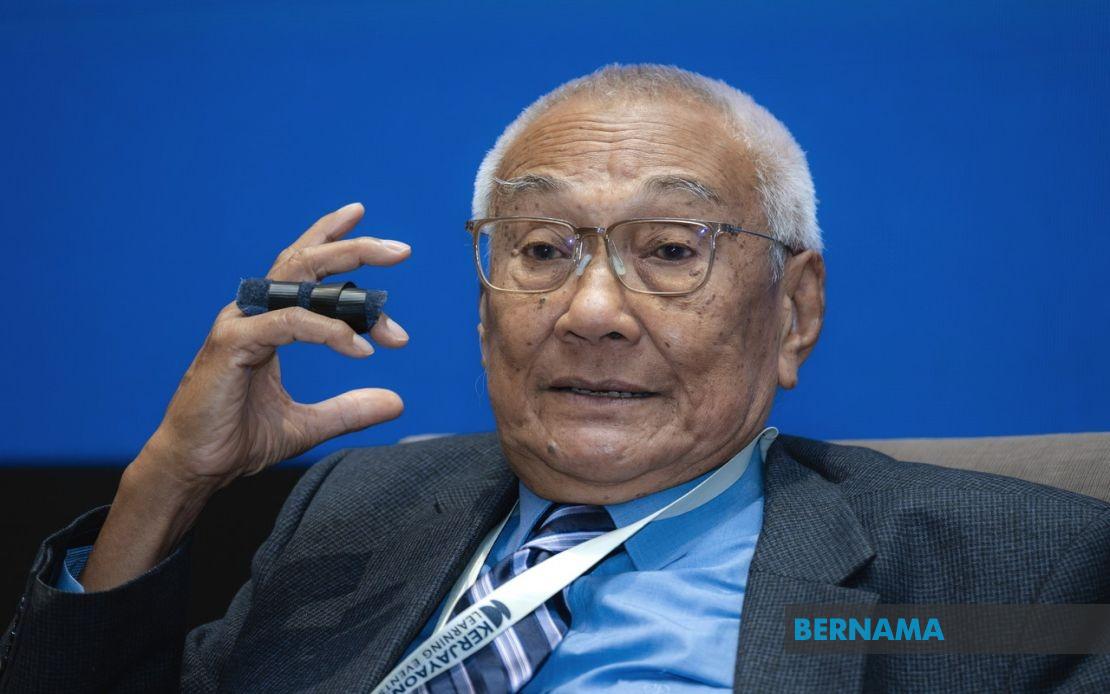
Artificial intelligence will never supersede the capacity for human judgment, according to Tun Zaki Azmi, the former Chief Justice of Malaysia who now leads Pertama Digital Berhad. Speaking at the Wisdom Malaysia 2026 Conference in Kuala Lumpur on August 5, Tun Zaki articulated a nuanced stance on the role of technology in governance and decision-making, arguing that while AI can streamline processes and offer supplementary insights, the ultimate responsibility for critical choices must remain with qualified human professionals.
Tun Zaki's perspective is grounded in decades of judicial experience, including his tenure as Chief Justice of the Dubai International Financial Centre (DIFC) Courts. He emphasized that judges cannot wholly depend on artificial intelligence to interpret legislation or assess evidence because the technology remains prone to what experts term "hallucinations"—instances where AI systems generate plausible-sounding but factually incorrect information. This technical vulnerability carries significant implications for the judiciary, where precision and accuracy are non-negotiable requirements that directly affect citizens' lives and rights.
The former jurist illustrated his argument through the structure of appellate proceedings, where multiple judges deliberate cases together. The practice of convening courts in panels comprising three, five, seven, or nine judges reflects a fundamental principle: that human reasoning is inherently varied, and that reasonable people can interpret the same facts or laws differently. This diversity of judicial perspective is a feature, not a flaw, and it produces the majority consensus that guides legal outcomes. No artificial system could replicate this nuanced deliberative process, which balances competing interpretations through reasoned dialogue among experienced minds.
Acknowledging that AI can enhance efficiency and provide valuable analytical support, Tun Zaki characterized the technology as a tool that makes work easier without displacing human expertise. In his prior role at the DIFC Courts, he witnessed the introduction of regulatory requirements mandating that lawyers and researchers explicitly disclose their use of artificial intelligence in preparing legal documents and research. This transparency mechanism ensures courts remain vigilant about the origins and potential limitations of the materials presented before them, allowing judicial officers to apply appropriate scrutiny when AI-assisted work is involved.
The disclosure framework implemented at the DIFC Courts represents a pragmatic approach to integrating AI into legal practice while maintaining safeguards. By requiring lawyers to inform courts of AI involvement, the system acknowledges the technology's utility while preserving judicial oversight and human accountability. This model has relevance for Malaysia's legal profession, which continues to grapple with questions about how to responsibly incorporate artificial intelligence into legal practice without compromising the integrity of the judicial process.
Tun Zaki's remarks also highlight the irreplaceable value of human experience and ethical reasoning in leadership and governance. The decision-making capacity of seasoned professionals is shaped not merely by technical knowledge but by the cumulative wisdom gained through navigating complex situations, managing crises, and learning from both successes and failures. These dimensions of judgment cannot be codified into algorithms; they remain distinctly human attributes that guide sound decision-making across sectors ranging from judiciary to business to public administration.
The Wisdom Malaysia 2026 Conference itself was conceived as a platform for intergenerational knowledge transfer, organized under the banner 'Learning from the Past, Looking to the Future'. According to KerjayaOne PLT chairman Datuk Seri Abdul Mutalib Razak, the two-day gathering aimed to bridge the widening gap between generations of leaders and ensure that institutional wisdom accumulated over decades does not dissipate as senior figures retire. This concern reflects broader challenges facing Malaysian organizations as experienced personnel transition out and institutional memory risks being lost in the rush to modernize.
The conference brought together prominent institutional and corporate leaders, including Tan Sri Che Khalib Mohamad Noh, the former president of Tenaga Nasional Berhad, Tan Sri Abdul Wahid Omar, who chairs both Cypark Resources Berhad and IOI Corporation Berhad, and Datuk Dr Mohd Khalis Abdul Rahim, formerly chief human capital officer of Malaysia Aviation Group. Their participation underscored the relevance of Tun Zaki's message across multiple sectors—corporate governance, energy, logistics, and human resources all benefit from the kind of judgment that emerges from sustained engagement with real-world challenges.
For Malaysian policymakers and institutional leaders, Tun Zaki's intervention arrives at a critical juncture as the nation navigates rapid technological advancement. While Malaysia has embraced artificial intelligence as a strategic priority for economic competitiveness and digital transformation, Tun Zaki's caution serves as a timely reminder that technology adoption must remain calibrated to preserve human oversight, accountability, and ethical judgment. The judiciary, in particular, cannot outsource its fundamental responsibility to independent, impartial human decision-makers who are bound by law and ethics.
The implications extend beyond the courtroom. As artificial intelligence permeates government agencies, financial institutions, and corporate boardrooms across Malaysia and Southeast Asia, the question of where to draw the line between AI support and human control becomes increasingly urgent. Regulatory bodies will need to develop frameworks—akin to the DIFC Courts' disclosure requirements—that harness AI's analytical power while preventing over-reliance on systems that lack transparency, accountability, and the capacity for genuine moral reasoning.
Tun Zaki's vision reconciles technological optimism with institutional conservatism. He does not reject artificial intelligence as a threat to be resisted, but rather insists it be understood as an instrument subordinate to human leadership. This perspective offers a middle path between those who see AI as a panacea and those who view it with deep suspicion. By maintaining that technology enhances rather than replaces human judgment, Tun Zaki articulates a framework for responsible innovation that respects both the capabilities of machines and the irreducible importance of human expertise, experience, and conscience in matters of governance and justice.

