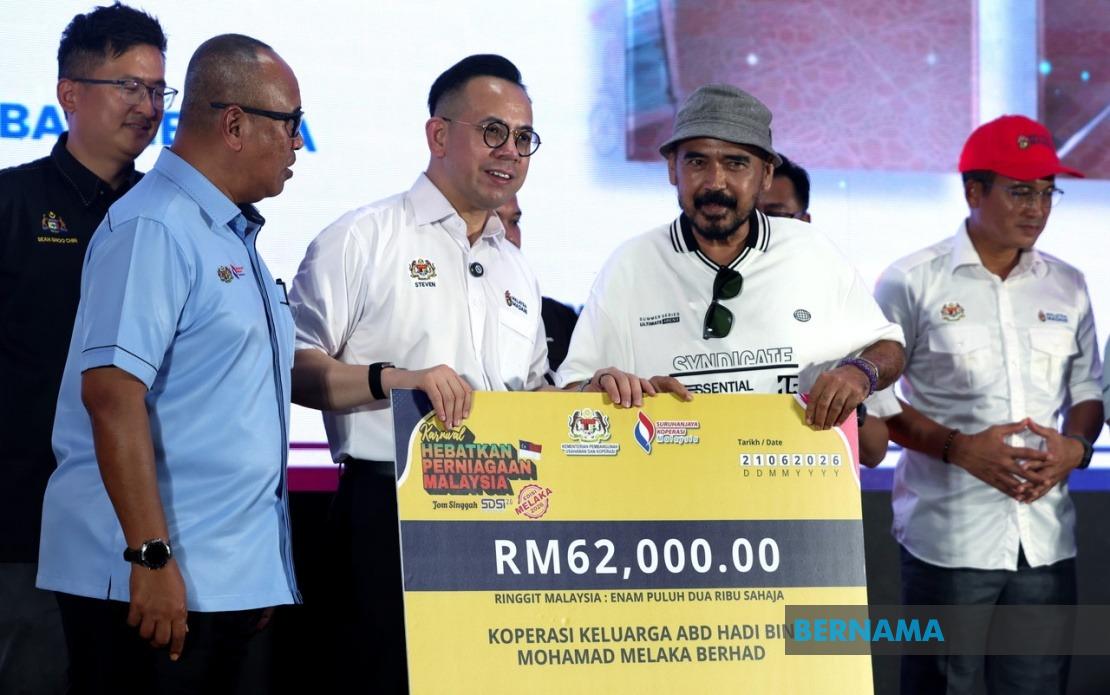
The Empowering Malaysian Businesses Carnival 2026, held in Melaka from June 19 to 21, has demonstrated the growing appetite among Malaysian entrepreneurs to forge meaningful business partnerships and access financing support. The three-day event, organised by the Ministry of Entrepreneur Development and Cooperatives (KUSKOP), concluded with impressive results that underscore the effectiveness of creating dedicated networking spaces for the nation's business community.
The carnival succeeded in generating RM8.45 million in combined business matching value and financing potential, a substantial figure that reflects the quality of interactions facilitated across the event. This success metric comprises two distinct components: a business matching value of RM6.4 million achieved through 72 dedicated matching sessions that brought together 25 potential entrepreneurs, and a financing potential of RM2.05 million from 55 micro, small and medium enterprises that participated in structured financial consultation sessions.
Attendance figures paint a picture of strong community engagement with the initiative. The carnival drew 70,000 visitors over its three-day run, demonstrating considerable public interest in opportunities designed to strengthen enterprise capacity across Malaysia. Beyond the headline figures, direct sales of products from carnival participants totalled RM532,802.77, providing immediate revenue benefits to participating entrepreneurs and indicating that the event functioned as both a networking hub and a functional marketplace.
The HPM Carnival operates as a cornerstone initiative under the broader Hebatkan Perniagaan Malaysia agenda, championed by KUSKOP Minister Steven Sim Chee Keong. This strategic programme is itself part of the government's larger ABCD framework, which prioritises four critical pillars: accelerating productivity, reducing bureaucratic friction, improving capital accessibility, and developing market access. The carnival's design reflects these priorities by creating an environment where entrepreneurs can simultaneously upgrade their business competencies, establish valuable professional networks, and identify concrete growth pathways.
The structural format of the carnival reveals thoughtful consideration of different enterprise maturity levels. By offering both general matching sessions and targeted financial interaction forums, the event accommodates entrepreneurs at various stages of development. Established MSMEs seeking partnership opportunities find themselves in the same ecosystem as emerging ventures exploring first-time financing options, creating cross-pollination of ideas and potential collaborations that might not occur through conventional business channels.
For Malaysian policymakers and ministry officials, events like this provide tangible evidence of demand-driven interventions working in practice. The RM8.45 million in potential transactions represents not merely abstract economic activity but real opportunities for enterprises to scale operations, hire additional staff, invest in technology, or expand into new markets. When multiplied across multiple carnival editions and considering the downstream economic effects, such initiatives contribute meaningfully to SME ecosystem development across the country.
The geographical distribution of these carnivals also merits attention. Having successfully executed events in two locations already, the ministry has confirmed that the third HPM 2026 Carnival will move to Penang, scheduled for July 17 to 19 at the Penang Waterfront Convention Centre. This progressive rollout across different states ensures that entrepreneurial communities beyond the Klang Valley receive equal opportunity to participate in the matching and financing sessions, addressing regional economic development imperatives and reducing geographic concentration of business support services.
Penang's selection as the next host carries particular significance given the state's established reputation as a manufacturing and technology hub. The event's arrival there could catalyse fresh partnerships between traditional industries and emerging digital-focused enterprises, while also creating networking opportunities between Penang-based companies and potential partners from other regions who travel to attend. Previous carnival attendees often report that the value of participation extends well beyond the specific deals concluded during the event itself, as relationships forged frequently develop into longer-term business collaborations.
For MSMEs contemplating participation in upcoming carnival editions, the Melaka results offer compelling motivation. The demonstration that 55 enterprises accessed RM2.05 million in financing potential suggests that financial institutions are receptive to the carnival format as a venue for identifying creditworthy borrowers. Similarly, the RM6.4 million business matching value indicates that partnerships—whether supplier-buyer relationships, distribution agreements, or joint venture possibilities—are genuinely being negotiated and concluded, not merely discussed as theoretical possibilities.
The integration of direct sales activity into the carnival model adds a dimension often overlooked in purely networking-focused events. The RM532,802.77 in immediate product sales demonstrates that carnival visitors arrive with purchasing intent, transforming the venue into a functional marketplace where entrepreneurs can test market response, build customer lists, and generate immediate cash flow. This combination of transactional and relational benefits distinguishes well-designed business carnivals from conferences that remain purely educational or connective in nature.
Looking forward, the HPM Carnival series positions itself as an essential fixture in Malaysia's enterprise development calendar. The sequential rollout across states through 2026 suggests sustained government commitment to field-based entrepreneur support, complementing digital platforms and office-based consultations with the irreplaceable value of face-to-face interaction. For businesses, policymakers, and regional observers tracking Malaysia's efforts to strengthen its SME base—a critical component of the nation's economic resilience—these carnival outcomes provide encouraging indicators that structured networking and financing access initiatives can deliver measurable, immediate impact on entrepreneurial opportunity and growth.