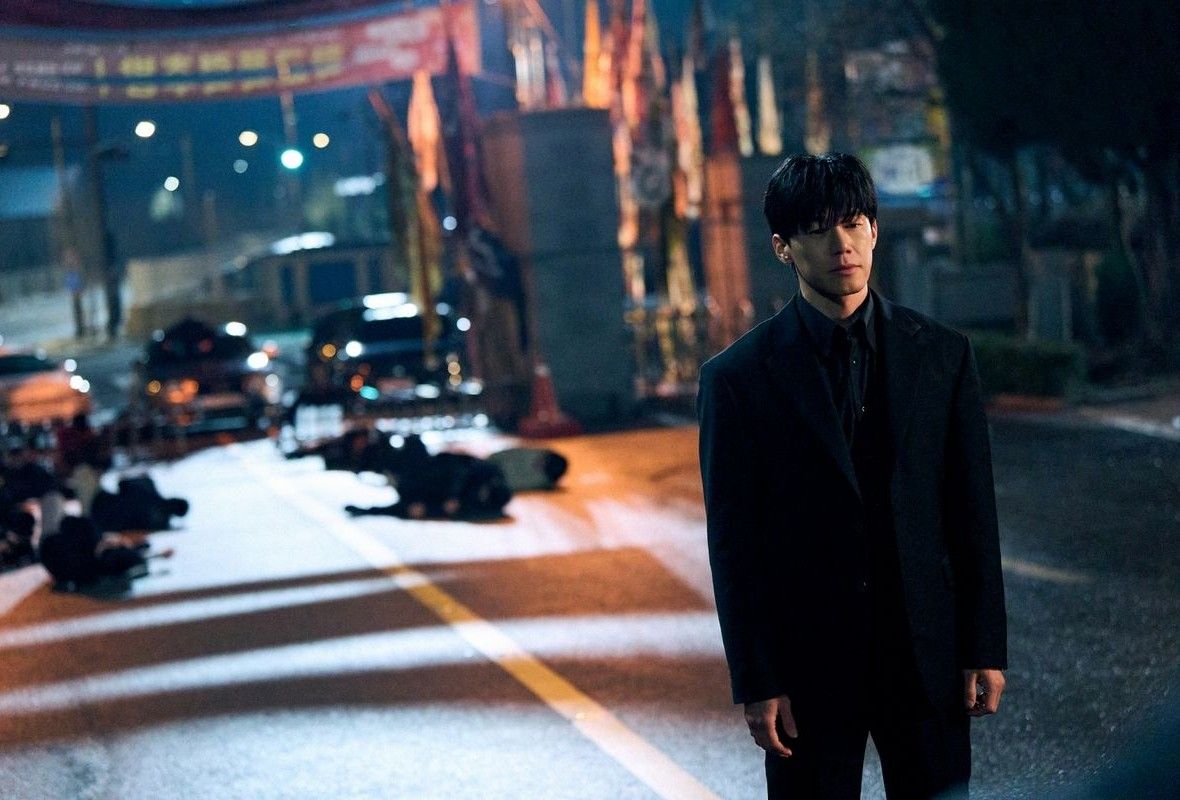
Imagine a teacher requiring a mule's attention before it will obey a command, and you have grasped the central challenge facing South Korea's controversial new drama 'Teach You A Lesson.' The ten-episode series, adapted from a provocative webtoon, arrives at a moment when audiences—particularly in Southeast Asia—have become simultaneously invested in and fatigued by familiar narrative patterns. Like the mule, viewers need their focus arrested, and this production manages to do precisely that by refusing to sanitise the institutional violence lurking beneath the surface of educational settings.
At the heart of the narrative stands Na Hwa-jin, a former Special Forces officer now overseeing an Emergency Response and Prevention Bureau tasked with managing a secondary school transformed into a microcosm of societal dysfunction. The character, portrayed by Kim Mu-yeol with unflinching intensity, enters a landscape where administrators navigate not merely the typical challenges of student behaviour but rather a comprehensive collapse of institutional safeguards. Director Hong Jong-chan constructs this world with deliberate restraint, presenting scenarios that feel uncomfortably plausible rather than exaggerated for dramatic effect.
The catalogue of institutional failure presented across the series encompasses a spectrum of contemporary anxieties. Students weaponise bullying against one another with calculated cruelty, parents transform classrooms into battlegrounds for their grievances, organised crime syndicates actively recruit minors into their networks, and illicit pharmaceutical compounds circulate through school corridors with alarming normalcy. For the understaffed emergency response team, each crisis demands not only tactical intervention but also navigation of political sabotage orchestrated by those threatened by genuine reform. This layering of problems reflects not Korean circumstances alone but a recognisable pattern across educational systems throughout East and Southeast Asia.
Na's partnership with ministerial official Choi develops gradually through carefully constructed flashbacks revealing the emotional foundation undergirding their professional collaboration. These scenes, anchored by the youthful performance of Ha Young, provide essential context for understanding why these individuals remain committed to reforming institutions that seem fundamentally resistant to change. The dynamic between Kim's character and the authority figure played by Lee creates a tension between pragmatic intervention and institutional politics, a struggle that will resonate with administrators and policymakers across the region who confront similar constraints daily.
What distinguishes this series from conventional school-set dramas lies in its thematic approach rather than its plot mechanics. Rather than resolving individual incidents to satisfactory conclusions, the production deliberately maintains ambiguity about whether meaningful systemic transformation remains achievable. This refusal to provide comforting narrative closure becomes itself a statement—one that prompts viewers to contemplate their own complicity in perpetuating institutional dysfunction. The junior inspectors surrounding Na, portrayed by actors including Jin Ki-joo, function less as heroic auxiliaries than as participants in an imperfect system attempting marginal improvements.
Kim Mu-yeol's performance anchors the entire enterprise, delivering observations to both perpetrators and victims that somehow locate compassion within situations designed to strip away dignity. His presence prevents the material from descending into either exploitative sensationalism or preachy didacticism. Equally significant is the ministerial authority conveyed through Lee's scenes, presenting viewers with a vision of institutional leadership imbued with genuine conviction—a representation that carries particular weight in societies where public trust in institutions remains fragile.
The series' impact extends far beyond Korean television ratings. Educational administrators in Malaysia have reported recognising uncomfortable parallels between the show's fictional secondary school and realities within their own institutions. Most striking was the message received by Kim from a Malaysian educator describing how the narrative resonated across thousands of kilometres, suggesting that the specific institutional pathologies depicted transcend national boundaries. This geographical reach indicates that the production has tapped into anxieties about educational systems that plague multiple societies simultaneously.
Central to the show's ethical framework is its treatment of violence and transgression. Rather than graphically sensationalising harm, the series employs specific acts of violence as narrative turning points that underscore irreversibility. Once boundaries are crossed, characters confront the consequences not through convenient redemptive arcs but through the harder work of accepting accountability and attempting restoration. This philosophical stance distinguishes the production from morality plays that reward virtue and punish vice through neat narrative mechanics.
The fundamental argument embedded throughout the series concerns the possibility of redemption and forgiveness within fundamentally broken systems. Rather than advocating for wholesale institutional collapse or naive faith in bureaucratic solutions, 'Teach You A Lesson' suggests that meaningful change emerges through individual commitment to recognising and respecting the humanity of others, even—or especially—when institutional structures incentivise dehumanisation. This message carries particular significance in contexts where rapid social change and competitive pressures have strained traditional bonds of communal care.
The production's deliberate ambiguity regarding solutions has catalysed genuine conversation across social platforms and educational forums. Teachers and parents have begun drawing explicit connections between depicted situations and contemporary educational challenges in their own communities. Rather than providing answers, the series functions as a diagnostic tool, prompting stakeholders to identify and articulate problems previously addressed through silence or institutional normalisation. This conversational function may ultimately prove more valuable than any narrative resolution could provide.
As the show continues generating discussions throughout Southeast Asia, it serves as a reminder that institutional reform requires sustained attention and discomfort with easy answers. Like the mule requiring direct intervention to focus its attention, societies confronting educational dysfunction must occasionally accept jarring narratives that refuse to restore audiences to complacency. The challenge, then, becomes whether viewers will retain these insights when the screen darkens and the harder work of institutional change beckons.

