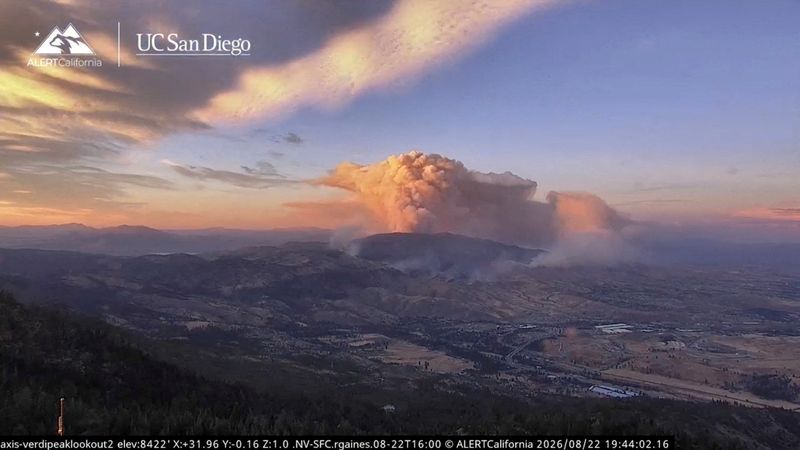
The explosion of user-generated content through social media and mobile devices has fundamentally reshaped modern journalism, flooding newsrooms with photographs and videos capturing events as they unfold—from natural disasters to political upheaval. Yet this abundance has created a parallel problem: artificial intelligence now generates convincing fabricated imagery that blurs the line between authentic documentation and sophisticated deception. Reuters, grappling with this evolving challenge, has invested heavily in a specialised visual verification unit that scrutinises hundreds of images daily, validating perhaps a dozen for publication.
The necessity for this systematic approach stems from a fundamental reality of modern news gathering. Reuters maintains one of the world's largest journalist networks, with approximately 2,600 reporters stationed across roughly 200 locations globally. Despite this extensive reach, coverage gaps remain inevitable. Significant events occur continuously in unexpected locations at unpredictable moments, often where no professional journalist is present. This geographical constraint has made verified public-sourced imagery indispensable to Reuters' editorial output, transforming eyewitnesses into a distributed reporting force that extends the agency's capacity far beyond its physical infrastructure.
The reliance on public submissions aligns with principles that have guided Reuters since its founding during World War Two. The agency's foundational commitment emphasises impartial, dependable journalism and the continuous refinement of reporting methodologies. Verified citizen imagery has proven instrumental in exposing major international stories, including evidence of American military involvement in strikes on Iranian educational facilities and detailed documentation of fatal incidents during civil unrest. This approach democratises newsgathering while maintaining editorial standards, though it introduces complexity that earlier newsroom workflows never anticipated.
Artificial intelligence presents an unprecedented verification challenge. The technology's capability to generate photorealistic videos, still images, and audio has advanced dramatically. Early deepfakes betrayed themselves through obvious flaws—unnatural finger counts, illegible background text, anatomical inconsistencies. Contemporary AI systems produce outputs nearly indistinguishable from authentic documentation. The problem intensifies when malicious actors feed genuine photographs and footage into generative systems, using real-world data to create convincing altered versions of actual events. Following Venezuelan President Nicolás Maduro's reported capture in January, fabricated images circulated depicting him in handcuffs, illustrating how AI can weaponise authentic events to spread disinformation.
Beyond algorithmic manipulation, deliberate human mislabelling compounds verification difficulties. Social media users frequently recirculate genuine footage from past events while falsely attributing them to current situations, different geographical locations, or alternative contexts. A protest video from 2019 might reappear in 2024 as evidence of today's unrest, gaining traction through rapid sharing before corrections circulate. This low-tech form of deception remains prevalent despite advanced AI threats, suggesting that media literacy challenges involve both technological and behavioural dimensions.
ReutersVisual Verification Team operates through a methodical investigative protocol designed to authenticate contested images. The process begins by identifying the original content creator, establishing their credibility, and conducting interviews about their direct observations. This human element remains crucial—machines cannot replicate the contextual understanding that eyewitnesses provide. When possible, journalists contact photographers and videographers directly, extracting details about timing, location, circumstances, and any editing applied before publication.
Digital metadata accompanying images offers critical corroborating evidence. Photographs and videos typically embed technical information revealing creation date, time, device specifications, and sometimes geographical coordinates. When metadata remains intact and consistent with claimed event details, it significantly strengthens authenticity assessments. Reuters journalists compare visual elements against multiple public information sources: satellite imagery, weather records, street-view photography, archival footage, and official event documentation. The angle and length of shadows within images can pinpoint specific times of day, eliminating false temporal claims. Multiple witness accounts from different camera angles provide additional verification layers, as simultaneous fabrication of coordinated footage from several sources presents exponentially greater technical difficulty.
AI detection software represents another verification tool, though journalists emphasise its limitations. Reuters employs multiple computational systems trained to identify algorithmic fingerprints and generation artefacts invisible to human observation. These algorithms scan for mathematical traces of AI processing, subtle inconsistencies in image composition, and anomalies in texture or lighting patterns. However, detection capabilities remain imperfect. As generative systems evolve, sophisticated fakes increasingly circumvent existing detection algorithms. Reuters' verification journalists acknowledge situations where computational tools yield inconclusive results, requiring editorial judgment calls that become progressively complex.
The verification process resembles assembling an intricate puzzle. Journalists accumulate discrete pieces of evidence—metadata fragments, corroborating accounts, technical analysis, contextual details—gradually constructing a composite picture. Only when sufficient evidence converges does publication proceed. This patience contrasts sharply with social media's pressure for instantaneous reporting, yet Reuters prioritises accuracy over speed. The distinction reflects institutional philosophy: news agencies bear responsibility for information integrity that casual social media users do not.
For Southeast Asian audiences and Malaysian readers particularly, these verification challenges carry direct relevance. Regional conflicts, political developments, and natural disasters frequently generate competing narratives amplified through social media. Misinformation about neighbouring countries' affairs can inflame diplomatic tensions or community divisions. Understanding how professional news organisations authenticate visual content provides perspective on evaluating information encountered online. As AI capabilities expand, distinguishing fabricated from genuine imagery will increasingly challenge not only journalists but ordinary citizens navigating information ecosystems.
The ongoing arms race between generative AI and detection systems suggests verification will remain labour-intensive and imperfect. Reuters' investment in specialist visual verification journalists reflects recognition that technological solutions alone cannot guarantee authenticity. Human judgment, informed by systematic methodology, remains essential. Yet even well-resourced operations validate only a fraction of available imagery, raising questions about information that circulates without professional scrutiny. For regions dependent on rapid news gathering during crises, the verification capacity gap creates vulnerability to coordinated disinformation campaigns designed to overwhelm fact-checking resources.

